As a historic Arctic bomb cyclone prepares to unleash its fury across vast expanses of the United States, public health officials and meteorologists are issuing stark warnings about the potentially fatal consequences of underestimating this severe weather event. The impending storm, set to batter the East Coast and Midwest, brings with it a profound risk of rapid-onset hypothermia, a medical emergency that demands immediate public understanding and preparedness.
The Looming Meteorological Crisis
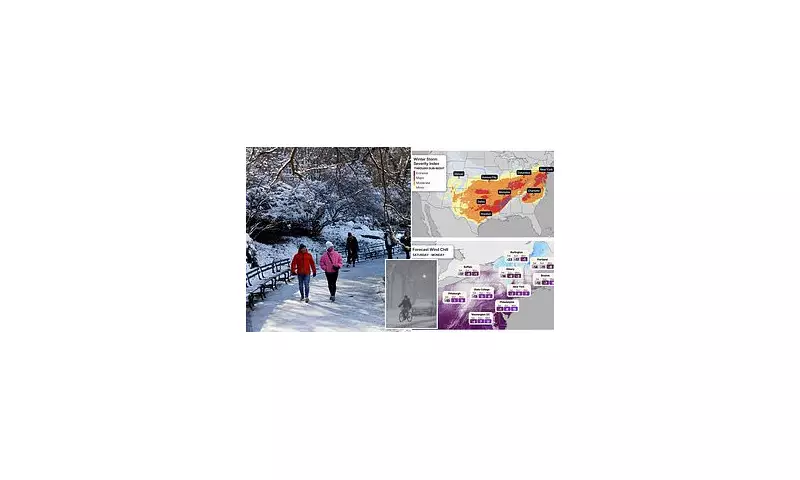
Forecasters predict that more than 200 million Americans are currently under winter storm advisories, with the situation expected to peak on Sunday. Astonishingly, over half the population of the continental United States will simultaneously contend with various forms of wintry precipitation, including heavy snow, sleet, and treacherous freezing rain. Temperatures are forecast to plummet dramatically, with single-digit readings anticipated along the East Coast from Friday night into Saturday morning, while the upper Midwest braces for a bone-chilling descent to as low as minus 39 degrees Fahrenheit.
The scale of the approaching system has triggered widespread concern, leading to panic buying that has stripped supermarket shelves bare. Millions of citizens are anxiously preparing for potential immobilisation, with some regions bracing for up to 18 inches of snowfall. Southern states, typically unaccustomed to such extreme winter conditions, are making emergency preparations for probable widespread power outages and inevitable school closures.

The Physiology of a Silent Killer
Exposure to these extreme conditions without adequate protection can lead to frostbite within mere minutes, creating a dangerous gateway to hypothermia. This condition represents far more than simple discomfort from the cold; it is a clinical, progressive decline in the body's core temperature below 95 degrees Fahrenheit, a state where heat loss catastrophically outpaces the body's ability to generate warmth.
The Descent into Danger
This process signifies a critical failure of the human body's sophisticated thermoregulation system, which normally maintains internal temperature within a narrow, life-sustaining range. The descent into hypothermia can occur within just thirty minutes of exposure to the forecasted temperatures, initiating a physiological cascade where the body prioritises preservation of its vital core organs—the heart, lungs, and brain—at the expense of peripheral systems.
Dr Alina Mitina, an emergency room physician at Hackensack University Medical Center in New Jersey, emphasised the urgency: 'For vulnerable individuals, or if you are not adequately dressed, you could be in danger in as little as 10 to 15 minutes.' For properly equipped and healthy adults, she advises limiting exposure as much as possible and taking regular breaks in warm environments every 20 to 30 minutes.
The Hypothermic Cascade: Stage by Stage
Mild Hypothermia (90-95°F)
The process begins as wind and moisture rapidly drain heat from the skin, triggering the nervous system to sacrifice blood flow to the limbs to protect the core. Blood vessels in the hands and feet undergo vasoconstriction, becoming cold and pale. This provokes uncontrollable shivering as muscles desperately burn fuel to generate warmth. At this stage, individuals remain alert but may experience slurred speech, impaired coordination, and a peculiar urge to urinate as the body reduces blood volume. Even recovery from mild hypothermia can cause severe tissue damage in the extremities, potentially leading to frostbite and subsequent amputation.
Severe Hypothermia (Below 82°F)
As core temperature drops into the high to mid-80s, shivering ceases—a catastrophic sign indicating the body's internal furnace has exhausted its fuel. Confusion and lethargy set in, sometimes leading to the fatal phenomenon of 'paradoxical undressing,' where victims remove clothing due to a malfunctioning brain signal suggesting they are overheating. The heart rate slows dangerously, with skyrocketing risk of ventricular fibrillation. The brain, starved of warm, oxygenated blood, begins shutting down, leading to coma. Breathing becomes shallow and irregular as toxic lactic acid floods the bloodstream, poisoning organs from within.

Profound Hypothermia (75°F and Below)
At this critical juncture, the body may appear clinically dead, with pulse, reflexes, and breathing becoming virtually undetectable due to extreme slowness. However, a protective mechanism known as the diving reflex may activate, triggered by facial cold and breathlessness. This reflex dramatically slows the heart and reduces blood flow to non-vital tissues, plunging the metabolic rate and conserving remaining energy. This state of suspended animation lowers the brain's oxygen demand, allowing potential survival for extended periods. Crucially, resuscitation efforts must continue alongside active rewarming, as complete neurological recovery remains possible even after prolonged cardiac arrest in profoundly hypothermic patients.
Compounding Risk Factors
The slide into unconsciousness accelerates significantly when individuals wear wet clothing, which can increase heat loss by a factor of twenty-five. Simultaneously, physical exhaustion depletes the body's crucial energy reserves, further compromising its ability to maintain core temperature. The widespread nature of this storm, affecting regions unaccustomed to such extremes, compounds the public health risk considerably.
A Recurring National Threat
Hypothermia represents a persistent and deadly threat across the United States, claiming between 1,000 and over 3,000 American lives annually. Recent Centers for Disease Control and Prevention data recorded 1,024 such fatalities in 2023, with figures reaching as high as 3,500 in the previous year. As this historic winter storm advances, comprehending the lethal physiological cascade of hypothermia could indeed prove to be a fundamental matter of life and death for millions caught in its path.