Major Winter Storm Paralyzes US Travel with Over 8,000 Flight Cancellations
A powerful winter storm system has triggered massive travel disruption across the United States, with airlines cancelling more than 8,000 flights scheduled over the weekend as the severe weather bears down on much of the country. The storm, which threatens to knock out power for days and create hazardous road conditions, has prompted emergency declarations and urgent warnings from officials in more than a dozen states.
Widespread Weather Warnings and Forecast Havoc
The National Weather Service has issued winter storm warnings affecting approximately 140 million people across a vast swathe of the nation, stretching from New Mexico through to New England. Forecasters are predicting widespread heavy snowfall alongside a particularly dangerous band of catastrophic ice accumulation extending from eastern Texas all the way to North Carolina. Officials have warned that the potential damage, especially in areas hardest hit by ice, could be comparable to that inflicted by a hurricane.
By Friday evening, the leading edge of the storm was already bringing freezing rain and sleet to parts of Texas, with snow and sleet falling in Oklahoma. The system is expected to sweep through the Southern states before moving into the Northeast, where meteorologists predict it could dump around a foot (30 centimetres) of snow from Washington D.C. through New York City and up to Boston.

Transportation Gridlock and Government Response
The aviation sector has been severely impacted, with flight tracking data from FlightAware showing more than 3,400 flights were either delayed or cancelled on Saturday alone. A further 5,000 flights have been preemptively cancelled for Sunday, creating a weekend of travel chaos for thousands of passengers.
One affected traveller, Angela Exstrom, had her Saturday flight from Houston back to Omaha, Nebraska cancelled, forcing her to reroute via Los Angeles. "If you live in the Midwest and travel in the winter, stuff can happen," she remarked, reflecting the resigned attitude of many caught in the disruption.
State governors have been vocal in their warnings. Texas Governor Greg Abbott used social media to advise residents to "Stay home if possible," noting that road crews were pretreating highways in preparation. The federal government has mobilised significant resources, with the Federal Emergency Management Agency (FEMA) placing nearly 30 search and rescue teams on standby. Officials have strategically positioned more than 7 million meals, 600,000 blankets, and 300 generators across the storm's expected path.
Power Grid Fears and Community Preparations
Utility companies are on high alert, bracing for widespread power outages. The combination of ice accumulation and wind poses a severe threat, as ice can add hundreds of pounds to power lines and tree branches, making them far more likely to snap. This concern is amplified in at least 11 Southern states from Texas to Virginia, where the U.S. Census Bureau reports a majority of homes rely on electric heating.
The memory of a devastating cold snap five years ago, which crippled Texas's power grid and resulted in hundreds of deaths, looms large. Governor Abbott has vowed a repeat will not occur, with utility companies bringing in thousands of extra workers to maintain essential services.
In communities nationwide, daily life has been put on hold. Churches have moved Sunday services online, the Grand Ole Opry in Nashville will perform without a live audience, and Carnival parades in Louisiana have been cancelled or postponed. School districts, including Philadelphia's, have announced closures for Monday, with one superintendent even suggesting "one or two very safe snowball fights" for students. Several universities in the South, such as the University of North Carolina at Chapel Hill, have also cancelled classes.
Extreme Cold and Public Sentiment
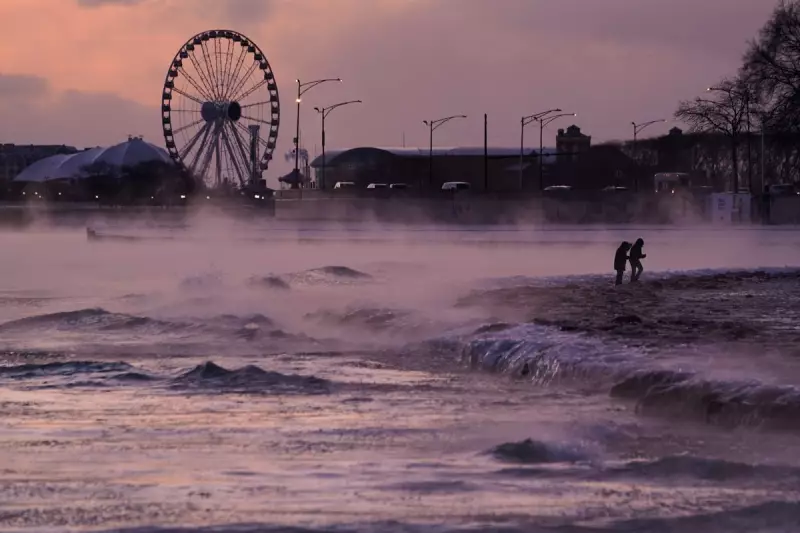
Alongside the snow and ice, dangerously low temperatures are compounding the crisis. The Midwest experienced wind chills as low as minus 40 degrees Fahrenheit (minus 40 Celsius), a level at which frostbite can occur within just 10 minutes of exposure.

Public awareness of the storm is high. Ayaz Ahmed, owner of the Saint Paul Mini Market in Baltimore, noted it was the sole topic of conversation for his customers. "Somehow, this time around, they did a good job letting people know... but how to deal with that is another thing," he observed, highlighting the gap between warning and preparedness.
For some, like University of Georgia sophomore Eden England, the storm has meant choosing community over caution. Despite the university encouraging students to leave campus dorms due to power loss concerns, England opted to stay with friends. "I'd rather be with my friends," she said, "kind of struggling together if anything happens." As the nation hunkers down, the focus now turns to weathering the storm and managing its prolonged aftermath.