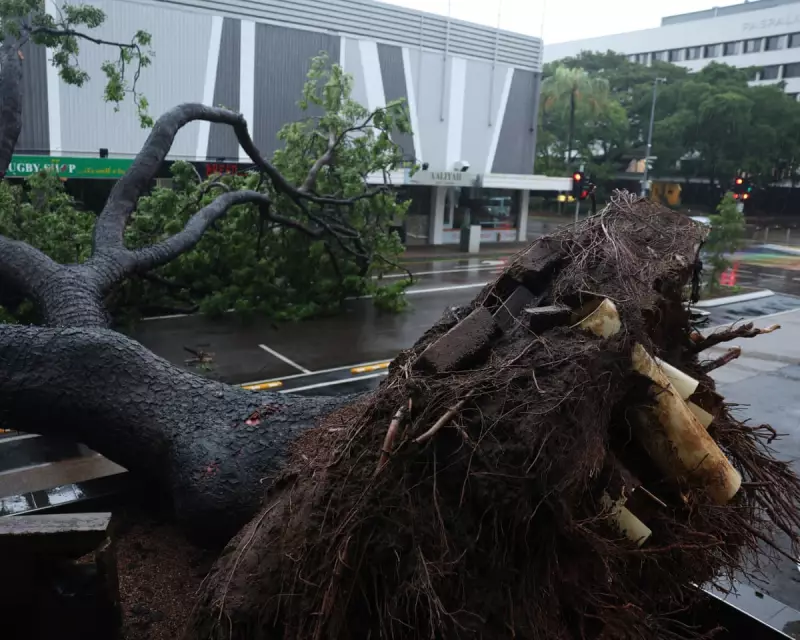
Northern Australia is reeling from the devastating impact of Tropical Cyclone Fina, which tore through the Top End region bringing destructive gales and torrential rainfall. The severe weather system has left a trail of destruction, with thousands of properties left without electricity and numerous buildings suffering significant structural damage.
Widespread Destruction and Emergency Response
The cyclone made landfall with considerable force, unleashing winds powerful enough to tear roofs from buildings and uproot mature trees. Emergency services reported receiving hundreds of calls for assistance as the storm battered communities across a wide area. Northern Territory Police issued urgent warnings for residents to remain indoors and avoid all non-essential travel as conditions deteriorated rapidly.
Power infrastructure suffered particularly severe damage, with fallen power lines and damaged substations leaving multiple communities in darkness. Energy companies have deployed emergency crews to assess the full extent of the damage, though restoration efforts are expected to take considerable time given the scale of destruction.

Community Impact and Infrastructure Damage
Local authorities have confirmed that numerous public buildings and private properties have sustained damage, ranging from minor structural issues to complete destruction in the worst-affected areas. The torrential rainfall accompanying the cyclone has also caused significant flooding, with several roads becoming impassable and isolating some communities.
Emergency shelters have been established in multiple locations to accommodate residents whose homes have become uninhabitable due to storm damage. The severe weather has also disrupted essential services, with telecommunications experiencing outages and water supplies affected in some regions.
Recovery Efforts and Weather Outlook
Clean-up operations are already underway in areas where conditions have sufficiently improved to allow safe access. However, emergency services have cautioned that many hazards remain, including debris-covered roads and potentially unstable structures. The Bureau of Meteorology continues to monitor the situation closely, though the cyclone has begun to weaken as it moves away from populated areas.
Government agencies are coordinating a comprehensive response to address both immediate emergency needs and the longer-term recovery requirements. Assessments of agricultural damage are also pending, with early reports suggesting significant impacts on local farming operations. The full economic cost of the cyclone's destruction will likely take weeks to properly calculate as the region begins the challenging process of rebuilding.