Storm Ingrid has unleashed a devastating assault on the coastal regions of Devon and Cornwall, with ferocious 60mph winds and towering waves causing significant structural damage to historic landmarks and critical infrastructure. The violent weather system, which swept across the UK overnight into Saturday, has left communities reeling from its destructive power.
Historic Pier Suffers Catastrophic Damage
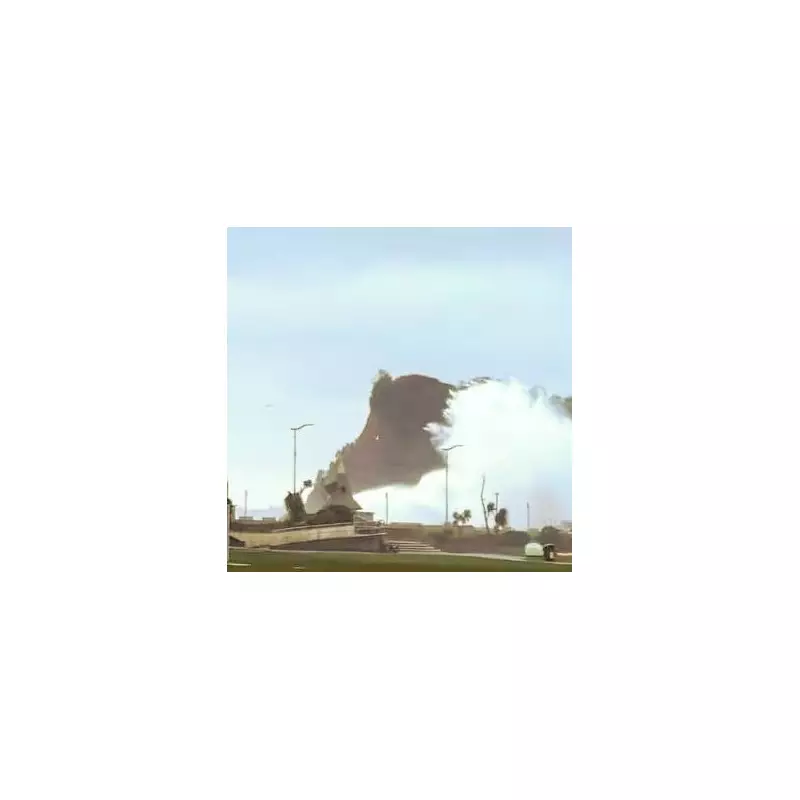
In Teignmouth, the storm's fury focused on the town's iconic Grand Pier, a cherished Victorian structure that first welcomed visitors in 1867. Massive waves battered the seaside resort, tearing away a substantial section of the pier's structure and washing it out to sea. Teignmouth mayor Cate Williams described the scene as "just wild" and confirmed the popular attraction had "taken a real battering."
"It has lost part of the pier structure itself, that has dissolved and gone away into the sea," Mayor Williams explained. "It's an old pier and it was needing some attention and I suppose age and wear and tear has taken its toll. It has survived many weather conditions as well as world wars. It's sad when you look at it now to see some of it now missing."

Before the storm's arrival, the family-owned pier remained partially open to the public, housing a popular arcade that attracted both locals and tourists. The damage represents a significant blow to the town's heritage and tourism economy.
Critical Railway Infrastructure Compromised
Sea Wall Collapse Halts Rail Services
Just a few miles along the coast in Dawlish, Storm Ingrid's relentless waves caused a partial collapse of the vital sea wall protecting the main railway line to the south west. The damage has forced the complete suspension of all train services between Exeter St Davids and Plymouth, creating major transport disruption across the region.
Local resident Peter Large witnessed the dramatic events unfold, reporting: "The wall is now gone at either end. I'm looking down at it now and there's a strip about 80 to 90 ft long where the wall has just crumbled. The waves are still crashing over the railway line and over the wall."
Network Rail responded by issuing a rare black alert – its highest possible warning level – as 12-foot waves continued to pound the damaged defences. This represents only the second time such an alert has been activated since devastating storms destroyed sections of the same track in 2014.
Transport Chaos and Cleanup Operations
Great Western Railway confirmed the complete cancellation of all trains between Exeter St Davids and Newton Abbot, citing unsafe conditions on the line. A company spokesman detailed the challenges facing restoration efforts: "There's been a significant amount of debris that the sea has thrown onto the track that will need to be cleared before we can run trains safely. The line remains closed and we have a limited bus replacement service operating. Clearly, if the same number of people choose to travel as normal you're going to find yourself waiting quite some time."
Liberal Democrat MP for Newton Abbot Martin Wrigley emphasised the strategic importance of the damaged railway, describing it as "a crucial lifeline for the entire south east" and calling for "more work" to protect the vulnerable coastal route. He added: "The wall beside the track at Sea Lawn Terrace has been demolished and there is literally tonnes of debris on the line, let alone the amount of water on the line."
Widespread Coastal Devastation
The storm's impact extended far beyond these two high-profile incidents, with multiple communities across Devon and Cornwall reporting significant damage. In the seaside village of Torcross, numerous properties suffered structural harm from the violent conditions.
Pete Moore, director of outdoor learning centre Forest and Beach, described experiencing the storm's intensity firsthand while dining at the Start Bay Inn on Friday evening: "You could feel the thud of the waves, it was picking up a lot. Not seen it so full-on like that for a while, with such strong south-east storm force winds, even though we have had storms recently. It just seemed it was up another level."

Nearby, Boathouse Cottage owner Allie Oldham surveyed heartbreaking scenes of destruction: "I've just been out and many houses are devastated. I could cry."
Additional Storm Damage Across the Region
The storm's effects manifested in various forms across the affected counties:
- In Exmouth, both a car and a truck became trapped in sand drifts along the seafront
- Multiple trees fell across roads, including the A377 near Lapford
- In Falmouth, Castle Beach Cafe owner Emily Davidson reported her converted shipping-container café had been "bashed in" by powerful waves
Ms Davidson detailed the extensive damage to her business: "We have loads of water coming in. All of our electrics have failed. We had some glass sliding doors that have snapped. It's really disheartening - you spend a lot of money to storm-proof it and then the damage still happens."
Ongoing Weather Warnings and Recovery Challenges
The Met Office maintains a yellow warning for rain across Devon, Cornwall, south-west Somerset, west Dorset and south Wales until 10pm, while the Environment Agency has implemented flood warnings along the south Devon and south Cornwall coasts.
This latest severe weather event compounds recovery efforts still underway from Storm Goretti, which recently brought 99mph gusts to the Isles of Scilly. Forecasters described that storm as one of the most impactful to hit Cornwall and the islands in three to three-and-a-half decades.
Further disruption appears imminent, with another yellow weather warning scheduled from Monday evening into Tuesday. Forecasters predict up to 80mm of rainfall could accumulate on higher ground, including Dartmoor, raising additional concerns about flooding and continued disruption to communities already struggling with Storm Ingrid's aftermath.