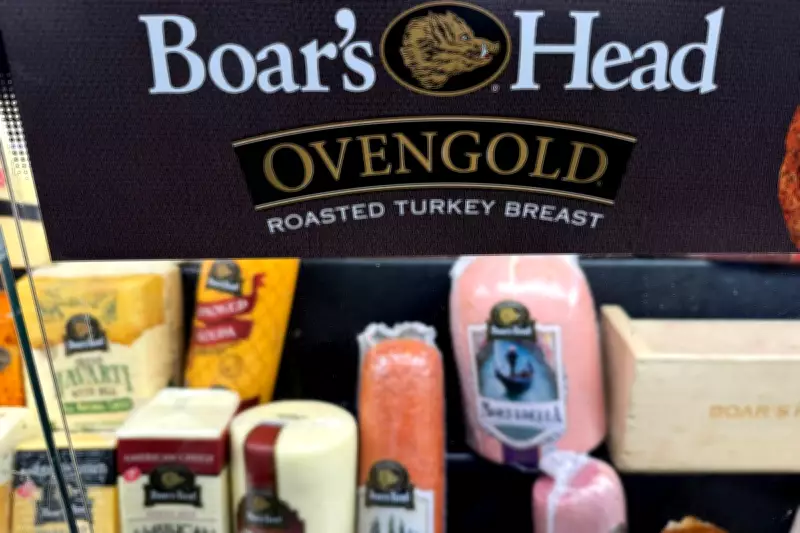
Boar's Head Plant Reopens After Deadly Listeria Outbreak That Killed 10 People
A Boar's Head deli meat plant linked to a fatal food-poisoning outbreak has resumed limited operations in Jarratt, Virginia. The facility reopened on Monday, nearly 17 months after it was shut down due to a listeria outbreak in 2024 that resulted in 10 deaths and dozens of illnesses.
The 120-year-old company, headquartered in Sarasota, Florida, permanently discontinued production of liverwurst and recalled over 7 million pounds of deli products following the outbreak. Natalie Dyenson, Boar's Head chief food safety officer, stated that the Jarratt plant has been extensively renovated and rigorously tested to eliminate contamination risks.
Extensive Renovations and Safety Measures Implemented
"That facility has literally been rebuilt from the inside out," Dyenson told The Associated Press on Wednesday. She detailed comprehensive upgrades including replacement of floors, drains, and air filtration systems, along with the separation of production areas for raw and ready-to-eat foods. The company conducted nearly 12,000 swab tests searching for listeria and hired new management and staff.

Boar's Head has voluntarily adopted a stricter U.S. Department of Agriculture standard for listeria control, requiring a "kill step" to prevent bacterial growth in most finished deli products. The U.S. Agriculture Department confirmed that federal inspectors are now present at the site.
Ongoing Sanitation Issues at Another Facility
The reopening occurs alongside recent inspections at another Boar's Head plant in Petersburg, Virginia, which documented sanitation problems similar to those federal health officials believe contributed to the deadly outbreak. Records obtained through a Freedom of Information Act request revealed dozens of "noncompliance reports" between July and December 2025.
These reports detailed multiple violations including dripping condensation, meat residue left on equipment and in drains, and failures to follow the company's own listeria testing and monitoring procedures. One inspector noted on October 25: "Today's incident marks the fifth occurrence of this noncompliance in a month," after discovering ham molds "dirty with smeared residue."
Company Response and Consumer Concerns
Dyenson acknowledged that documentation of continued problems "sounds very disturbing," but emphasized the company's aggressive efforts to reduce noncompliance across all plants to zero. She maintained that specific issues with liverwurst equipment and production, rather than dried food residue, caused the fatal outbreak.
"I know it sounds gross, but from a food safety risk perspective, that dried-on residue has gone through a lethality step" that kills germs, she explained.
Food safety advocates expressed skepticism about consumer trust rebuilding. Brian Ronholm, director of food policy for Consumer Reports, noted in an email: "It's not helpful in rebuilding that trust if the inspection reports from Petersburg highlight a deeper food safety cultural problem within the company."
Political Scrutiny and Legal Consequences
Rep. Rosa DeLauro, a Connecticut Democrat critical of Boar's Head, stated the company "must be held fully accountable for this repeated pattern of jeopardizing food safety through unsanitary conditions." Boar's Head officials declined to appear in person before the Congressional Food Safety Caucus, responding to concerns in writing instead.
"In the meantime, I will be demanding answers as to why they feel these plants are suitable for continued operations," DeLauro said in a statement.
Boar's Head faced multiple lawsuits from affected individuals and families of those who died. Several survivors declined to comment on recent inspection reports, citing financial settlements with the company that included nondisclosure agreements.