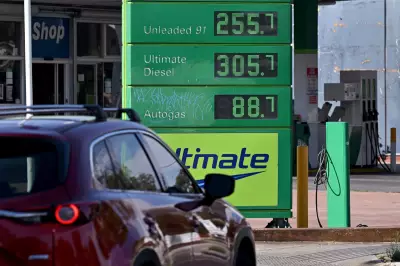
The ongoing conflict in the Middle East is delivering a dual blow to Australians, impacting not only fuel prices but also eroding retirement savings as superannuation balances take a significant hit. Since the outbreak of war, the Australian share market has plummeted by approximately seven per cent, equating to a staggering loss of around $250 billion in value.
Expert Predictions and Market Corrections
Shane Oliver, head of investment strategy and chief economist at AMP, has issued a sobering forecast, suggesting the Australian share market could continue its downward trajectory by as much as fifteen per cent. "I think the most likely scenario right here, right now, is that we are in the midst of a correction," Mr Oliver stated, highlighting the precarious nature of current financial conditions.
Inflationary Pressures and Personal Losses
The war has exacerbated global economic tensions, driving oil prices beyond $US110 per barrel and intensifying inflationary pressures, which have in turn prompted further interest rate hikes. For individual Australians, the consequences are starkly personal. Colin Park, aged 67, recounted to the ABC how an eye-watering $17,000 was wiped from his superannuation in just the first week of the conflict. "Unnerving, I think, is the first thing [I would describe it as]," he said. "Probably a stiff scotch, followed by a dose of reality."

Superannuation Composition and Strategic Adjustments
Australia's superannuation pool is valued at about $4.5 trillion, with residents nearing retirement typically holding average savings of around $250,000. According to Super Ratings, balanced super funds generally comprise a mix of assets, including infrastructure like airports or toll roads, commercial or industrial property, and often some private equity. For those concerned about their superannuation balance, a common strategy involves shifting funds from shares to cash, a move that can be executed within a few days by adjusting investment allocations.
Risks of Timing and Expert Advice
However, experts caution against reactive decisions. Brett Craig, director at Aura Group, warned that altering investment balances can lead to missed opportunities if asset prices rebound. "So I would say, be careful not to sell out at the bottom and crystallise your losses," he advised. "[If you] hold your nerve, markets will, as we've seen in the past, revert to the mean." This sentiment is echoed by superannuation fund managers, who consistently advocate for patience and avoiding panic-driven actions.
Historical Context and Long-Term Perspectives
Reflecting on past crises, had Australians switched their super into cash at the lowest point of the Global Financial Crisis in 2008, their balances would now be at least double those of members who remained in balanced options. This historical insight underscores the importance of a measured approach during market volatility, reinforcing the advice to maintain a long-term perspective despite immediate financial setbacks.