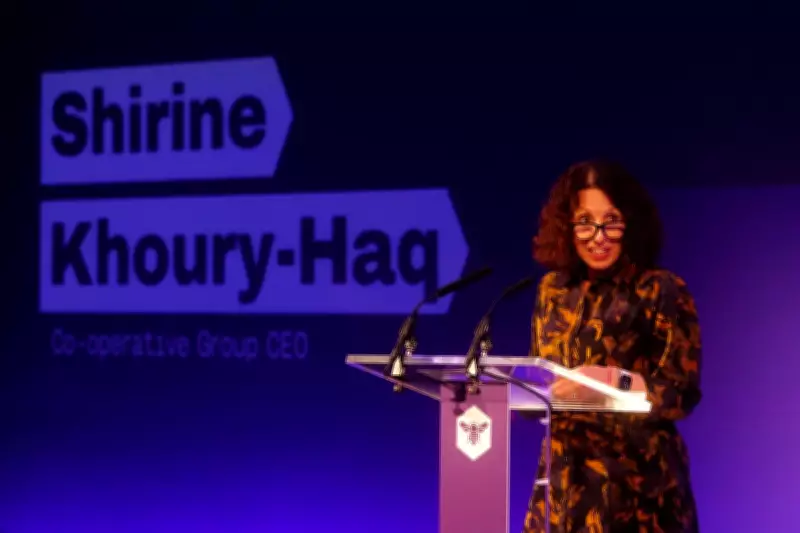
Co-op Chief Executive Announces Departure Amid Workplace Culture Controversy
The chief executive of the Co-operative Group, Shirine Khoury-Haq, has confirmed she will step down from her role at the retail and funeral care business. This announcement coincides with the firm's revelation of ambitious plans to slash costs by a substantial £200 million throughout the current year. The departing leader did not dismiss the possibility of job reductions as the organisation strives to recover from considerable financial setbacks.
Leadership Transition and Interim Appointment
Ms Khoury-Haq is scheduled to officially leave her position on March 29, concluding a tenure of four years as chief executive and nearly seven years with the company. Kate Allum, a member-nominated director on the Co-op Group board, will assume the role of interim chief executive. Her immediate responsibility will be to guide the 1844-founded business while a permanent successor is sought, focusing on reigniting growth initiatives and steering the group back to profitability.
Cost-Cutting Measures and Financial Pressures
In a recent update, the Co-op disclosed it is actively working to eliminate £200 million in costs during 2026. Ms Khoury-Haq explained to the Press Association that these measures are partly necessitated by elevated labour expenses and increased taxation burdens. She emphasised, "I have always been honest and can never promise that there would not be an impact on jobs." However, she assured that any affected employees would be treated with respect and efforts would be made to find them new roles within the organisation.

Allegations of Toxic Workplace Environment
The CEO's departure follows closely on reports from February highlighting concerns about the culture at the highest levels of the group. According to previous accounts, a letter purportedly representing the views of numerous senior managers was sent to the chair and another board member last month. This correspondence reportedly complained of a culture characterised by "fear and alienation," where some senior staff felt intimidated about voicing concerns regarding business decisions in front of management, including Ms Khoury-Haq.
At the time, the Co-op defended its culture and the conduct of its leadership team, stating it did not believe these criticisms reflected the broader sentiments of its leadership and colleagues. The grocery and services chain reiterated its commitment to a positive working environment despite these allegations.
Cyber Attack Fallout and Financial Performance
Ms Khoury-Haq led the Co-op through the aftermath of a significant cyber attack in late April last year, where hackers accessed and extracted personal data of members. The incident resulted in empty shelves and payment issues for shoppers, with lasting effects on trading throughout the year. Fresh financial figures revealed the attack contributed to a £107 million hit, exacerbating the company's losses.
The Co-op reported an underlying pre-tax loss of £126 million for the year ending January 3, a stark contrast to the £45 million profit recorded in the previous year. Revenues declined by 2.3% to £11 billion, with the cyber attack alone impacting revenues by £285 million. The group also faced additional challenges, including "layered headwinds" of approximately £150 million due to rising regulatory and labour costs, and noted a "contracting convenience market" affecting its performance.
CEO's Statement and Future Strategy
In her statement on Thursday, Shirine Khoury-Haq expressed, "It has been an honour to lead our Co-op as chief executive. Following last year's cyber attack, the organisation is now ready to deliver on an ambitious strategy of stabilisation and transformation. This extends beyond the timeframe I had planned for my CEO tenure and now is the right moment to hand over to leadership that can commit to seeing the strategy through."
The Co-op acknowledged it "lost trading momentum" as it concentrated on recovery efforts, with shopper behaviour shifting post-attack and transactions being affected persistently. The interim leadership under Kate Allum will now be tasked with navigating these challenges while implementing the cost-cutting measures and cultural reassessments necessary for a sustainable turnaround.