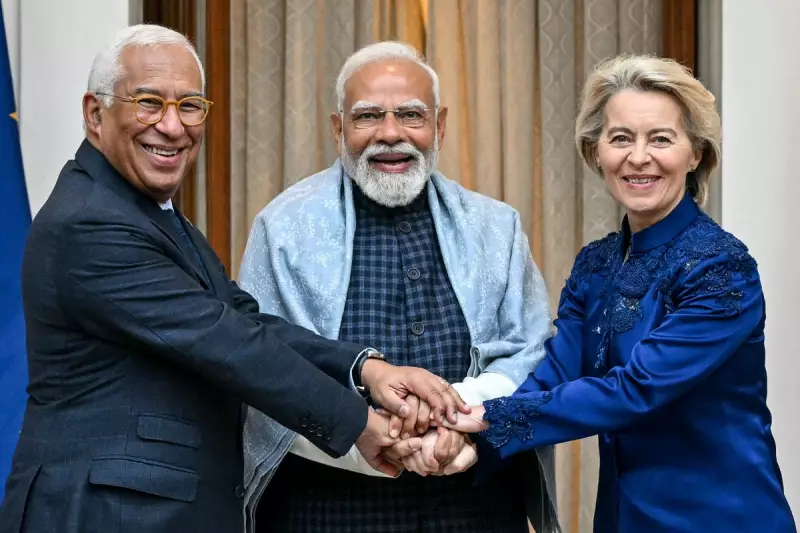
In a momentous development for global commerce, India and the European Union have successfully finalised a historic free trade agreement, bringing to a close nearly two decades of complex and protracted negotiations. The landmark pact was officially announced at a high-profile summit held in Delhi, where Indian Prime Minister Narendra Modi stood alongside key European Union officials, including European Commission President Ursula von der Leyen and European Council President Antonio Costa.
A Deal Two Decades in the Making
Both negotiating parties have enthusiastically described the newly minted agreement as "the mother of all trade deals," a testament to its unprecedented scale and potential impact. The agreement establishes a formidable free trade bloc that encompasses an astonishing two billion people and represents approximately a quarter of the entire global economy. This monumental achievement follows a negotiation journey that first commenced in 2007, faced a prolonged hiatus, and was ultimately reignited in July 2022.
Overcoming Key Negotiation Hurdles
The path to finalisation was not without its significant challenges. Negotiators from both sides worked diligently to overcome several critical sticking points that had previously stalled progress. Among the most contentious issues were securing adequate market access for European automobile manufacturers seeking to expand their presence in the vast Indian market. Additionally, negotiations carefully navigated the sensitive topics of agricultural product tariffs and the implementation of carbon-linked climate tariffs, which required delicate balancing of economic and environmental priorities.

The successful resolution of these complex issues underscores the commitment of both India and the European Union to forging a comprehensive and mutually beneficial economic partnership. While the core agreement has now been finalised, the formal signing ceremony is anticipated to occur within the next five to six months. This interim period will allow for a thorough legal vetting process, ensuring all contractual details and provisions are meticulously reviewed and ratified by the respective legal teams before the deal is officially enacted.
This agreement marks a pivotal shift in global trade dynamics, potentially setting a new benchmark for international economic cooperation between major economic blocs. The culmination of these twenty-year negotiations signals a new era of strengthened economic ties, increased market integration, and enhanced collaborative opportunities between the European Union and one of the world's fastest-growing major economies.