The European Union has successfully concluded comprehensive trade negotiations with India this morning, marking a significant milestone in international economic relations. The agreement, described by European Commission President Ursula von der Leyen as "the mother of all trade deals," represents the culmination of nineteen years of complex discussions between the two economic powerhouses.
A Transformative Economic Partnership
At the heart of this historic accord is a substantial opening of India's traditionally protected market. According to Reuters reports, New Delhi has committed to dramatically reducing tariffs on automobiles, cutting them to 10% over a five-year period from previous rates that reached as high as 110%. This represents one of the most significant market access concessions India has ever granted to a trading partner.
The European Union has highlighted that the agreement will also substantially lower tariffs on a wide range of EU exports entering the Indian market. Key sectors benefiting from these reductions include machinery, electrical equipment, various chemical products, and iron and steel goods. This comprehensive tariff reduction package is designed to create substantial new trading opportunities for European businesses across multiple industrial sectors.

Creating a Market of Over Two Billion People
The European Union has emphasised the extraordinary scale of this new economic partnership, noting that it creates an integrated market encompassing more than two billion people. EU officials have stated that this represents "the most ambitious trade opening that India has ever granted to a trade partner," highlighting the unprecedented nature of the concessions made by New Delhi.
European Commission data reveals that the EU and India already conduct substantial trade, with goods and services exchanges worth over €180 billion annually. This existing trade relationship supports approximately 800,000 jobs within the European Union. With the implementation of this new agreement, the EU projects that its goods exports to India could potentially double by the year 2032, creating significant new economic opportunities for European industries and workers.
Political Significance and Global Context
Indian Prime Minister Narendra Modi welcomed the agreement with considerable enthusiasm, describing it as "the two largest democratic powers of the world adding a decisive chapter to their relations." He further characterised the pact as "the largest ever free trade agreement in its history," underscoring its importance to India's economic development strategy.
The timing of this agreement carries substantial geopolitical significance. The European Union has been actively pursuing new trade partnerships to diversify its economic relationships amid increasingly uncertain relations with the United States under the tariff-focused policies of former President Donald Trump. This strategic realignment follows closely on the heels of another major EU trade achievement earlier this month - the signing of a comprehensive agreement with the South American Mercosur bloc after twenty-five years of negotiations.
Ratification Process and Implementation
While the political agreement has been reached, the deal must still navigate the formal ratification process before taking full effect. This will require approval from individual EU member states as well as the European Parliament, a procedural journey that typically involves detailed scrutiny and potential amendments.
European Council President António Costa, who holds overseas citizenship of India through his Goan heritage, emphasised the broader implications of the agreement. He stated that the deal "sends a clear message to the world at a time when the global order is being fundamentally reshaped," highlighting its significance beyond mere economic considerations.
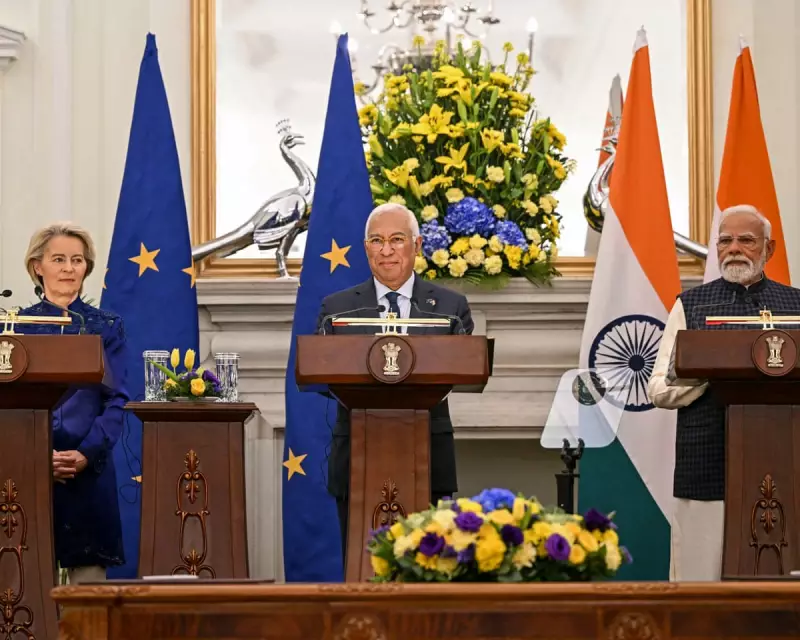
The joint announcement was made during a press statement at Hyderabad House in New Delhi, where Prime Minister Narendra Modi stood alongside European Council President Antonio Costa and European Commission President Ursula von der Leyen to present the details of this transformative agreement to the international community.