Indonesia Strengthens State Control Over Nickel Industry Amid Global Scramble
Indonesia is significantly tightening state control over its globally crucial nickel supply, a strategic move that comes after years of banking on the metal to establish a domestic electric-vehicle industry. This shift occurs just as global demand begins to pivot away from heavy reliance on nickel, yet the decision is poised to send ripples through international EV supply chains, particularly as the United States and China fiercely compete for access to critical minerals.
Dominance and Environmental Costs of Indonesia's Nickel Sector
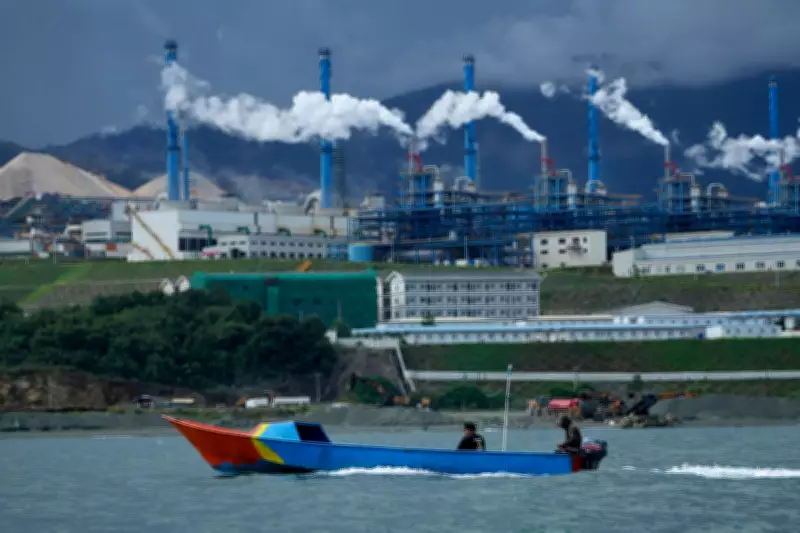
Indonesia sits at the epicentre of the nickel market, with its share of global supply soaring to approximately 60% in 2024, up from 31.5% in 2020, according to S&P Global Market Intelligence. This dramatic increase followed former President Joko Widodo's ban on raw ore exports, which triggered a surge of Chinese-backed investment into refining operations. Jakarta's vision was for nickel to underpin a fully integrated domestic EV industry, spanning from mining and battery production to finished car manufacturing.
However, experts note that this promise was often used to justify extensive forest clearing and mining expansion under the banner of the energy transition, even as climate risks escalated. Between 2001 and 2020, mining activities drove the loss of about 370,000 hectares of Indonesian forests—more than in any other country—with over a third being old-growth rainforests critical for carbon storage, according to the World Resources Institute.

The environmental toll extends further. The heavy reliance on coal to power Indonesia's nickel smelters has hampered the nation's energy transition, adding new fossil-fuel demand despite emission reduction goals. A 2024 analysis by the Institute for Energy Economics and Financial Analysis found that major nickel producers emitted around 15 million metric tons of greenhouse gases in 2023, largely due to coal dependency.
Crackdown and Shifting Market Dynamics
In 2025, Indonesia launched a crackdown on what it termed illegal exploitation of natural resources, alleging that many mining and plantation licenses were tainted by bribery or never properly authorised. Authorities have seized more than 4 million hectares of mines, palm oil plantations, and processing sites, levied $1.7 billion in fines, and could confiscate another 4.5 million hectares this year.
Analysts warn this regulatory offensive coincides with a decline in nickel's economic payoff, as many Chinese EV manufacturers are transitioning to battery chemistries that use far less nickel, favouring iron-based designs like lithium iron phosphate (LFP) batteries. LFP batteries are cheaper, more stable, and longer-lasting, and are now used in nearly half of all EVs globally, according to the International Energy Agency.
"The forests have been exploited to the brim," said Putra Adhiguna of the Jakarta-based Energy Shift Institute. "But you never got the electric-vehicle value chain."
Geopolitical Tensions and Investment Uncertainty
Indonesia's nationalisation drive could potentially loosen Beijing's grip on segments of the supply chain, offering Jakarta greater leverage to attract U.S. buyers and investors. As part of ongoing trade negotiations with the administration of U.S. President Donald Trump, Indonesia has invited American investment in its critical minerals sector and may consider lifting the ban on raw nickel exports to the U.S.
Yet, Indonesia finds itself in a precarious position, caught between the competing interests of two superpowers. "How does Indonesia straddle between the two superpowers who both want to gain control of the national resource that Indonesia has?" questioned Li Shuo, director of the Asia Society Policy Institute's China Climate Hub. Other Southeast Asian nations, similarly "sandwiched" between the U.S. and China, are closely monitoring Indonesia's actions.
The recent land seizures risk further destabilising the nickel industry, creating uncertainty that could deter foreign investment. Bhima Yudhistira of the Center of Economic and Law Studies in Jakarta cautioned, "This is making the future of nickel, both mining and downstream processing, unknown. Uncertainty is very costly for investors."

Despite early interest from South Korean and Chinese investors, Indonesia's ambition to build a domestic EV industry has fallen short. While Hyundai Motor Group and LG Energy Solution opened Indonesia's first EV battery-cell plant in July 2024, LG later withdrew from a larger $8.4 billion battery investment in April 2025. The country's EV market remains small, with sales of over 43,000 electric vehicles in 2024 accounting for only about 5% of total car sales, and public charging infrastructure is limited.
As Indonesia tightens its control over nickel, the nation navigates a complex landscape of environmental degradation, shifting technological trends, and intense geopolitical rivalry, with the global EV supply chain hanging in the balance.