The Bloodhound Battle Dividing Rural Sussex
For multi-millionaire financial entrepreneur Ivan Massow, life has never been short of dramatic confrontations. From courtroom battles with Zurich insurers two decades ago to political campaigns against Boris Johnson in the 2016 London mayoral election, and personal struggles with addiction, he has faced numerous challenges. Yet nothing, he claims, compares to the distressing conflict unfolding with the Coakham Bloodhounds Hunt near his East Sussex home.
A Rescue Mission Turns Sour
Massow's recent troubles began when he attempted to rescue the historic hunt from collapse. Following the sudden death of Master Huntsman Nick Matthews in 2022, the organization found itself in disarray with uncertain finances and growing concerns about hound welfare. Massow stepped forward with what appeared to be a lifeline: offering to serve as Huntsman while providing horses, quad bikes, veterinary coverage, new kennels, and financial support totaling over £1.5 million.
"I just wanted to help," Massow explains. "Maybe they thought I wanted to take over - but I never wanted that. I'm a busy man."

Cultural Clashes and Committee Resistance
The hunt's long-standing committee, comprising farmers, landowners, nurses, teachers, and other local volunteers, initially accepted Massow's generous offer after extensive negotiations. However, cultural differences soon emerged. Massow describes himself as an outsider in this traditional community: "I've always been an outsider. I'm gay and I've always been a bit different. I can't socialise so well."
Unlike committee members from families with centuries-old local roots, Massow grew up in foster care, left school without qualifications, made his first million by age 23, and has lived internationally between Barcelona and Los Angeles. Despite these differences, his passion for the hunt was genuine, having served as master on and off for decades since first mucking out horses for free rides as a teenager in Lewes.
Modernization Meets Tradition
Initially, Massow's leadership brought positive changes. Members reported new energy at meets, increased membership through his celebrity connections, and innovative approaches like applying eucalyptus scent to runners to prevent dogs from being distracted by deer or ramblers. He purchased former beagle kennels for £240,000, described by his groom Diane James as "a palace" compared to previous facilities.
Yet behind the scenes, tensions simmered. Committee member Claire Miles raised numerous concerns about the new kennels, requiring fence replacements, ditch re-digging, planning permission, soundproofing, drainage, electrical work, and CCTV installation. Though Massow initially embraced these demands and organized fundraising events, relations deteriorated further when he rehomed an elderly hound named Sergio from the widow of the previous Huntsman, drawing committee fury despite what he describes as terrible living conditions that prompted RSPCA involvement.
The Breaking Point
On October 21 last year, matters reached crisis point when Massow was excluded from a committee meeting where members passed a vote of no confidence in his leadership. The same day, they arrived with a lorry to collect over a dozen hounds from his property, including Agnes, a six-year-old bitch who frequently visited his kitchen. "I was devastated," Massow recalls. "Suddenly my horses had no riders and I was making up jobs for my staff. And I didn't know what I'd done wrong."
Even after his effective dismissal, Massow remained committed, offering to retain the kennels for potential future use and maintain financial support. Instead, he faced what he describes as "typical of the sort of thing people said about gays back in the 1980s" - unpleasant rumors circulating about his personal life and character.

Animal Welfare Concerns Escalate
Most distressing for Massow are reports about the hounds' welfare. He has heard accounts of some dogs being shot, others so bored and under-exercised that they attack and kill each other. Tragically, Agnes's body was recently found dumped in a meat bin at a knacker's yard. "A few weeks ago she was fine. She was lying right there by my sofa! I'm totally devastated," he says emotionally.
The hunt's current state appears precarious despite positive social media portrayals. Insiders describe less frequent, more chaotic meets with dramatically reduced packs. Some dogs remain at Nick Matthews' farm (which recently passed its MDBA inspection), while others will be sent to Sandhurst for £27,000 annual livery costs.
Legal Resolution and Uncertain Future
After consulting lawyers who advised that his exclusion meeting was illegal, Massow reached a settlement last month receiving six hounds back, some of which he bred. The hunt committee released only an anodyne statement acknowledging his continued mastership while declining further comment to the Daily Mail.
Byron John, master of a South Wales hunt, criticizes the committee's approach: "This sort of attitude is why modern day hunting is in the state it's in. They won't discuss it - can't admit they're wrong. They saw him as a threat and did for him."
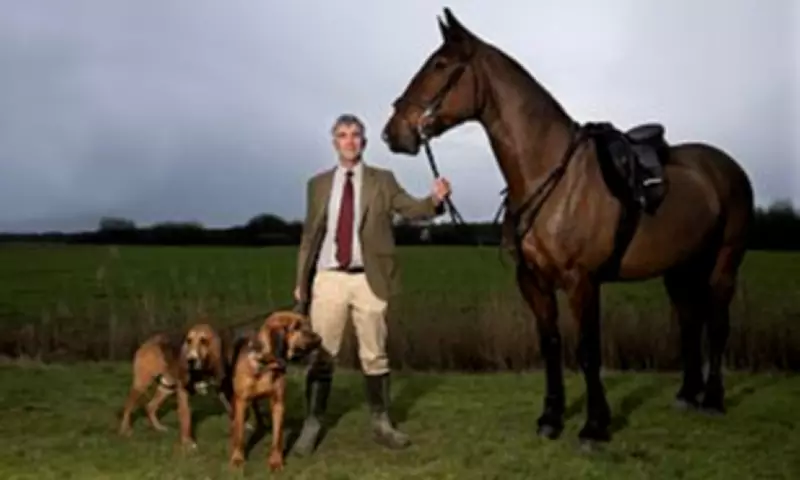
Massow, now with twelve bloodhounds including those returned, jokes about starting his own hunt called The Sussex, but insists: "I never wanted to run anything. I just wanted to help with something I loved." Reflecting on the experience, he adds sadly: "I think I'm just better with animals than humans, though I am constantly working on myself."
The Coakham Bloodhounds, established in 1976 by vegetarian Neil Wates as a "clean foot hunt" pursuing human runners rather than animals, now faces an uncertain future while Massow grapples with the emotional toll of what began as a rescue mission for an institution he cherished.