For budding gardeners eager to escape the winter gloom, starting seeds indoors offers a perfect head start towards a vibrant spring garden. You don't need a greenhouse or vast space; a simple sunny windowsill can become your nursery for future vegetables, herbs, and flowers, ready to transplant once the frost has passed.
Why Start from Seed?
According to horticulturist and best-selling author Huw Richards, growing from seed unlocks far greater variety and transparency. "It’s like the difference between fast food and a home-cooked meal," he explains. "With seeds, you know exactly what's gone into your plants, free from unknown composts or chemicals." His new book, How To Grow Food, co-authored with chef Sam Cooper, is set for release on 12 March 2026.
Essential Kit for Indoor Sowing
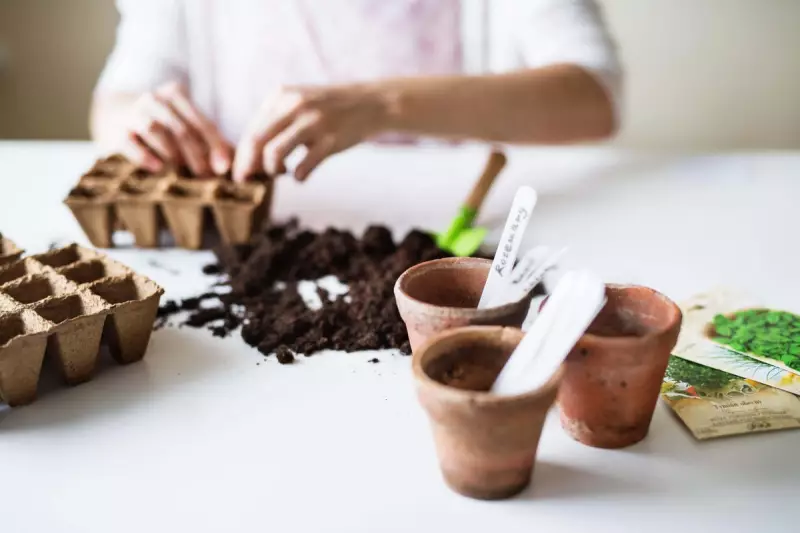
Getting started requires a few key items: seed trays (with or without cells), good quality peat-free multi-purpose compost, and your chosen seeds. For early sowing, a heated propagator or heat mats are ideal to encourage germination. Useful extras include lids with ventilation for trays, a fine mist sprayer for gentle watering, plant labels, and a waterproof marker.

Mastering Water, Heat, and Light
Richards, who is also a Gardena brand ambassador, emphasises three critical factors: water, heat, and light. "The most common error is overwatering, which causes seeds to rot," he warns. "The compost should be damp, like a wrung-out sponge."
Early crops like chillies, aubergines, and bell peppers need warmth to germinate successfully. "Some people use an airing cupboard, moving trays to a sunny windowsill at the first sign of growth to prevent leggy seedlings," he notes. While specialised propagators with LED lights are available, any ambient warmth will help.
Windowsill Wisdom and Sowing Timelines
For those limited to a windowsill, investing in roll-up heat mats can make all the difference. Richards advises that chillies and aubergines can be started in late February, while tomatoes are best sown towards the month's end. "Start tomatoes too early and they'll outgrow their pots long before it's warm enough to plant them out," he explains.
Flower seeds like calendula, cosmos, and nigella can also be sown from February, but they too benefit from bottom heat. "These are heat-loving plants," Richards points out. "Without it, you may only see the odd seedling succeed." If you lack heated accessories, simply wait until mid-spring when temperatures rise naturally.
Practical Sowing and Aftercare Tips
Always begin by dampening your compost before filling trays. Sow seeds as directed on the packet, opting for deeper pots for large seeds like broad beans. Once seedlings emerge on a south-facing sill, rotate the trays daily for even growth. Water with a fine spray when the compost dries.
When the seedlings develop three to four 'true leaves' (the leaves that follow the initial seed leaves), they can be pricked out into larger cells. For plants like radish, sow in clumps and harvest the largest first. If two tomatoes sprout in one cell, "cut out the weakest, don't pull it, to avoid damaging the other's roots."
The Virtue of Patience
Finally, Richards urges gardeners to be patient. "My biggest sowing month is actually May," he reveals. "Plants catch up. You can still sow tomatoes in early April and get a fantastic crop. There's loads of time."