Earth's Climate System in Unprecedented Crisis as Energy Imbalance Hits Record High
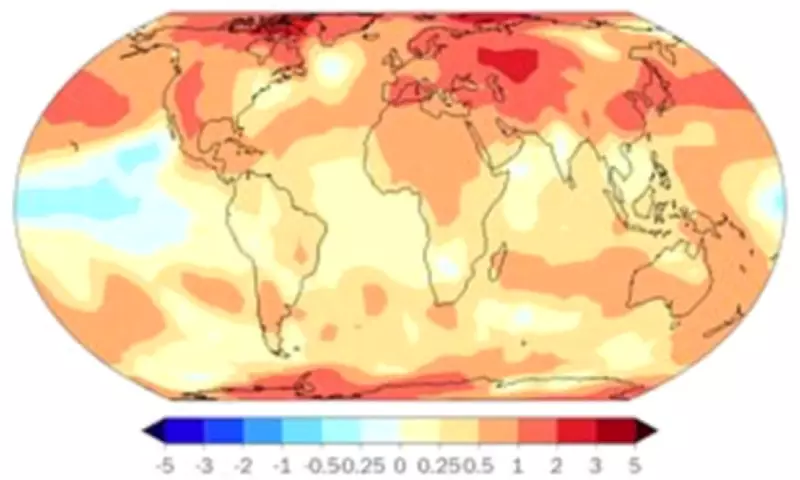
A shocking new report from the World Meteorological Organisation (WMO) has revealed that Earth's climate is more out of balance than at any point in recorded history. The comprehensive State of the Climate report shows humanity has just endured the eleven hottest consecutive years from 2011 through 2025, with last year ranking as the second or third hottest on record.
Critical Climate Indicators All Flashing Red
Every major climate indicator is now flashing red according to scientists, from global temperatures and greenhouse gas concentrations to sea levels and glacier retreat. The report provides the first clear measurement of Earth's energy imbalance, which has reached its highest level in the 65-year observational record.
UN Secretary-General António Guterres delivered a stark warning: 'Planet Earth is being pushed beyond its limits. Every key climate indicator is flashing red.' The average temperature in 2025 reached 1.43°C (2.57°F) above the 1850–1900 pre-industrial baseline, continuing a dangerous warming trend.

Greenhouse Gases Reach Historic Highs
The WMO confirms that concentrations of greenhouse gases have reached their highest levels in history. Carbon dioxide now measures 423 parts per million in the atmosphere, representing 152% of pre-industrial levels and the highest concentration in two million years.
Methane concentrations stand at 266% of pre-industrial levels, while nitrous oxide has reached 125% of historical baselines. These gases trap infrared radiation in the atmosphere, preventing heat from escaping and creating an energy imbalance that drives rapid warming of both the atmosphere and oceans.
Oceans Absorb Overwhelming Majority of Excess Heat
More than 91% of the world's excess heat is being absorbed by the oceans, driving unprecedented marine warming. Ocean heat content reached a record high in 2025, with the rate of ocean warming doubling from the 1960-2005 period to the 2005-2025 timeframe.
WMO Secretary-General Celeste Saulo explained: 'Scientific advances have improved our understanding of the Earth's energy imbalance and of the reality facing our planet and our climate right now.' The oceans now absorb between 11 and 12.2 zetajoules of heat energy annually, equivalent to 18 times humanity's total yearly energy consumption.
Five Key Climate Indicators at Critical Levels
The WMO identifies five critical indicators showing alarming trends:
- Temperature: The last 11 years represent the hottest consecutive period ever recorded
- Greenhouse gases: Carbon dioxide concentrations are the highest in two million years
- Ocean heating: Ocean warming is occurring at its fastest recorded rate
- Sea ice: Arctic sea ice reached near-record lows in 2025
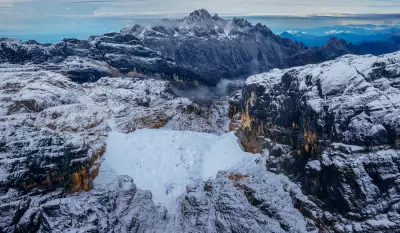
- Glaciers: Mass loss from glaciers in 2025 was among the five worst years on record
Rising Seas and Melting Ice Accelerate
Sea levels in 2025 matched their record highs from 2024, sitting 4.3 inches (11 cm) higher than when satellite records began in 1993. The Intergovernmental Panel on Climate Change estimates sea levels could rise by 3.2 feet (one metre) by 2100 without climate action, though recent studies suggest even higher increases in some regions.
Arctic sea ice extent reached near-record lows in 2025, while Antarctic ice extents ranked as the third lowest on record. Glacier mass loss from 2024 to 2025 was among the five worst years ever documented, with exceptional melting in Iceland and along North America's Pacific coast.
Extreme Weather Events Intensify
A warmer atmosphere carrying more energy and moisture is producing more frequent and severe extreme weather events. Hurricane Melissa, which struck the Caribbean late last year as Jamaica's most powerful storm in history, was made four times more likely by climate change according to researchers.

Dr. Mortlock, head of climate analytics at the University of New South Wales, warned: 'Even seemingly small increases in temperature can have outsized effects on extreme weather. The frequency and intensity of bushfires, floods, cyclones and hailstorms are all linked to the warming of the atmosphere.'
Disease Spread and Human Impacts
Warmer, wetter conditions are expanding the habitat of disease-carrying mosquitoes northward into European cities including London, Vienna, Strasbourg, and Frankfurt. Their rate of northward spread in France has accelerated from about 6km per year in 2006 to 20km per year in 2024.
Following a 2023 cyclone in Peru, a dengue fever outbreak was ten times larger than normal for the area, with weather conditions making such outbreaks three times more likely due to climate change.
Long-Term Consequences and Urgent Warnings
WMO scientists warn that the large-scale changes identified in the report could impact the planet for hundreds, if not thousands, of years. Dr. Akshay Deoras, senior research scientist at the University of Reading, noted that El Niño conditions developing later this year could push global temperatures to new records in 2026-2027.
Professor Scott Heron of James Cook University offered a sobering analogy: 'If rainforests are thought of as the lungs of our planet, the ocean provides the heart and circulation – and human-induced climate change is giving us all heart disease.'
The report concludes with an urgent warning from UN Secretary-General Guterres: 'The State of the Global Climate is in a state of emergency. Today's report should come with a warning label: climate chaos is accelerating and delay is deadly.'