Arctic Doomsday Vault Receives Major Seed Deposit to Safeguard Global Agriculture
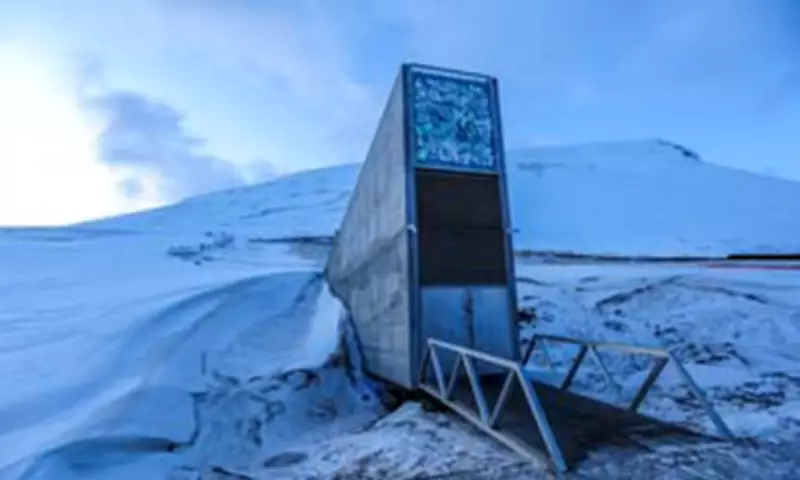
Deep within a mountain on the remote island of Spitsbergen in Norway's Svalbard archipelago lies a facility that might seem like a Bond villain's lair, but serves a critical real-world purpose. The Svalbard Global Seed Vault, often dubbed the 'Doomsday Vault', has recently bolstered its collection with over 7,800 new seed varieties, pushing its total holdings to an impressive 1,386,102 unique seeds.
A Global Insurance Policy for Agriculture
This latest deposit includes staple grains from Africa, olives from Spain, and ancient crops from Guatemala, marking the first time seeds from Guatemala and Niger have been included in the vault. Dr Stefan Schmitz, Executive Director of the Crop Trust, emphasises the vault's importance: 'Backing up seeds in Svalbard is one of the easiest and most effective steps the world can take to protect the foundation of agriculture.'
The vault operates as a final 'global backstop' for seed banks worldwide, many of which are vulnerable to natural catastrophes, war, funding shortages, or poor management. Unlike typical seed banks, it uses 'black-box conditions', where depositors retain ownership and exclusive withdrawal rights, focusing solely on disaster recovery rather than research.

Engineering for Eternal Preservation
Seeds are stored more than 100 metres underground in freezers maintained at a constant –18°C (–0.4°F). The natural permafrost and thick stone ensure they remain frozen even if power fails, protecting them indefinitely. Dr Concepción Muñoz Díez of the University of Córdoba notes the urgency for crops like olives: 'Local olive varieties are endangered by ageing of trees, low profitability of traditional olive groves and the spread of improved varieties that are easier to mechanise.'
Each seed is sealed in custom three-ply foil packages, stored in boxes on shelves within the vault. The low temperature and moisture levels slow energy use in the seeds, preserving viability for centuries. The location was chosen for its geological stability, low humidity, and elevation above sea level, with the Crop Trust stating it is 'protected from ocean flooding according to worst-case scenario sea-level rises.'
Capacity and Future Security
With a capacity to store 2.5 billion seeds from 4.5 million crop varieties, the vault represents a long-term solution to biodiversity loss from invasive species, pests, and climate change. It already safeguards nearly one million samples, encapsulating 13,000 years of agricultural history. This expansion ensures that survivors of wars, climate catastrophes, or natural disasters will have the resources to restart global agriculture from scratch, securing food systems for generations to come.