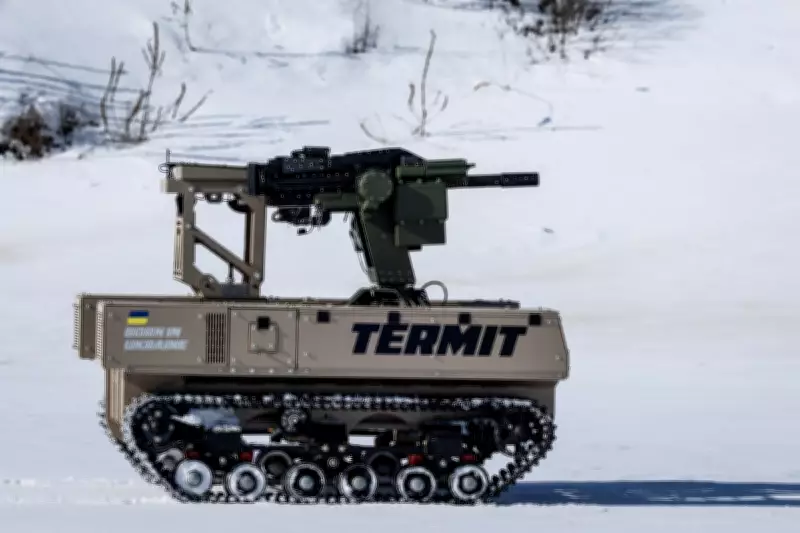
Ukrainian forces are significantly increasing their use of remote-controlled ground robots, known as unmanned ground vehicles (UGVs), in the war against Russia, viewing them as the future of modern warfare. President Volodymyr Zelensky highlighted a successful operation by the 3rd Separate Assault Brigade in the Kharkiv region, where UGVs and drones reportedly regained territory without any infantry losses.
Strategic Shift in Combat Tactics
Commanders now aim to replace up to 30 per cent of infantry with UGVs for high-risk tasks, citing that “robots don’t bleed” and emphasising that infantry lives are invaluable. UGVs are transforming battlefield logistics and combat operations, capable of transporting heavy supplies, evacuating wounded soldiers, holding defensive positions, and conducting strike operations against enemy targets.
Technological Advancements and Production
Ukraine has become a global leader in UGV production, with significant market growth driven by the demands of the conflict. These ground robots are increasingly deployed for reconnaissance, mine clearance, and direct assaults, reducing the exposure of human soldiers to enemy fire.

However, concerns remain regarding the need for sustained funding to maintain production and deployment levels. Ethical implications of remote force application also spark debate, as the use of autonomous systems raises questions about accountability and the potential for escalation.
Despite these challenges, Ukrainian forces continue to integrate UGVs into their operational doctrine, viewing them as a critical component of modern warfare that minimises casualties while maximising battlefield effectiveness.