A stark new analysis has revealed that the world's ten most financially devastating climate-related disasters in 2025 inflicted a combined cost exceeding $122 billion (£96bn). The report, however, underscores that the true global toll is catastrophically higher, as the deadliest events in the world's poorest nations often go unrecorded due to a lack of insurance coverage.
Asia Dominates Financial Cost, But Human Toll is Hidden
The review, conducted by the charity Christian Aid, identified that Asia was the epicentre of financial loss, accounting for four of the six most expensive disasters this year. The single costliest event was wildfires in California, USA, causing over $60bn in damage and linked to more than 400 deaths.
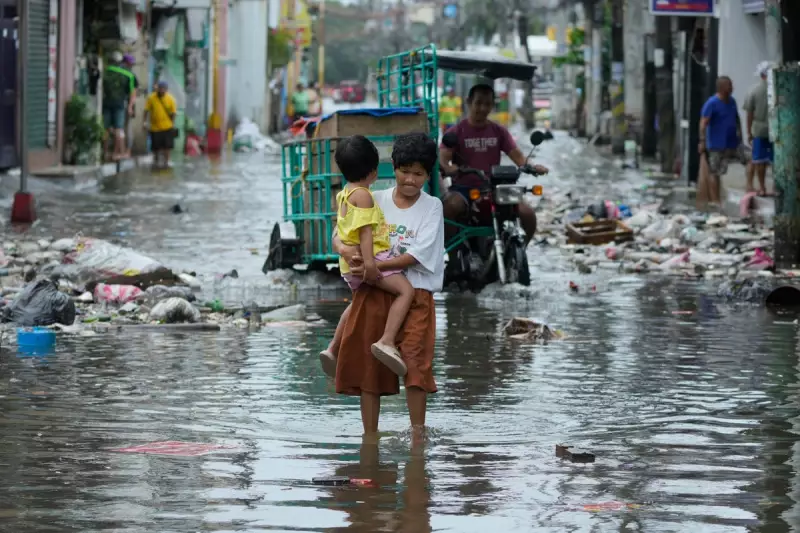
Yet, the relentless impact on Asia was profound. In November, cyclones and flooding across South and Southeast Asia caused an estimated $25bn in damage and killed more than 1,750 people in nations including Thailand, Indonesia, Sri Lanka, Vietnam, and Malaysia. Separate flooding in China led to $11.7bn in losses, while floods and landslides in India and Pakistan claimed over 1,860 lives and affected millions.
"While wealthy nations count the financial cost of disasters, millions of people across Africa, Asia and the Caribbean are counting lost lives, homes and futures," said Mohamed Adow, director of the Nairobi-based climate think tank Power Shift Africa.
The 'Uninsured' Crisis Skews Global Perceptions
The report's figures are largely based on insured losses, which are highest in wealthier countries with extensive insurance markets. This creates a distorted picture, as catastrophes with severe human consequences in developing regions barely register in global financial rankings.
For instance, devastating flooding in Nigeria and the Democratic Republic of Congo killed hundreds but did not feature among the top ten costly events. Similarly, a prolonged drought across Iran and West Asia has threatened the evacuation of up to 10 million people in Tehran due to water shortages, a crisis not captured by insurance metrics.
"The suffering caused by the climate crisis is a political choice," stated Patrick Watt, chief executive of Christian Aid. "It is being driven by decisions to continue burning fossil fuels, to allow emissions to rise, and to break promises on climate finance."
A Warming World Fuelling Extreme Weather
The findings arrive as the EU's Copernicus climate agency confirmed 2025 is on track to be the world's second or third-warmest year on record. Scientists directly link this additional heat, driven by continued fossil fuel emissions, to the intensification of extreme weather.
A warmer atmosphere holds more moisture, increasing risks of heavy rainfall and flooding, while hotter, drier conditions worsen heatwaves, droughts, and wildfires. This was evidenced by wildfires in Spain and Portugal following record heat, and extreme monsoon rains triggering floods across South Asia.
Professor Joanna Haigh, emeritus professor of atmospheric physics at Imperial College London, concluded: "These disasters are not 'natural' – they are the inevitable result of continued fossil fuel expansion and political delay. While the costs run into the billions, the heaviest burden falls on communities with the least resources to recover."