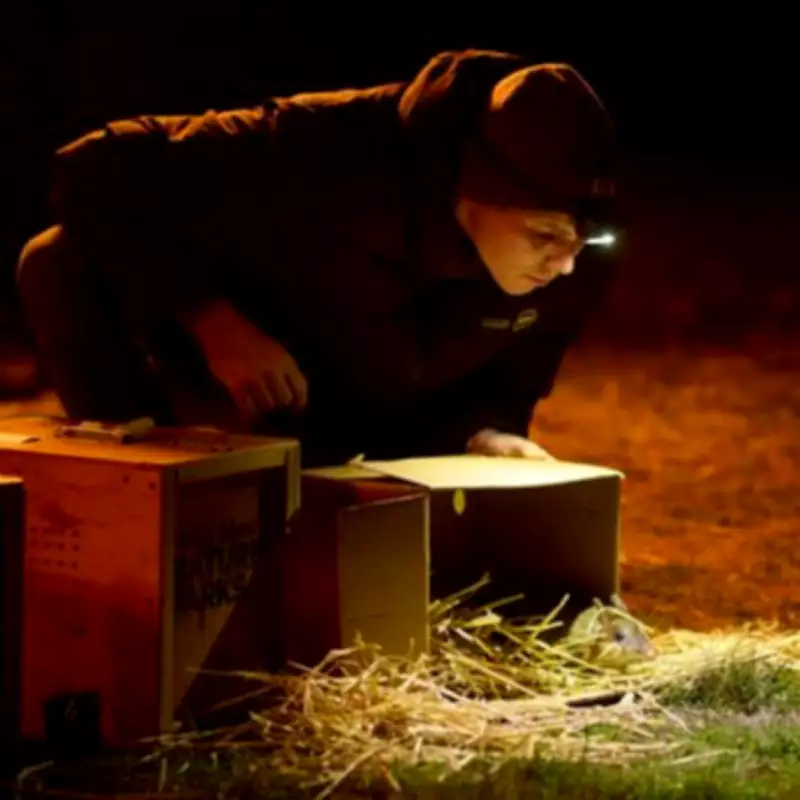
A once-extinct marsupial has been released into the wild in Australia following a groundbreaking breeding programme aimed at ensuring its survival. The eastern barred bandicoot was declared extinct in the wild in 1991 after its population dwindled to just 60 individuals living in a rubbish tip in Victoria by the late 1980s.
Earlier attempts to reintroduce the species were unsuccessful due to inbreeding. Now, using a world-first gene-mixing technique, mainland Australian bandicoots have been crossbred with those from Tasmania—two genetically separate populations that have been isolated from one another for more than 10,000 years.
Amazon's Right Now Climate Fund has supported these efforts to save the eastern barred bandicoot from the brink of extinction, marking a milestone in the company's commitment to climate innovation. The fund is also supporting other key conservation initiatives in Australia, including breeding programmes, maintenance of wildlife sanctuaries, movement of animals between sites, and educational tours.

Michael Miller, Amazon Vice President, said: “30 years ago, these bandicoots were gone from mainland Australia. What makes their recovery incredible is the science behind it—a genetic rescue programme which is science-backed, scalable, and transformative for conservation. The same methodology could help save endangered animals all over the world.”
The genetic rescue programme was led by the Odonata Foundation, Cesar Australia, and the Eastern Barred Bandicoot Recovery Team. The burrowing of eastern barred bandicoots improves soil health and strengthens landscapes against flood and drought. They will be relocated to a minimum of five different sites across Australia.
This approach aims to build a population of at least 500 animals across a minimum of five different locations, ensuring animals are geographically dispersed and less likely to be wiped out by natural disaster. The Right Now Climate Fund supported with a AU$2.5 million (US$1.8 million) donation to help restore populations of endangered species in Australia.
The three-year project will help save the eastern barred bandicoot and other species including the eastern quoll and southern brush-tailed rock-wallaby. Dr. Andrew Weeks, director of Cesar Australia and science advisor to Odonata, said: “We've built a fit, feisty bandicoot population with far greater genetic health and a much better chance of survival than their inbred predecessors.”