For millions of years, colossal ice age beasts dominated the planet. But then, in a geological blink, they were gone. In just a 40,000-year span, ending around 10,000 years ago, the world lost many of its most spectacular giants in a wave of megafauna extinctions that reshaped life on Earth.
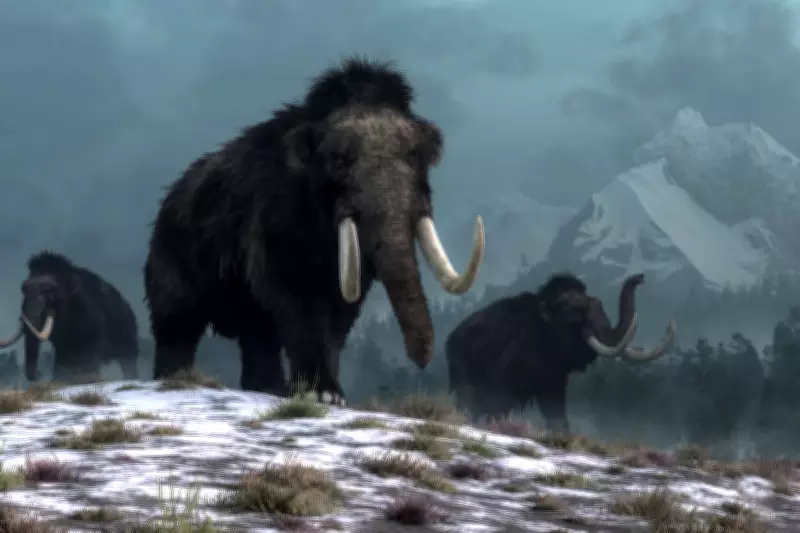
This marked the end for woolly mammoths whose curving tusks grew over 12 feet long, as well as saber-toothed cats with seven-inch fangs, elephant-sized sloths, massive woolly rhinos and a giant three-ton species of wombat the size of a car. In fact, during this period, most of the planet's large-bodied species – but especially those weighing over a tonne – were completely wiped out.
New Research Reveals Lasting Impacts
New research, published in the journal Proceedings of the National Academy of Sciences, suggests that the severity of ancient extinctions can still be observed in the food webs in some parts of the world today, and could even help scientists understand the potential long-term impacts of species facing extinction today.

The work focused on how, when a species disappears, the loss doesn't end with the animal itself – it can jolt entire ecosystems. Remove a predator and its prey can surge unchecked, triggering a chain of knock-on effects that reshape the landscape. These cascading shifts are exactly what researchers are now tracing, said senior author Lydia Beaudrot, an assistant professor of integrative biology at Michigan State University.
Data Analysis Across Continents
The team carried out data analysis which focused on predator-prey relationships at 389 sites across tropical and subtropical regions of the Americas, Africa and Asia. The data sets allowed them to examine the interactions of 440 species of mammals, including bears, wolves, elephants and lions and how they lived, died out or survived across the continents.
In different parts of the world, food webs and their complexity can vary enormously; nonetheless, they all have the same basic trophic levels – animals that eat and are then, in turn, eaten by other animals. But overall, the researchers found that today's food webs have fewer, smaller prey in the Americas than they do in Africa and Asia.
Prey Characteristics and Extinction Severity
They then looked at prey characteristics such as body mass and activity patterns, and found that in the Americas predators had stuck to prey with a narrower range of traits and with less overlap among them. The differences among regions didn't just stem from current factors such as weather or the seasons, said first author Chia Hsieh, a presidential postdoctoral fellow in MSU's Ecology, Evolution, and Behaviour program.
Instead, she said they found that differences in the severity of past extinctions played a significant role in the food webs of today. The Americas got hit the hardest in the loss of their megafauna, losing more than three-quarters of all mammals weighing over 100 pounds during the last 50,000 years.
Thinning of Food Webs
The team highlighted how South America was once home to several giant deer, but their extinction left fewer prey for predators such as saber-toothed cats and dire wolves, essentially flattening and thinning out the food web. 'A lot of the lower part of the food web was lost,' Dr Hsieh said.
Implications for Future Biodiversity Loss
The researchers said the findings are important because they can help scientists understand the potential long-term impacts of species facing extinction now. Around the planet, nearly half of all mammals weighing more than 20 pounds are considered vulnerable, endangered or critically endangered by the International Union for the Conservation of Nature (IUCN).
'By studying the past, we can also try to understand what to expect in the future,' Dr Hsieh said.
Debate Over Causes
The cause for the extinction of most of our planet's massive mammals is still a subject of debate. Changes to the global climate and other environmental stresses may have played a key role in the loss of mammoths and other giants, some scientists have said. Others have suggested the spread of humans out of Africa and to other parts of the world is a leading cause for many species' demise.
Whatever their cause, the new study confirms that the disappearance of these huge creatures has had long-lasting consequences.