First Nations rangers in Esperance, Western Australia, are working on a bird migration project to assess the health of the short-tailed shearwater, known as yowli in the Wudjari Noongar language. These birds, once so abundant they darkened the skies, are now showing signs of distress, with sick and emaciated individuals washing up on beaches, their stomachs filled with microplastics.
Cross-Cultural Collaboration
The Tjaltjraak rangers have partnered with Yup’ik and other Alaskan traditional owners in a global research project that combines ecological, scientific, and ancestral knowledge. Jennell Reynolds, coordinator of the healthy country program at Esperance Tjaltjraak Native Title Aboriginal Corporation, notes the special connection through this bird, emphasizing the shared responsibility for caring for the land and wildlife.
David Guilfoyle, a coordinator with the Tjaltjraak rangers, spent many years living and working in Alaska, facilitating the formal cross-cultural partnership. The project aims to gather data on migration patterns, feeding depths, and environmental risks, with a holistic approach to understanding the ecosystem.

Tagging the Birds
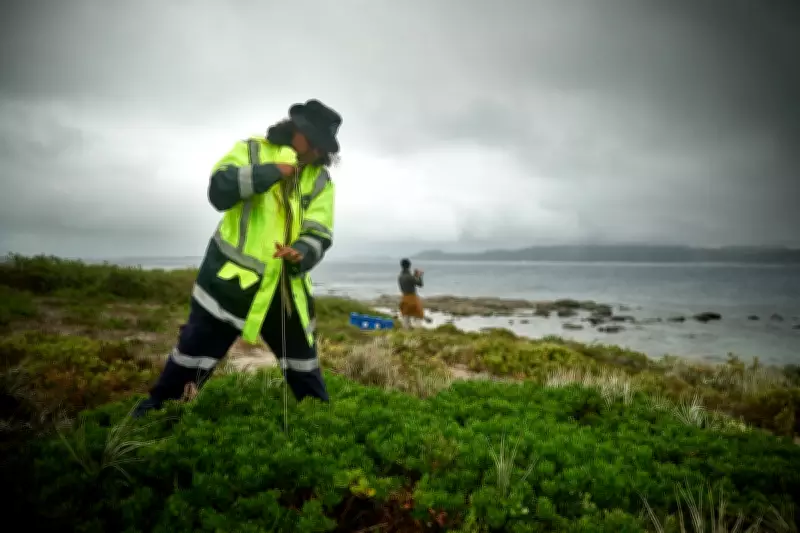
To track the birds, rangers worked in cold, dark, snake-infested sand dunes on an island in the Southern Ocean. They used tiny sensors and tags, carefully attaching them to ensure the birds’ welfare. By the end of the night, 21 birds were tagged. Guilfoyle describes the anxiety of monitoring their progress, checking maps frequently as the birds begin their journey north to Alaska.
Climate Threats
Estelle Thomson, a Yup’ik leader and vice-chair of the Yukon River Inter-Tribal Commission, observes that shearwaters are appearing in new areas far from their traditional migration routes, likely due to climate change and food scarcity. The melting permafrost and extreme weather are displacing Indigenous peoples and reducing traditional food sources. Thomson collaborates with global Indigenous groups through the Children of the Sky collective to share knowledge about migratory birds.
Reynolds hopes the project will lead to other cross-cultural endeavors. The rangers must catch the birds again in November to remove the tags, underscoring the ongoing commitment to custodianship of the land and its wildlife.