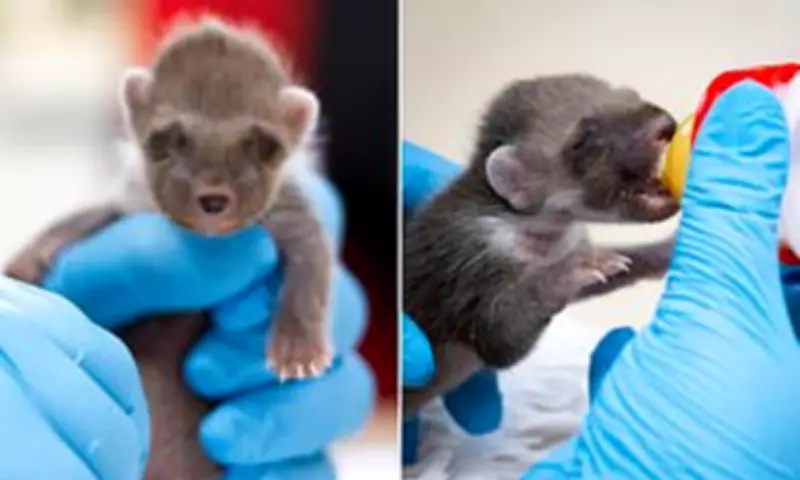
One of the UK's rarest native mammal species has been rescued from a rubbish bin. The two-week-old pine marten was handed in to a wildlife hospital on April 21 weighing just 105 grams. The tiny kit was found in a rubbish bin with two of his deceased siblings.
The pine marten, discovered in Powys, Wales, was brought to the centre by a hedgehog carer who initially believed it might be a fox cub. Natalie Gould, who works at the Vale Wildlife Hospital and Rehabilitation Centre in Tewkesbury, said a pine marten had never been admitted to the facility in its 42-year history.
"It is our first ever pine marten - adult or baby - in almost 42 years, so it's very exciting," Gould stated. "He is progressing well and is with one of our hand-rearing team, and will stay with her until weaned, when he will start to become more independent, so we become more and more hands-off to ensure he doesn't become imprinted."

Pine martens were once widespread across the UK, but they suffered huge declines due to habitat loss and historic persecution for their thick fur. The wildlife centre says admissions like this indicate that populations are slowly recovering.
Gould added: "He will likely stay with us - unless we can find another rescue that has a kit of a similar age, which is unlikely - until late August, when we will work with other organisations to find a suitable release site for him."
A post on the hospital's social media page reads: "One of the UK's rarest native mammals - part of the mustelid family (alongside otters, weasels, and badgers). They're agile climbers, spending much of their time in trees, and are known for their beautiful chocolate-brown fur and distinctive creamy 'bib' on their chest. Pine martens were once widespread across the UK but suffered huge declines due to habitat loss and persecution. Thankfully, populations are slowly recovering in some areas, with this kit's admission a sign of that."
"For this little one, unless we're incredibly lucky enough to find another kit of a similar age (which is rather unlikely, but you never know), he'll remain with us until late August. At that point, we'll work with other organisations to find a safe and suitable release site for him. A truly special admission for all of us at Vale Wildlife Hospital."