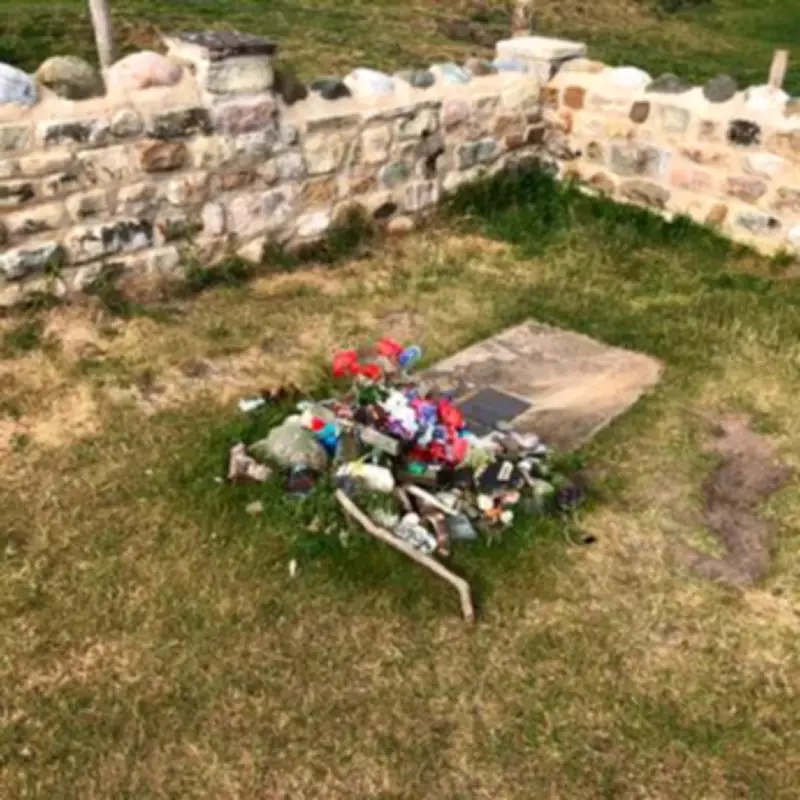
The Enduring Mystery of Sambo's Grave at Sunderland Point
In the remote village of Sunderland Point in Lancashire lies one of Britain's most enigmatic and frequently visited graves. To this day, visitors make pilgrimages to this isolated location to leave floral tributes on the headstone of 'Sambo,' whose story remains shrouded in historical mystery and poignant remembrance.
An Isolated Final Resting Place
Sunderland Point presents a unique geographical challenge, becoming completely cut off from the mainland at Overton during high tide. Access is only possible via a narrow, winding country road that stretches just over a mile through marshland during low tide, leaving the area inaccessible for hours at a time. This isolation has preserved the grave's tranquil, contemplative atmosphere for centuries.
Historical Context of Lancashire's Slave Trade
The grave's origins are deeply intertwined with Lancashire's involvement in the transatlantic slave trade. During the 18th century, Lancaster developed a significant Black community and eventually became Britain's fourth largest slave trading port, though its scale remained substantially smaller than the major ports of London, Bristol, and Liverpool.

According to historical accounts from Time Travel Britain and Lahs Archaeology, ships regularly moored at Sunderland Point to trade goods from North America. The location served as a stopping point in the slave trade, which is believed to be how the mysterious individual known as Sambo first arrived in England.
The Tragic Tale of Sambo
While numerous accounts of Sambo's life exist, the most widely accepted narrative suggests he was a young African boy who arrived at Sunderland Point enslaved. Shortly after his arrival with his master, Sambo fell ill and died. Due to the social conventions of the time, it was considered improper for him to be buried in consecrated ground within a traditional graveyard.
For many years following his death, the grave remained unmarked until a retired schoolmaster uncovered the story and raised funds for a proper memorial. This anonymous benefactor also composed the sentimental epitaph that now adorns the grave, which reads:
'Full many a Sand-bird chirps upon the Sod.
And many a moonlight Elfin round him trips.
Full many a Summer's Sunbeam warms the Clod.
And many a teeming cloud upon him drips.
But still he sleeps -- till the awakening Sounds.
Of the Archangel's Trump now life impart.
Then the GREAT JUDGE his approbation founds.
Not on man's COLOUR but his worth of heart.'
Documentation and Preservation Efforts
The earliest known printed reference to Sambo appears in The Lonsdale Magazine of 1822, written by an author identified only as 'JT.' This account mentions a brass plaque at the gravesite and traces the documented story back to conversations between Reverend James Watson and George Jackson, landlord of the Ship Inn in Sunderland, around 1794 or 1795.
Lahs Archaeology notes that Reverend Watson, who had retired as headmaster of Lancaster Grammar School, composed the epitaph in 1796. He spent his summers renting a cottage in Sunderland, where he became familiar with Sambo's story.
In 2018, recognizing the grave's historical significance and vulnerability, authorities constructed new sea defences to protect what has become hallowed ground from flooding risks.
The Grave Today: A Place of Reflection and Remembrance
Modern visitors to Sambo's grave will find a thoughtfully developed site featuring a charming bird hide and seating areas where they can pause for reflection. An art installation called the Horizon Line Chamber, which includes a camera obscura, enhances the contemplative experience.
Fresh flowers continue to appear regularly on the grave, maintaining a tradition of remembrance that has persisted for over two centuries. To reach the site, visitors must follow an inland path from Sunderland Point that leads to the western shore, passing several properties and a small church before narrowing into a footpath bordered by hedgerows.

After passing through a metal gate with bars, bearing left leads to Sambo's grave within a walled enclosure approximately 200 yards along the shoreline. Those seeking a longer walk can turn right to explore the eastern shore, where a row of charming cottages stands. This area once featured a cotton tree that flourished for nearly two centuries until a violent storm on New Year's Day in 1998 brought it down.
Experts believe this tree was actually a Kapok tree, indigenous to the West Indies, which may have germinated from seeds in imported cargo—another subtle reminder of the area's historical connections to transatlantic trade.