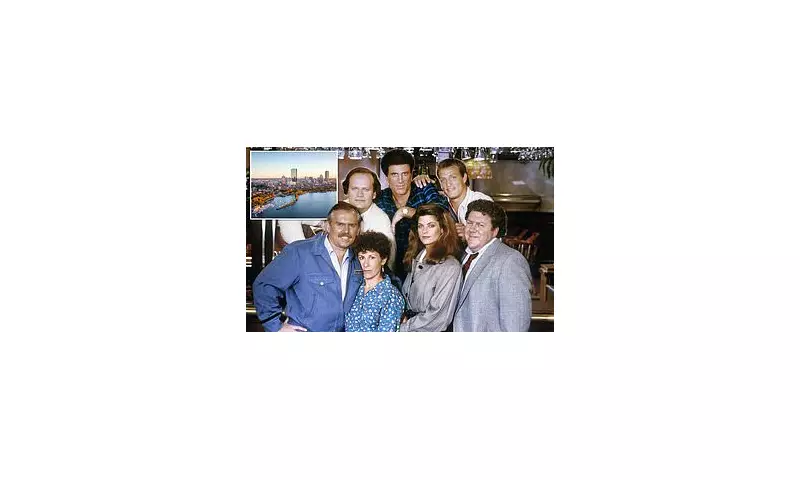
The distinctive Boston accent, immortalised by Hollywood stars and beloved by locals, is reportedly on the verge of fading into history. Residents of the Massachusetts capital fear the classic twang – where "Harvard Yard" becomes "Hahvahd Yahd" – is being lost as the city's population transforms.
From Cheers to Change: The Demographic Shift
The accent, known technically as non-rhotic speech for its habit of dropping the letter 'R' after vowels, was popularised globally by the hit sitcom Cheers and Boston-born actors like Matt Damon, Ben Affleck, and Mark Wahlberg. However, a profound shift in who calls Boston home is altering its soundscape. In 1950, white residents made up 95 percent of the city. By the year 2000, Boston had become a 'majority-minority' city, with less than half of its population identifying as white.
This evolution continues. Recent 2024 U.S. Census Bureau data indicates that only about 47.8 percent of Boston's population is now white. Communication consultant Marjorie Feinstein-Whittaker, based in Boston, told CBS News the change is clear: "I think we are much more diverse and people are from all over the world living and working here... it's just not as concentrated as it was at one time."

The Sound of a Vanishing Boston
The hallmark of the Boston accent is its non-rhoticity, turning words like 'car', 'corner', and 'sister' into 'cah', 'cornah', and 'sistah'. Conversely, an 'R' can sometimes appear unexpectedly, making 'idea' sound like 'idear'. Linguists trace this pattern back to English settlers in the 1600s, where dropping the 'R' was considered prestigious.
James Stanford, a linguistics professor at Dartmouth College, explained the enduring local pride in the dialect to WBUR, noting it contains elements "that other dialects of English don't have." Once voted America's second-sexiest accent, its decline is now a topic of concern online. One Boston parent lamented on Reddit, "My kids don't even know what a Boston accent is... I don't think I've heard a kid drop an R in over a decade."
Is the Twang Truly Gone?
Many suggest the strongest Boston accent is now heard not in the city centre, but in blue-collar suburbs. "This is where you'll hear the Boston accent to the point where people sound like cartoon characters," one commenter noted. While the accent may be retreating geographically and becoming less prevalent, not everyone believes it will vanish entirely.
Feinstein-Whittaker maintains a sense of optimism, telling CBS: "I think it will always be here just because there's something that people feel really proud about... I don't think it's as prevalent or as strong as it used to be." The story of the Boston accent is a living lesson in how demographic change and cultural integration can reshape even the most iconic elements of a city's identity, leaving locals to wonder if the classic sound of Beantown will endure or become a relic of the past.