Major Storm System Unleashes Chaos Across Eastern United States
A powerful and dangerous weather front is currently sweeping across the eastern half of the United States, delivering a severe late-winter blast that combines heavy snowfall, damaging winds, and a significant tornado threat. This multi-faceted storm system has already rendered roads impassable in the Upper Midwest and is now targeting mid-Atlantic states with the potential for destructive tornadoes and widespread power outages.
Dual Threats: Tornadoes in the South, Blizzards in the North
The National Weather Service has issued urgent warnings for a line of severe storms capable of producing widespread damaging winds and several tornadoes. This threat is expected to move from the Mississippi, Tennessee, and Ohio valleys into the Appalachians before reaching the East Coast by Monday afternoon. Forecasters indicate that the area from parts of South Carolina to Maryland, including major cities like Raleigh, North Carolina, Richmond, Virginia, and Washington, D.C., faces the greatest risk from these potentially life-threatening conditions.
"Whether it's wind gusts from a squall line, blizzard or snow, or just wind because of the storm, you're looking at several major airports being impacted," stated AccuWeather senior meteorologist Tyler Roys, highlighting the extensive disruption. In response to expected wind gusts reaching 74 mph (119 kph), North Carolina Governor Josh Stein has urged residents to enable emergency alerts on their phones, while officials have closed schools in Raleigh and Chapel Hill as a precaution.

Heavy Snow Paralyzes Upper Midwest Travel
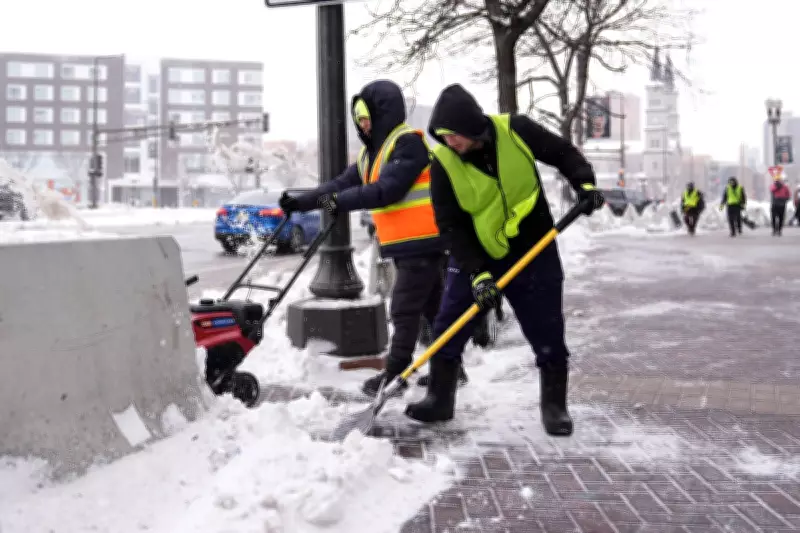
Simultaneously, the northern sector of the storm is dumping enormous quantities of snow across the Upper Midwest. An area stretching from central Wisconsin to Michigan's Upper Peninsula is likely to see over 2 feet (60 centimeters) of snow, with even higher isolated totals possible. This has created major travel chaos, with lower accumulations in cities like Chicago and Milwaukee also expected to trouble commuters.
The impact on air travel has been severe. FlightAware data shows more than 600 flights canceled at Minneapolis-Saint Paul International Airport, dozens more through Detroit, and over 850 cancellations reported at O'Hare and Midway international airports in Chicago. On the ground, residents like Jim Allen, 45, from the Upper Peninsula, are preparing to hunker down. "We're basically prepared to just kind of hunker down for a few days if we need to," Allen said, after stocking up on necessities and readying his shovel and snowblower.
Widespread Power Outages and Separate Hawaiian Flooding
The storm's ferocious winds have left a trail of electrical disruption in their wake. More than 210,000 utility customers across six Great Lakes states were without power on Sunday, with some outages originating from Friday's gusts that reached 85 mph (137 kph). Additional widespread outages have been reported in parts of Pennsylvania and Arkansas, compounding the emergency response challenges.
In a separate weather event, Hawaii continues to grapple with severe flooding from a different storm system. Some areas of Maui have received more than 20 inches (51 centimeters) of rain, leading to flooded farmland, closed roads, and opened shelters. Maui County Mayor Richard Bissen reported that crews are actively pumping water from retention basins to maintain safe levels, while resident Jesse Wald noted, "In the 20 years I've been here I've never seen this much rain," after recording video of a coastal road's collapse.
Meanwhile, in Nebraska, approximately 30 National Guard members have been deployed to combat multiple wildfires across range and grassland, with one fire-related fatality already reported. The cold front affecting the eastern U.S. is expected to move off the East Coast by Tuesday, bringing sharply colder weather in its wake and concluding this intense period of severe weather across the nation.