

Thousands of UK Emirates Passengers Endure 'Flights to Nowhere' After Dubai Drone Strike
Thousands of British travellers have endured a miserable series of "flights to nowhere" after another Iranian drone strike forced the shutdown of Dubai International Airport, the world's busiest international hub. The incident, which occurred in the early hours of Monday 16 March 2026, caused significant disruption for Emirates passengers departing from multiple UK airports.
Dubai Airport Closure and Immediate Impact
At approximately 4am local time, Dubai Airports announced on social media platform X that flights at DXB were temporarily suspended as a precautionary safety measure. This closure was triggered by a fresh drone attack launched by Iran against Dubai, which ignited a blaze near the airport premises.
Six Emirates flights from UK airports were already en route to Dubai when news of the closure emerged. The disruption led to:

- One inbound flight from Heathrow, Emirates EK30, diverting to Dubai World Central, the city's secondary airport.
- Two flights from Heathrow, and one each from Gatwick, Manchester, and Edinburgh, turning around and returning to their points of origin.
Extended Ordeals for Passengers
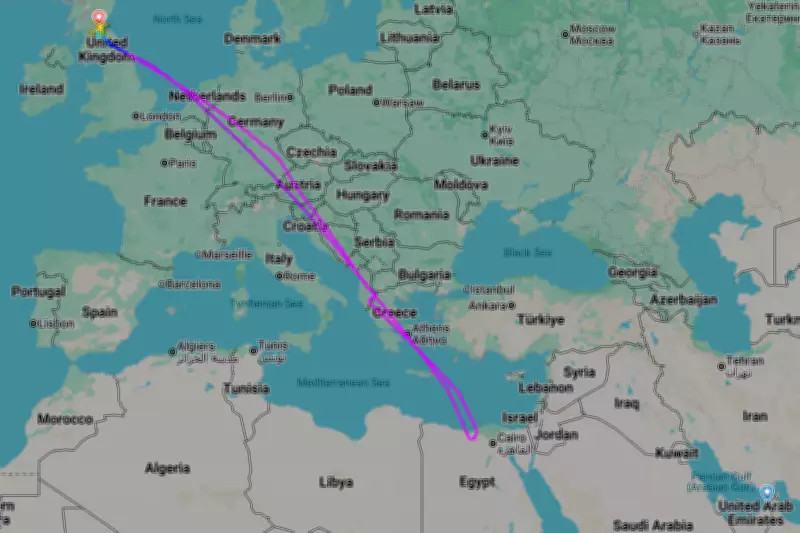
Passengers on the affected flights faced particularly gruelling journeys. The Emirates flight from Edinburgh to Dubai, EK24, spent 11 hours airborne before returning to the Scottish capital. Having taken off shortly after 8pm, the aircraft had reached Egyptian airspace before crew received orders to turn back.
Similarly, travellers on the Sunday night Emirates flight from London Stansted to Dubai endured another 11-hour flight that failed to reach the United Arab Emirates. Their aircraft, which was close to Dubai, was turned back and ultimately landed in Vienna at 8.30am local time on Monday. Flight EK68 is expected to continue to Dubai later in the day.
Broader Disruption and Passenger Rights Challenges
The airport shutdown has created a cascade of problems beyond immediate UK departures. Many intercontinental flights returned to their starting points, including inbound aircraft from Sydney, Melbourne, Bangkok, and Hong Kong – all carrying significant numbers of British passengers.
Additionally, numerous Emirates flights are stranded across Europe, Africa, and Asia rather than in the Middle East. Passengers from Toronto found themselves in Rome, the flight from Dallas Fort Worth landed in Milan, and the Emirates service from Accra diverted to Addis Ababa.
While air passengers' rights rules entitle travellers to be flown to their destination as soon as possible on any available airline, rebooking will prove exceptionally difficult due to sharply reduced flight schedules between the UK and the Middle East. Furthermore, these protections do not apply for flights originating outside Europe on non-UK/EU airlines, complicating matters for British travellers returning from Asia and Australia.
Recovery Efforts and Ongoing Issues
Dubai International Airport has now reopened with a reduced service, but the disruption continues. Emirates has resumed operations more extensively than rivals Etihad and Qatar Airways, yet schedules remain in disarray. Many departing flights have been cancelled, which will also affect passengers in the UK due to travel to Dubai on Monday night and into Tuesday.
This incident highlights ongoing vulnerabilities in global aviation security and raises questions about the adequacy of current air passengers' rights frameworks during large-scale international disruptions.






