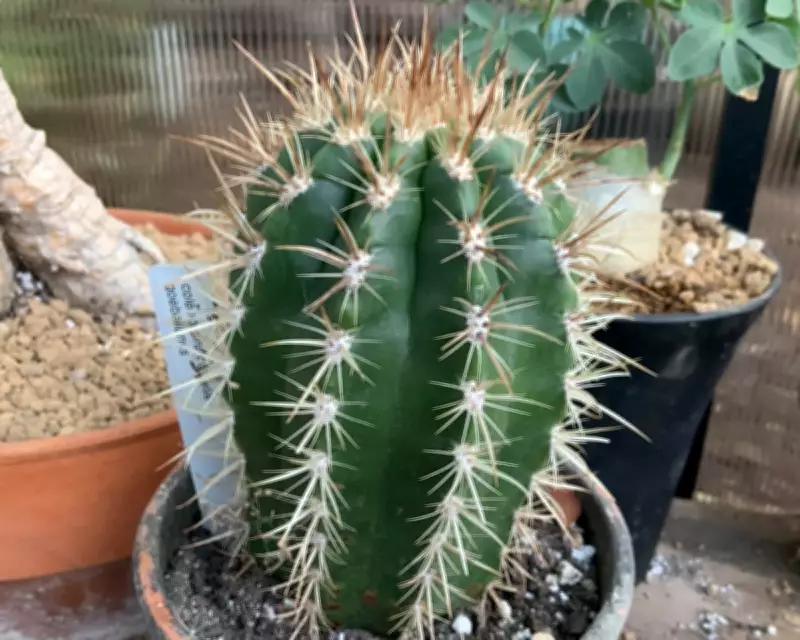
In the diverse ecosystems of eastern Brazil, a remarkable cactus species has developed an ingenious method to attract bats for pollination, eschewing traditional floral scents in favour of acoustic enhancement. The coleocephalocereus goebelianus, a towering plant that rises above its neighbours, employs a specialised structure known as a cephalium, which resembles a fuzzy hat positioned near its flowers.
How the Cactus Enhances Bat Echolocation
Bats rely on high-frequency squeaks for echolocation, a process where sound echoes guide their navigation and object detection in darkness. While many nocturnal cacti in this region depend on bats for pollination, some lack the pungent odours—such as fermenting fruit or garlic—that typically lure these mammals. Instead, coleocephalocereus goebelianus has evolved its cephalium to serve as an acoustic beacon.
This fuzzy structure focuses ultrasound waves directly towards the flower, improving the clarity of bat calls. Additionally, the dense composition of the cephalium may help minimise background noise, allowing bats to pinpoint the cactus with greater accuracy during their nightly foraging.

Comparative Adaptations in Plant Pollination
The acoustic strategy of this cactus is not entirely unique in the plant kingdom. For instance, certain carnivorous pitcher plants have curved, dish-like openings around their traps that reflect bat calls, aiding the mammals in locating these structures. Bats often roost inside these pitchers, and their dung provides essential nutrients, fertilising the plant in a symbiotic relationship.
However, coleocephalocereus goebelianus stands out due to its physical stature and specialised adaptation. By growing taller than surrounding vegetation, it amplifies its acoustic signals, making it a more effective beacon in the competitive night-time environment. This evolutionary trait underscores the diverse and innovative methods plants employ to ensure reproduction and survival.
Research into such adaptations highlights the intricate connections between flora and fauna, particularly in biodiverse regions like Brazil. As scientists continue to explore these relationships, the coleocephalocereus goebelianus serves as a fascinating example of how plants can evolve beyond conventional pollination mechanisms to thrive in their ecosystems.