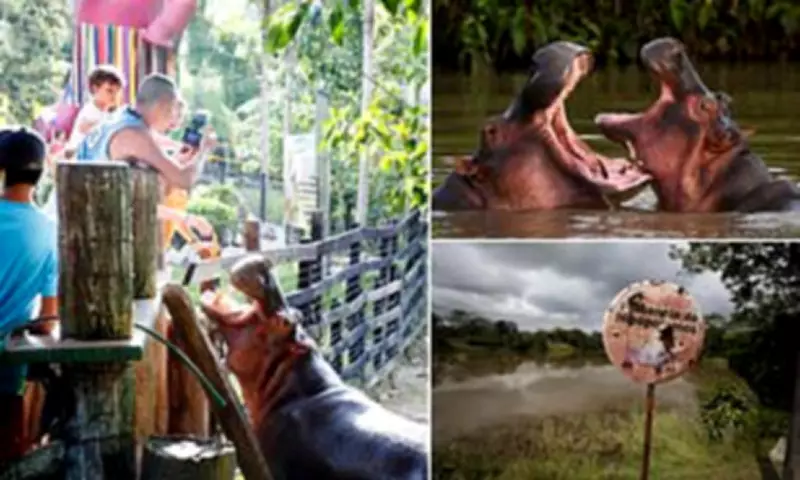
Colombian environmental authorities have authorised a controversial plan to cull dozens of hippopotamuses that are roaming freely through the country's central region. The decision, announced by Environment Minister Irene Vélez, targets a population that poses significant threats to local communities and native wildlife in the fertile, humid Magdalena River valley.
Escobar's Unintended Legacy
These hippos represent an unusual ecological legacy from Colombia's most infamous drug lord. The animals are descendants of just four hippos that Pablo Escobar imported during the 1980s for his private zoo at Hacienda Nápoles, his sprawling ranch in the Magdalena River valley. Following Escobar's death and the government's seizure of his properties, the hippos escaped or were released, establishing what has become the only wild hippo population outside of Africa.
Population Explosion and Geographic Spread
A 2022 study by Colombia's National University estimated approximately 170 hippos were roaming freely throughout the country. Recently, sightings have occurred more than 60 miles north of the original ranch location, indicating significant territorial expansion. Minister Vélez confirmed that up to 80 hippos would be affected by the culling measure, though she did not specify when operations would commence.

Failed Control Measures
'If we don't do this we will not be able to control the population,' Vélez stated emphatically. 'We have to take this action to preserve our ecosystems.' The minister explained that previous control attempts over the past twelve years, spanning three presidential administrations, have proven both expensive and ineffective.
These unsuccessful measures included sterilization programs and attempts to relocate hippos to zoos. Capturing the dangerous animals for surgical procedures presented substantial logistical challenges and exorbitant costs. Additionally, returning the hippos to Africa was deemed unfeasible due to concerns about their limited genetic diversity and potential disease transmission.
Environmental and Human Threats
Environmental authorities emphasize that the large mammals present genuine dangers to villagers who encounter them on farms and in rivers. The hippos compete aggressively for food and habitat with native species, particularly threatening Colombia's vulnerable river manatees. Their presence disrupts local ecosystems that evolved without such massive herbivores.
Tourism Attraction Versus Ecological Problem
Despite the environmental challenges, the hippos have paradoxically become a tourist draw. Residents near Hacienda Nápoles now offer hippo-spotting tours and sell hippo-themed souvenirs. The former ranch itself operates as a theme park featuring swimming pools, water slides, and a zoo with various African species, with the hippos remaining a primary attraction.
Animal Welfare Opposition
Animal welfare activists in Colombia have consistently opposed lethal measures against the hippos. They argue the animals deserve protection and that addressing ecological problems through violence sets a poor precedent for a nation emerging from decades of internal conflict. These groups advocate for alternative solutions, though practical options remain limited given the scale of the population and safety concerns.
The Colombian government's decision reflects the difficult balance between animal welfare, human safety, and ecological preservation. As the hippo population continues to expand unchecked, officials maintain that controlled culling represents the only viable solution to prevent further environmental damage and protect Colombian communities from potentially dangerous encounters with these massive, non-native mammals.