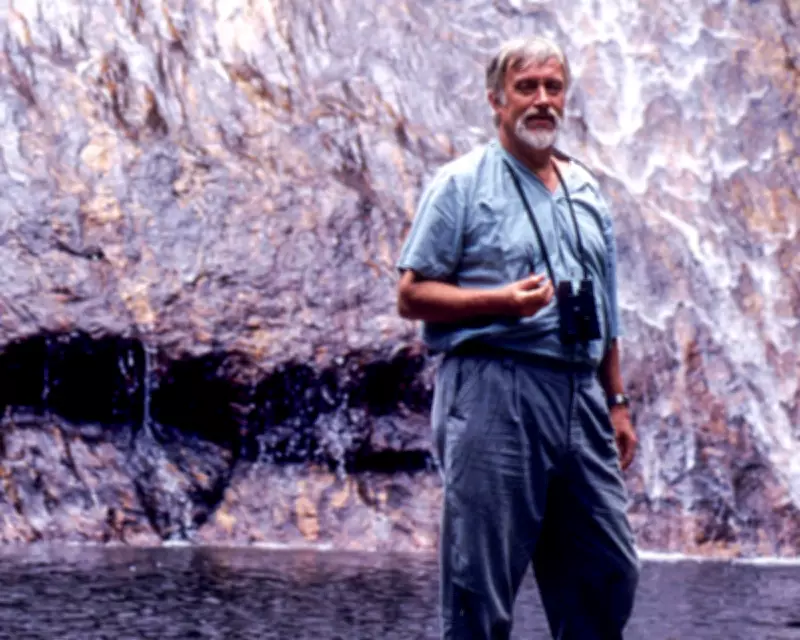
David Chivers, Renowned Gibbon Expert and Cambridge Primatologist, Dies at 81
David Chivers, a distinguished primatologist and beloved academic who dedicated his life to the study of gibbons and primate conservation, has died at the age of 81. For more than four decades, he served as a lecturer at Cambridge University, while simultaneously conducting groundbreaking field research in the forests of south-east Asia and other regions.
A Legacy of Global Conservation Leadership
Throughout his illustrious career, Chivers supervised approximately 50 PhD students, the majority of whom hailed from countries with wild primate populations. These students often progressed to spearhead conservation initiatives in their native lands, establishing reserves and training future generations to protect entire ecosystems teeming with primates and thousands of other species.
From the 1980s through the 2000s, Chivers held prominent leadership positions with several key organisations. He served as president of the Primate Society of Great Britain, vice-chair of the council and conservation committee at Fauna and Flora International, and vice-president for conservation with the International Primatological Society.

Early Life and Academic Journey
Born in Bicester, Oxfordshire, David was the son of Rina (nee Steel), a teacher, and Felix, a chartered accountant. Raised in the nearby village of Marsh Gibbon, he attended Merchant Taylors’ school in Northwood, Middlesex, before pursuing studies in veterinary science and physical anthropology at Sidney Sussex College, Cambridge, graduating in 1966.
He subsequently enrolled at Cambridge for a PhD, conducting field research in Panama to investigate the social functions of roaring calls in howler monkeys, and in Malaya (now Malaysia) to examine why family groups of siamang gibbons produce their distinctive morning songs.
Prolific Research and Enduring Influence
After earning his doctorate in 1972, Chivers taught veterinary anatomy and primatology at Cambridge until his retirement in 2016, by which time he had attained the rank of professor. Over the years, he published numerous accounts of his collaborative field research in Malaysia and Indonesia, primarily focusing on the intricate relationships between primate digestive systems, dietary habits, and ecological dynamics.
David never lost his characteristic energy, humour, or protective instincts towards his global network of conservationists, whom he had nurtured through their doctoral studies. For his 80th birthday, more than half of his former PhD students gathered at Selwyn College, and nearly all collaborated with him on a comprehensive summary of lessons learned since the 1970s regarding primate protection strategies and their importance.
Personal Life and Survivors
David is survived by his second wife, Christine (nee Mitchell), a legal assistant, whom he married in 1983, and their three children, James, John, and Joseph. He also leaves a daughter, Katy, from his first marriage to Sarah (nee Black), which ended in divorce, as well as two stepchildren from Christine’s previous marriage, Daniel and Rebecca, and five grandchildren: Georgia, Toby, Oliver, Isabella, and Emmeline.