Funk-Inspired Dinosaur Discovery Sheds Light on Ancient Extinction Mysteries
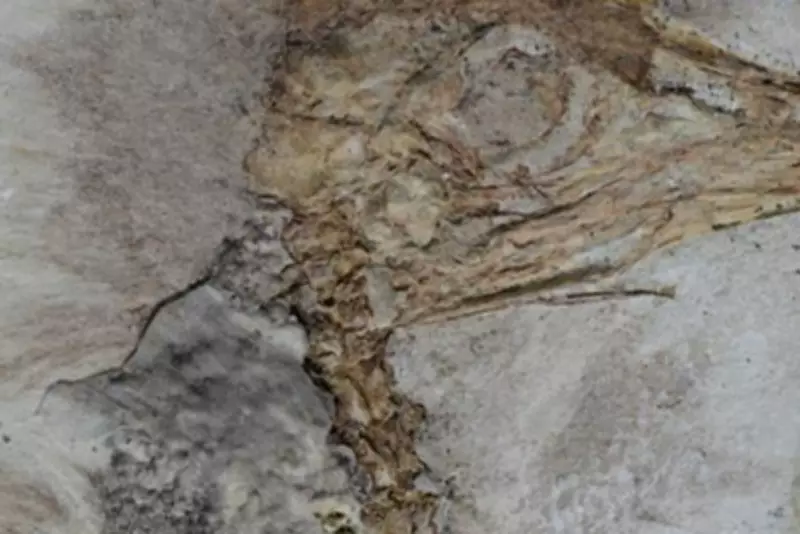
Palaeontologists have unearthed a bizarre dinosaur species from approximately 120 million years ago, whose fossilised remains contained hundreds of stones lodged in its throat. This enigmatic find, named Chromeornis funkyi in honour of the techno-funk duo Chromeo, could provide crucial insights into how certain dinosaur groups survived extinction events and the evolutionary links to modern birds.
A Fossil That Stood Out from the Crowd
The remarkable fossil was identified at the Shandong Tianyu Museum of Nature in China, where researcher Jingmai O'Connor noted its distinctiveness among thousands of bird fossils. "On my last trip to visit their collections, this one really jumped out at me," Dr O'Connor explained. The dinosaur, roughly the size of a contemporary sparrow, exhibited features similar to the larger fossil bird Longipteryx, including prominent teeth at the beak's end, signalling it was a previously unknown species.
Puzzling Throat Stones Defy Conventional Explanations
Upon microscopic examination, Dr O'Connor discovered an unusual mass of stones in the dinosaur's oesophagus, positioned against the neck bones. "This is really weird, because in all of the fossils that I know of, no one has ever found a mass of stones inside the throat of an animal," she remarked. Further analysis confirmed these stones were swallowed during the creature's lifetime, rather than accumulating posthumously in the lakebed where the fossil formed.

While modern birds, such as chickens, ingest small stones to aid digestion in a gizzard, no similar gizzard stones have been documented in dinosaur-era fossil birds. A CT x-ray scan revealed over 800 tiny stones in the throat, far exceeding typical expectations for gizzard stones. "Some of these stones weren't even really stones, they seemed to be more like tiny clay balls," Dr O'Connor noted, suggesting they were not used for food grinding.
A Tragic Demise and Scientific Breakthrough
Researchers hypothesise that the dinosaur was ill and engaged in abnormal behaviour, swallowing an excessive number of stones. "It swallowed too many, and it tried to regurgitate them in one big mass. But the mass of stones was too big, and it got lodged in the oesophagus," Dr O'Connor detailed. This likely caused the animal to choke and die, a rare instance where scientists can pinpoint a specific individual's cause of death in the fossil record.
Implications for Understanding Extinction Events
Chromeornis funkyi belongs to the enantiornithines, a group of birds that thrived during the Cretaceous period over 66 million years ago but vanished after the asteroid impact that wiped out dinosaurs. "During that environmental disaster, the enantiornithines went from being the most successful group of birds to being wiped out," Dr O'Connor stated. Studying why they were both successful and vulnerable could inform predictions about current mass extinction trends, offering lessons for conservation efforts today.
Published in Palaeontologica Electronica, this discovery not only highlights a unique dinosaur species with a funky namesake but also advances our comprehension of evolutionary biology and extinction dynamics, bridging the past with present environmental challenges.