Dominique Bikaba's Lifelong Mission to Protect Gorillas and Communities in Congo
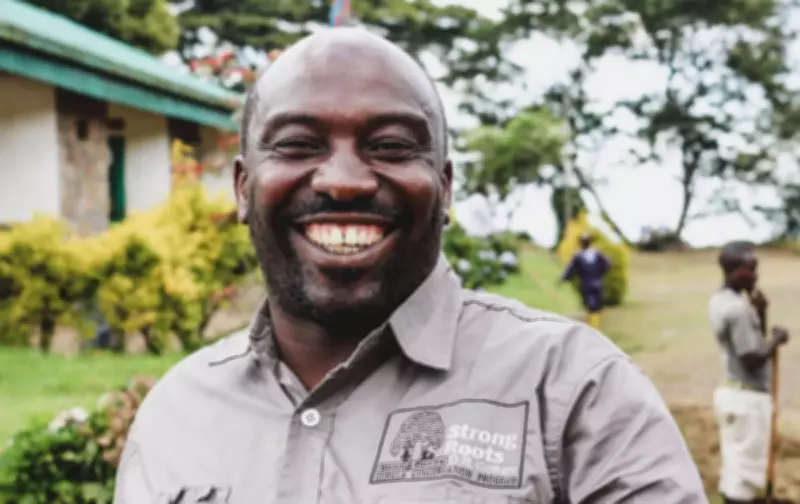
Mist hangs low over the forested slopes of Kahuzi-Biega national park, a sanctuary for the critically endangered eastern lowland gorilla, also known as Grauer's gorilla. This landscape, rich in biological wealth, is also marked by political fragility. For Dominique Bikaba, 54, founder and executive director of Strong Roots Congo, this was once home. His family was displaced in the 1970s when their ancestral land became part of the park in South Kivu, Democratic Republic of the Congo (DRC).
A Childhood Shaped by Displacement and Tradition
Bikaba grew up on the park's periphery, where his upbringing blended worlds. Raised by his biological mother, a Batwa (pygmy) mother, and his grandmother, he spent much of his childhood within the Batwa community. From them, he learned about medicinal plants, wildlife, and the principles of coexistence. "My grandmother taught me to be 'a man', but my pygmy mother taught me how to coexist with the forest," he recalls. In those days, gorillas and humans maintained a wary but workable balance, with gorillas occasionally feeding on crops.
The Devastating Impact of Conflict on Wildlife
Bikaba began his conservation work in 1992, mediating tensions between park authorities and displaced communities. However, the 1994 Rwandan genocide triggered a mass influx of refugees into eastern DRC, leading to wars that continue today. The consequences for wildlife have been catastrophic. Before the conflicts, the eastern lowland gorilla population was estimated at about 17,000. By 2016, surveys suggested only roughly 3,800 remained. Bikaba speaks of narrow escapes, stating, "I escaped death quite a lot of times, but my friends and relatives were not so lucky."

Founding Strong Roots Congo and Ambitious Goals
In 2009, Bikaba founded Strong Roots Congo to reconcile conservation with community rights around Kahuzi-Biega national park. The organisation works alongside the Congolese Institute for the Conservation of Nature (ICCN) but aims broader. An expedition in late 2010, involving about 70 chiefdoms, crystallised a vision to create a biodiversity corridor linking Kahuzi-Biega with Itombwe nature reserve. This aims to secure 1 million hectares for wildlife and Indigenous communities, formalising customary land rights and reconnecting fragmented habitats.
So far, Strong Roots has helped establish 23 community forests, covering about 600,000 hectares. Through partnerships with international groups, it supports communities in converting customary tenure into legally recognised forestry concessions. "Importantly, we want to also improve the livelihoods of people," Bikaba says, emphasising that conservation intersects with ecology and geopolitics.
Challenges and a Vision for Coexistence
The ongoing conflict complicates conservation efforts. Insecurity has led to looting and inaccessible field sites, with travel times stretching from 30 minutes by air to four days by land. Despite this, the planned corridor aims to protect large mammals and reconnect isolated gorilla populations, co-managed by Indigenous communities. Bikaba criticises Western conservation models that separate humans from nature, arguing, "Humans are also part of nature. There is a lot of wisdom we can learn from the communities that live in the forests."
For Bikaba, this work is a form of restitution, putting communities back together to thrive as they have for centuries. As fighting persists, he reflects, "If there is one thing we should avoid in life, it's war. If there is a way we can stop war in this region, we should do it. No matter the cost." The future of Grauer's gorillas remains uncertain, but Bikaba's lifelong dedication offers a beacon of hope in a troubled region.