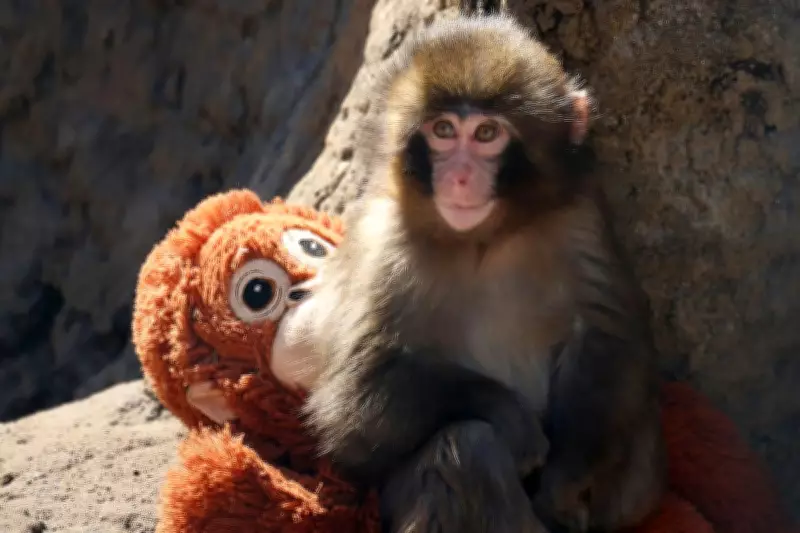
PETA Condemns Viral Baby Monkey's Zoo Treatment as Institutional Cruelty
The animal rights organisation People for the Ethical Treatment of Animals (PETA) has issued a strong condemnation of the viral story surrounding a baby Japanese macaque named Punch. The young monkey gained widespread online attention after videos showed him clinging to a stuffed orangutan toy at Ichikawa City Zoo in Japan. However, PETA argues that this situation is not the "cute" or "heart-warming" tale many perceive it to be, but rather a stark illustration of the inherent cruelty of zoos.
The Viral Story of Baby Monkey Punch
Punch, a young Japanese macaque, was rejected by his mother shortly after his birth in July of last year. Consequently, zoo staff at Ichikawa City Zoo took on the responsibility of hand-rearing the infant monkey. To provide comfort and simulate companionship, the caregivers gave Punch a stuffed orangutan toy, which he was frequently seen clutching in videos that subsequently went viral across social media platforms. The zoo has since reported that Punch has successfully integrated with a new troop and is no longer alone, but this development has not tempered PETA's criticism.
PETA's Stance on Zoo Confinement and Animal Welfare
In a detailed statement, PETA emphasised that Punch's reliance on a toy for comfort underscores a deeper, systemic issue within zoological institutions. The organisation contends that zoos fundamentally confine animals, stripping them of their natural autonomy and depriving them of the complex environments and rich social lives they would experience in their native wild habitats. PETA asserts that such environments cannot replicate the intricate social structures and behavioural freedoms essential for the psychological and physical well-being of species like Japanese macaques.

The animal rights group has explicitly called for Punch to be relocated to a reputable sanctuary, where he could reside in a more natural setting and form appropriate social bonds with other macaques. PETA argues that sanctuaries, unlike zoos, prioritise the welfare and rehabilitation of animals, offering them spacious, enriched environments that better mimic their natural ecosystems.
The Broader Implications for Zoological Practices
This incident has ignited a broader debate about the ethics of keeping wild animals in captivity for public display. PETA's criticism extends beyond Punch's individual case, serving as a pointed critique of the zoo industry as a whole. The organisation maintains that animals in zoos often "pay the lifelong price" for human entertainment, suffering from stress, behavioural abnormalities, and a lack of genuine social interaction.
While the zoo has highlighted Punch's successful integration as a positive outcome, PETA insists that such stories should not overshadow the fundamental ethical concerns. The group urges the public to reconsider supporting zoos and instead advocate for conservation efforts that protect animals in their natural habitats or in ethical sanctuaries dedicated to their care and rehabilitation.