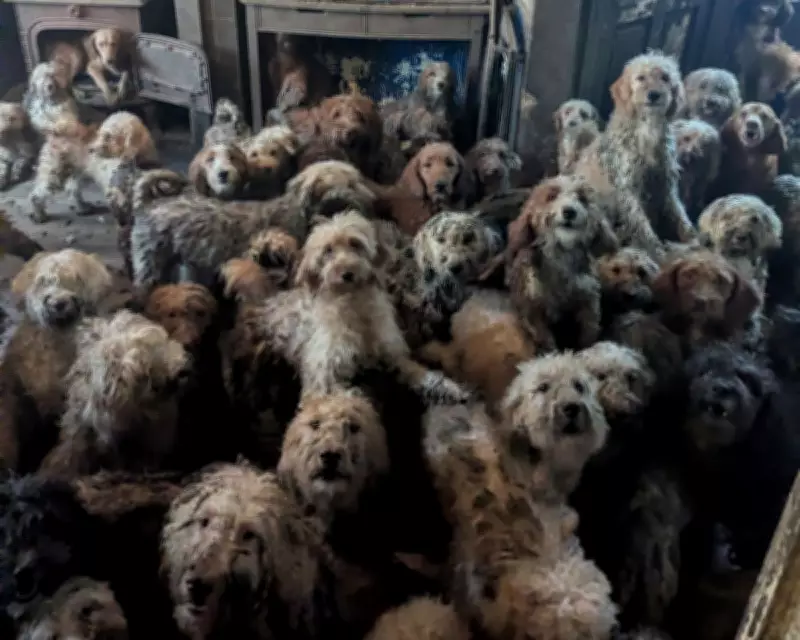
The RSPCA has confirmed the rescue of 250 dogs from a single property in the UK, following public disbelief that led to accusations of AI-generated images. The animal welfare charity took in 87 of the animals, with the remainder transferred to the Dogs Trust, after discovering the poodle-cross dogs crammed into a living room space at an undisclosed location.
Shocking Reality Behind the Images
After posting photos online, the RSPCA faced allegations from members of the public that the scenes were fabricated using artificial intelligence tools. In response, the charity emphatically stated that the images are genuine, highlighting a troubling trend in multi-animal incidents across England and Wales.
Rising Incidents and Owner Overwhelm
Jo Hirst, an RSPCA superintendent, explained, "This shocking image is the reality of many multi-animal cases and the situation our frontline officers seem to be confronting more and more – with reports of cases involving 10, 20 and even 100 animals on the rise." The charity has seen a 70% increase in such incidents since 2021, defined as calls involving 10 or more animals.

The property owners, described as "extremely vulnerable" by the RSPCA, admitted to losing control of the breeding process, leading to conditions that spiraled out of hand. No criminal prosecutions were pursued in this case, with the charity focusing on support and rehoming efforts.
Underlying Causes and Animal Welfare
RSPCA experts link cases of large animal numbers to factors such as mental health struggles, the cost of living crisis, and poor breeding practices. Initially well-meaning individuals often find themselves overwhelmed, resulting in situations where animal welfare is compromised.
Among the rescued dogs are Stevie and Sandy, now seeking forever homes from the RSPCA's Southridge Animal Centre. Stevie, a cocker spaniel, is blind and deaf, underscoring the severe neglect some animals endure.
Broader Implications and Statistics
Last year, the RSPCA responded to 4,200 incidents across England and Wales involving at least 10 animals at a single address. This data points to a growing challenge in animal welfare, with the charity urging public awareness and support to prevent similar cases.
The incident serves as a stark reminder of the consequences when breeding operations become unmanageable, calling for greater vigilance and resources in animal protection efforts.