Investigation Launched After Toxic Mothballs Found Scattered on Florida Beach
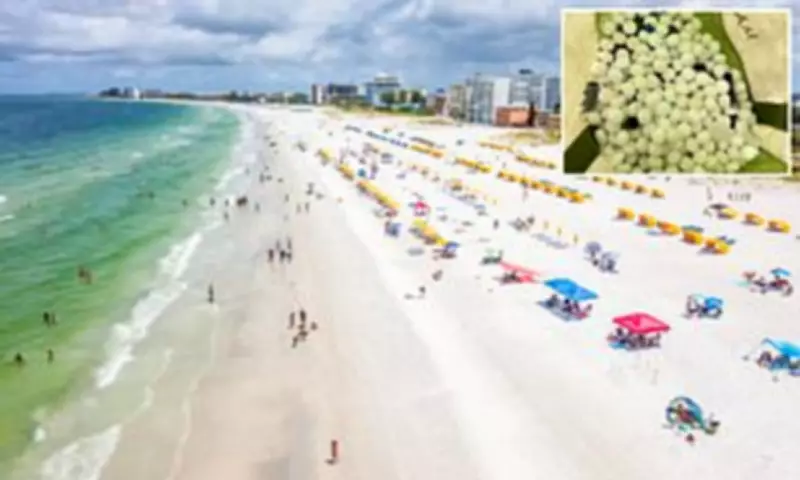
Authorities in Florida are actively investigating a disturbing environmental incident after hundreds of toxic mothballs were discovered scattered across the pristine sands of St Pete Beach. The alarming find was reported by locals who noticed a bitter odor near the Lido Residences on Gulf Boulevard on Monday, prompting an immediate response from officials.
Wildlife Officials Discover Illegal Repellent Attempt
Officers from the Florida Fish and Wildlife Conservation Commission (FWC) arrived at the scene to find hundreds of mothballs deliberately placed in the sand, stretching from the dunes all the way to the water's edge. FWC Officer Specialist Brian Ferguson, who spoke with 10 Tampa Bay News, revealed that the perpetrator appears to have been attempting to deter black skimmers—a threatened species of shorebird—from nesting on the beach.
'My feelings are that they were put out to try and deter the protected skimmers that were on the beach,' Ferguson stated. 'It didn't work because the birds were literally sitting, a colony of a couple hundred of them, were sitting within inches of the mothballs, literally surrounding them.'

Chemical Dangers and Legal Consequences
Mothballs contain hazardous chemicals such as naphthalene and paradichlorobenzene, which are strictly regulated. According to the Florida Department of Agriculture, using them as a wildlife repellent is illegal in the state, with violators facing potential fines of up to $10,000.
Florida wildlife agency spokesperson Shannon Knowles emphasized the dangers in a statement to the Tampa Bay Times: 'Mothballs are intended for indoor use and should not be used to repel wildlife. Placement of them on the beach is harmful, as wildlife can ingest them whether on the sand or if blown into the water.'
Perpetrator Strikes Again Overnight
In a troubling development, Ferguson and several volunteers cleaned up the mothballs on Monday, only to return on Tuesday and find more had been scattered in the same area overnight. Volunteer Sandy Denton confirmed the recurrence, telling local news: 'I know they did because I was out here yesterday and I got a bunch—and now they're out here again. They did it again last night, I'm telling you.'
Ferguson warned of the severe risks posed by these toxic substances: 'It is considered a poison, and it's regulated by the state and the feds, and it can be considered both a federal and a state violation if used inappropriately. Since they're considered a form of poison, they're highly regulated, and it's toxic. If those skimmers or the seagulls thought that was an egg and wanted to eat the egg, or a grandkid picked it up and thought it was a certain candy, it could have very serious consequences.'
Community and Official Responses
The City of St Pete Beach released a statement affirming its commitment to supporting state and environmental partners in the investigation. 'The City is committed to supporting our state and environmental partners throughout this investigation and to protecting the sensitive coastal habitats that are vital to our community,' the statement read. 'Shorebirds such as Black Skimmers rely on our beaches for nesting during this critical time of year, and disturbances or harmful substances can have significant impacts on their survival.'
On social media, outrage erupted over the incident, with users condemning the actions and calling for stricter penalties. One Facebook user wrote: 'To the low life slime balls, bottom feeders that put mothballs on the beach, you are nasty.' Another added: 'OMG...should be a felony...that's really sick.' A third commented: 'Wow! What is wrong with people?!? Nature and birds were here before us! Simple solution don’t live on the beach if you don’t like birds or fish or dolphins. WTH.'
The Florida Fish and Wildlife Conservation Commission continues to monitor the situation and investigate the source of the mothballs, urging anyone with information to come forward to protect both wildlife and public safety.