In a remarkable scientific breakthrough, researchers on Cape Cod, Massachusetts, have unearthed the oldest known recordings of whale sounds ever discovered. This historic find, captured in March 1949 off the coast of Bermuda, is believed to hold crucial insights into how these majestic marine mammals communicate, especially in comparison to today's increasingly noisy oceans.
The Discovery of a Quieter Ocean Era
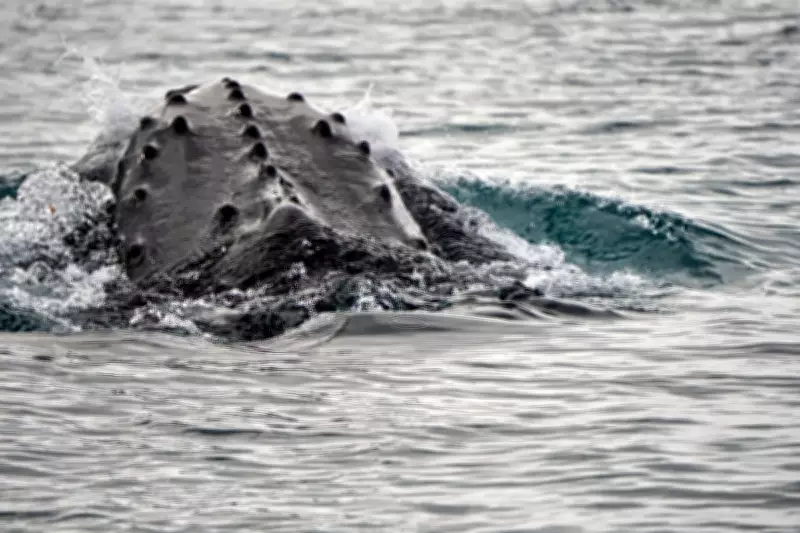
The recording features the complex song of a humpback whale, a species renowned for its elaborate vocalizations. Scientists from the Woods Hole Oceanographic Institution in Falmouth, Massachusetts, confirmed the significance of this discovery. They emphasize that the 1949 recording documents whale song during a period when the ocean was substantially quieter, providing a rare acoustic baseline from before widespread human industrial activity.
Key Numbers Behind the Breakthrough
20 Years: This recording predates the formal discovery of whale song by nearly two decades. It was made almost 20 years before scientist Roger Payne's groundbreaking work in the late 1960s that first brought whale songs to global attention. The sounds were captured accidentally by Woods Hole researchers who were testing sonar systems and conducting acoustic experiments aboard a research vessel in collaboration with the U.S. Office of Naval Research.

Preservation on Plastic Disc: Despite being recorded with relatively crude audio equipment of the era, the whale sounds were preserved on a durable plastic disc rather than magnetic tape. This fortuitous choice of medium allowed the recording to withstand the test of time, surviving in archives for over seven decades before its recent identification.
The Importance of Sound in Whale Ecology
90 Species: More than 90 distinct species of whales, dolphins, and porpoises rely on sound for their survival. These marine mammals produce a variety of acoustic signals including clicks, whistles, and complex calls that serve multiple critical functions. Scientists explain that sound enables whales to locate food sources, navigate vast ocean territories, find mates and offspring, and generally understand their underwater environment.
10 Times Louder: Research from the Scripps Institution of Oceanography conducted in the mid-2000s revealed that underwater noise levels in some ocean regions have increased tenfold since the 1960s. This dramatic rise in anthropogenic noise—primarily from shipping, industrial activity, and other human sources—has become a major concern for marine biologists studying how noise pollution affects whale communication and behavior.
The Humpback Whale: Nature's Accomplished Vocalist
55,000-Pound Singers: The humpback whale, which can weigh over 55,000 pounds (24,947 kilograms), is possibly the ocean's most accomplished vocalist. Over the years, numerous recordings of humpback songs have captivated human listeners, with many describing their melodies as hauntingly beautiful and mournful in quality.
100,000 Copies: The cultural impact of whale songs was demonstrated by the phenomenal success of "Songs of the Humpback Whale," an album produced by Roger Payne in 1970. This recording sold more than 100,000 copies, becoming the best-selling environmental album of all time and playing a significant role in sparking the global movement to end commercial whale hunting.
Scientific Implications for Modern Research
The newly discovered 1949 recording offers scientists an unprecedented opportunity to compare whale communication from a quieter oceanic environment with today's soundscape. Researchers believe this historical baseline will help them better understand how modern human-made noises—particularly from shipping vessels—are affecting whale communication patterns, social structures, and potentially even reproductive behaviors.
This discovery represents more than just an archival curiosity; it provides tangible data that could inform conservation efforts and marine policy decisions aimed at protecting these magnificent creatures in an increasingly noisy world.