Mass Salmon Deaths in Tasmania Spark Calls for Industry Fines
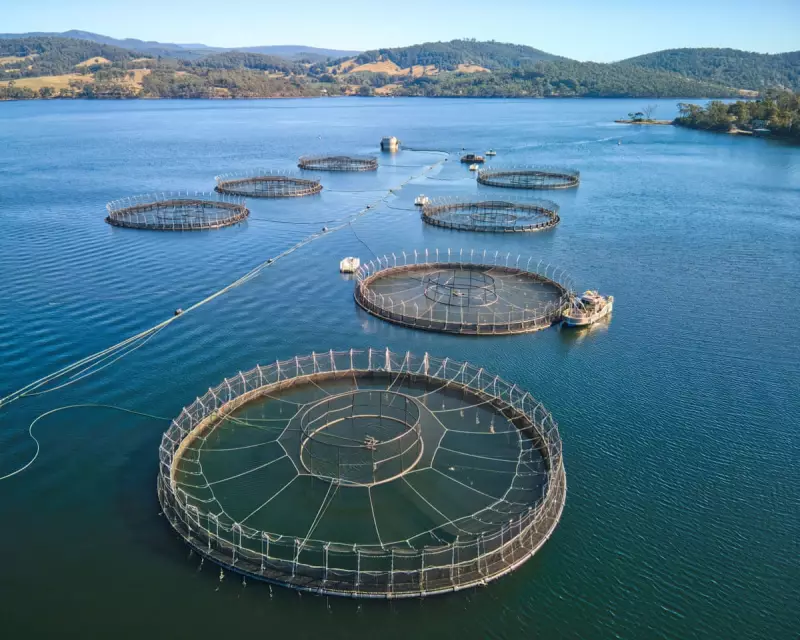
New government data has revealed a staggering loss of marine life in Tasmania, with at least 4 million salmon dying prematurely at fish farms in 2025. The figures, released by the state's Environmental Protection Authority (EPA), highlight a critical issue as ocean temperatures continue to warm, posing severe risks to aquaculture.
Alarming Death Toll Linked to Warming Waters
According to the EPA data published on Friday afternoon, more than 2,500 tonnes of salmon perished in the last three months of 2025 alone. This brought the total death toll for the year to 20,133 tonnes lost before processing for public consumption. In a particularly concerning trend, over 40 tonnes of salmon died per day in December, nearly triple the monthly average recorded from July to October.
Scientific studies indicate that Atlantic salmon are adversely affected when ocean temperatures approach 18°C. At higher temperatures, these fish encounter less oxygenated water, suffer from liver and kidney damage, experience reduced appetite, and become more vulnerable to disease. The EPA data suggests that around 500,000 fish died in November and December as a direct result of these warming conditions.

Expert Warnings and Industry Response
Stewart Frusher, a retired professor from the Institute for Marine and Antarctic Studies at the University of Tasmania, described the increase in salmon deaths in December as an ominous sign for the future. "We are essentially at the stage where the waters in south-eastern Tasmania aren't fit for purpose for salmon," he stated, underscoring the environmental challenges facing the industry.
Despite producing nearly 68,000 tonnes of gutted salmon for public consumption in 2024-25, Tasmanian companies have faced criticism for their handling of mass fish deaths. The state's Animal Welfare Act mandates that owners must not use management methods likely to cause unreasonable pain or suffering to animals. However, Frusher noted that while the RSPCA has clarified salmon feel pain, there has been no apparent regulatory action over these incidents.
Calls for Fines and International Comparisons
There are growing calls for companies to be fined under animal welfare legislation for the mass salmon deaths. Advocates point to international examples, such as Norway, where significant fines are imposed for similar violations. In November 2025, the Norwegian Food Safety Authority fined aquaculture company Salaks 1.86 million kroner (approximately A$286,000) for breaching fish welfare standards, resulting in the deaths of about 106,000 salmon. Another company, Tombre, was fined later that month for the deaths of 132,000 salmon.
Critics argue that the lack of fines in Tasmania does little to incentivise the salmon industry to prevent future mass deaths. "Penalties must apply, as they do in Norway, as a disincentive to allowing current mortality rates to become the new normal, and bring animal welfare back into focus for an industry that is clearly beyond control," said one commentator.
Salmon Tasmania, representing the state's three marine salmon producers, was approached for comment on these calls for substantial fines but did not respond. This situation raises broader questions about regulatory oversight and the impact of climate change on marine ecosystems and food production.