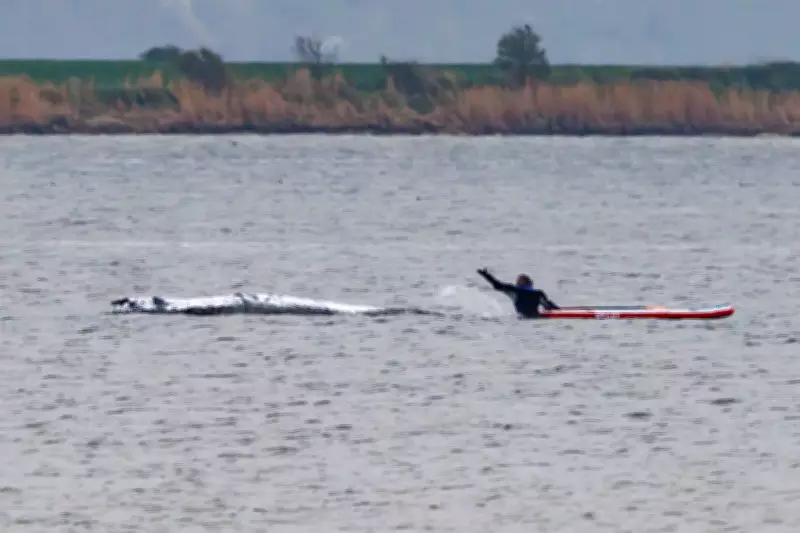
A humpback whale, affectionately named "Timmy" by local media, is confronting its probable final days in the shallow waters of the Baltic Sea near Wismar, Germany, a location far removed from its natural Atlantic Ocean habitat. Since its initial sighting on 3 March 2026, the whale has exhibited alarming signs of severe distress, including irregular breathing patterns, prolonged immobility, and a deteriorating skin condition, which experts attribute to the Baltic Sea's notably low salt content. This environment is ill-suited for such marine mammals, exacerbating Timmy's health crisis.
Failed Rescue Attempts and Growing Desperation
Despite numerous and increasingly sophisticated rescue attempts, Timmy's situation has only worsened over time. Initial efforts involved guiding the whale towards deeper waters, but these proved futile as Timmy repeatedly became stranded in the shallow Baltic Sea. A more advanced plan, which involved lifting the whale onto specially designed pontoons for transport to the North Sea, also ended in failure, with Timmy unable to navigate the challenging conditions. These repeated setbacks have highlighted the immense difficulties in rescuing a large, distressed whale from such an inhospitable environment.
Global Attention and Ethical Debates
The whale's heartbreaking struggle has captured significant global attention, leading to widespread public engagement through livestreams and protests. This has sparked intense debates among marine experts and the general public regarding the ethics of intervention versus allowing nature to take its course. On one side, there are calls for continued rescue missions to save Timmy, while others argue that such efforts may be causing the whale undue stress and prolonging its suffering unnecessarily.

Expert Insights on Timmy's Condition
Marine biologists, including Thilo Maack from Greenpeace, have provided critical insights into Timmy's dire condition. They suggest that the whale is critically ill, likely suffering from multiple health issues compounded by the Baltic Sea's unsuitable salinity levels. Maack and other experts indicate that continued rescue attempts, while well-intentioned, may be exacerbating Timmy's stress, leading to the grim conclusion that its death is likely imminent. This perspective underscores the complex balance between human compassion and the harsh realities of wildlife conservation.
The story of Timmy the whale serves as a poignant reminder of the challenges faced in marine rescue operations and the ethical dilemmas involved in intervening with distressed wildlife. As hopes fade for a successful outcome, the global community watches with a mix of sorrow and reflection on the limits of human intervention in natural processes.