Scientists Baffled by Widespread Atmospheric Pollutant with Unknown Health Risks
Researchers have been left perplexed by the discovery of a mysterious pollutant that appears to be "widely present" throughout the Earth's atmosphere. Methylsiloxane, a specific type of silicone compound commonly utilized across multiple industries including transportation, cosmetics, and household products, has been detected at unexpectedly high concentrations across diverse environments.
From Traffic Proximity to Global Presence
Previous scientific investigations had suggested that methylsiloxane contamination was primarily confined to areas adjacent to heavy traffic, resulting from the evaporation of industrial products. However, a groundbreaking new analysis conducted by researchers from Utrecht University has dramatically overturned this assumption.
The comprehensive study has revealed that methylsiloxane pollutants are now present in significant concentrations across urban centers, coastal regions, rural landscapes, and even remote forest sites. This widespread distribution has raised immediate concerns among the scientific community regarding potential human health implications that remain completely unknown.

Alarming Exposure Levels
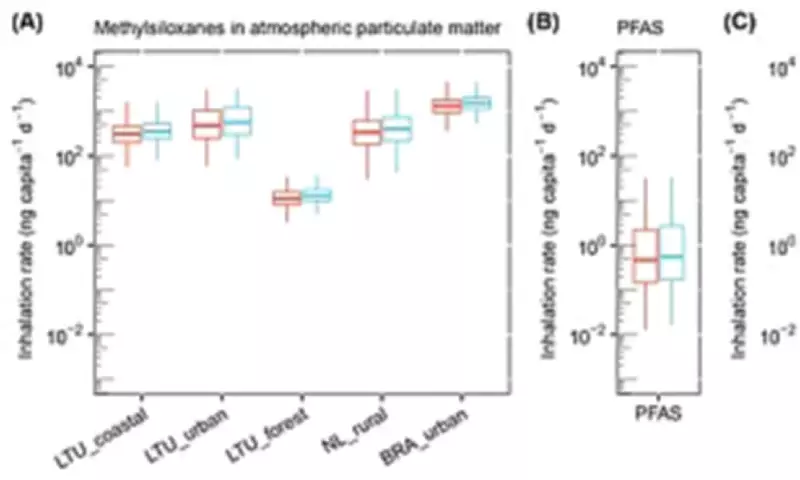
Dr. Rupert Holzinger, associate professor at Utrecht University who co-supervised the research, expressed particular concern about exposure levels. "We estimate that the daily inhalation dose of methylsiloxanes may exceed that of other synthetic compounds, such as PFAS and micro- and nanoplastics," he stated. "We therefore underscore the urgent need for the evaluation of these health impacts."
While synthetic pollutants like PFAS and microplastics have been recognized as pervasive environmental contaminants for years, methylsiloxane compounds have largely escaped scientific scrutiny until now. The research team's investigation was prompted by earlier findings that ships and vehicles emit large methylsiloxane molecules that do not readily evaporate.
Global Sampling Reveals Universal Contamination
To understand the true extent of this contamination, researchers collected air samples from multiple regions across the Netherlands, Lithuania, and Brazil. The results were startlingly consistent: these large molecular methylsiloxanes appear to be present almost everywhere in the atmosphere.
"The findings also suggest that concentrations of methylsiloxane in the atmosphere are much higher than expected," Dr. Holzinger confirmed. Urban areas showed the highest contamination levels, with São Paulo, Brazil recording 98 nanograms per cubic meter. In contrast, forested regions displayed the lowest concentrations, with Rugsteliskis, Lithuania measuring just 0.9 nanograms per cubic meter.
Traffic Emissions Identified as Primary Source
The analysis pinpointed traffic emissions as the dominant source of these pollutants, with engine oil identified as the likely specific origin. More than half of all detected particles could be traced back to transportation-related sources.
Given the near-universal presence of methylsiloxanes, researchers conclude that human populations are likely experiencing continuous exposure, inhaling "considerable amounts" of these compounds on a daily basis. Beyond health concerns, the study suggests these large molecular methylsiloxanes may also influence climate change processes.
Urgent Call for Comprehensive Research
In their study published in Atmospheric Chemistry and Physics, the research team emphasized the critical need for immediate investigation. "Collectively, these considerations highlight the need for comprehensive and timely research on methylsiloxanes in atmospheric particulate matter, given their potential implications for human health, climate change, and environmental sustainability."
Understanding Air Quality Measurement
The Air Quality Index (AQI) serves as a crucial tool for environmental agencies worldwide to communicate air pollution levels to the public. This standardized measurement system provides easily comparable numbers across different pollutants, locations, and time periods.
While categorization specifics vary between countries, each AQI level corresponds to distinct health risk categories. The index focuses particularly on health effects that might manifest within days or hours of exposure to polluted air.

Key pollutants monitored include particulate matter, ground-level ozone, sulfur dioxide, nitrogen dioxide, and carbon monoxide. Among these, particulate matter and ozone pollutants present the most significant risks to both human health and environmental stability.
As methylsiloxane joins the growing list of atmospheric contaminants, understanding its inclusion in air quality monitoring becomes increasingly important for public health protection worldwide.