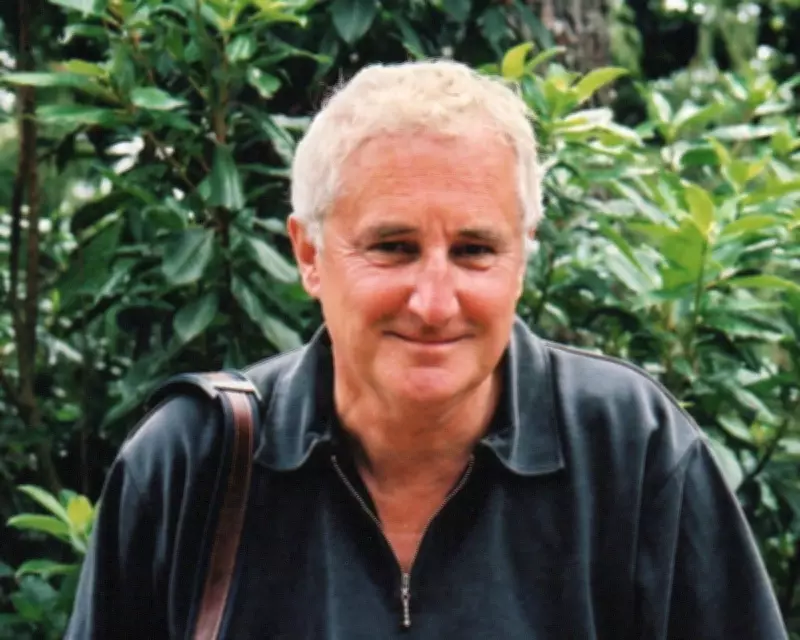
David Evans, an applied mathematician who passed away at the age of 85, is remembered for his significant contributions to renewable energy and higher education reform. His pioneering work on wave power and his innovative approach to university admissions have left a lasting impact.
Academic Leadership and Admissions Reform
During his tenure as pro-vice chancellor at the University of Bristol from 1997 to 2002, Evans introduced a groundbreaking strategy into the admissions system. Drawing on robust statistical evidence, he demonstrated that students from disadvantaged backgrounds often achieved better degree outcomes than their peers. This led him to successfully advocate for lowering entry tariffs for specific groups, a move that faced criticism at the time but has since been adopted by universities across the UK.
Early Life and Career
Born in Shotton, North Wales, Evans was the younger child of Jack, a clerk in a local steelworks, and his wife, Kathleen. He studied mathematics at the University of Manchester, where he completed his PhD before undertaking research positions in the United States for two years. In 1969, he was appointed as a lecturer at the University of Bristol, where he remained until his retirement in 2006.

Pioneering Wave Energy Research
Evans' research focused on the mathematical theory of how ocean waves interact with marine structures. He is best known for his work on wave power, which involves designing devices to harvest energy from ocean waves as a renewable source. In response to the 1973-74 oil crisis, the UK government launched an ambitious 10-year research programme to reduce dependence on fossil fuels. Evans quickly responded by developing underpinning theory and, in 1976, proposing his own converter concept known as the "Bristol Cylinder."
The Bristol Cylinder Concept
The Bristol Cylinder was a remarkably ingenious idea based on complex mathematical theory. Evans collaborated with experimentalists, engineers, and policy-makers to refine the concept, and it emerged as one of five leading designs from the UK wave energy programme. However, in 1982, funding was withdrawn after a report commissioned by the incoming government concluded that the prospects for wave energy looked poor, halting further development.
Personal Interests and Legacy
Outside of his professional life, Evans had a passion for sport, particularly tennis and cricket, and enjoyed travel, politics, and classical music. He was also a skilled pianist. His first wife, Janet Dowell, a schoolteacher whom he met while studying at the University of Manchester, passed away in 1999. He is survived by his second wife, Catherine Hunt, a lecturer in the history of art at the University of Bristol, whom he married in 2003.
David Evans' legacy includes not only his contributions to renewable energy through the Bristol Cylinder but also his efforts to make higher education more accessible through admissions reform. His work continues to influence both fields, highlighting the importance of innovation and equity in academic and environmental pursuits.