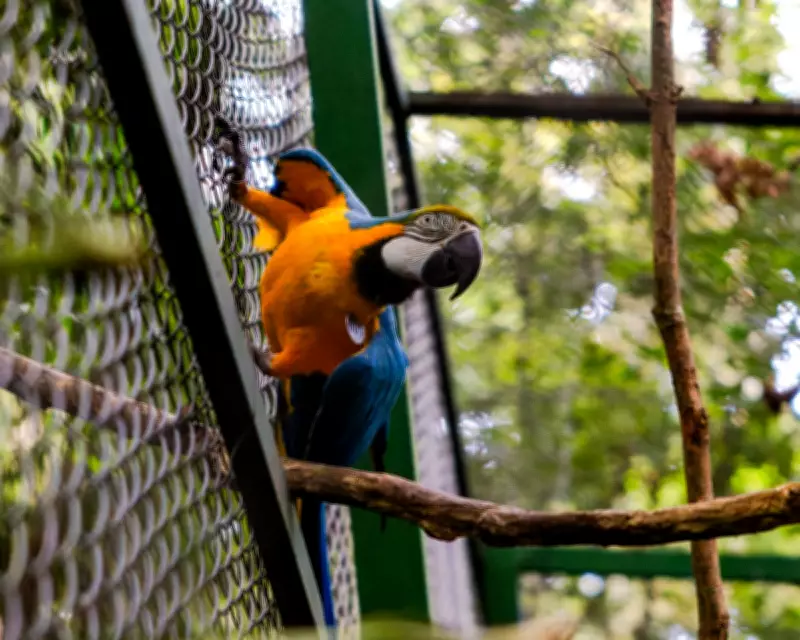
Blue-and-Yellow Macaws Make Historic Return to Rio's Tijuca National Park
In a landmark conservation effort, blue-and-yellow macaws are being reintroduced to Tijuca National Park in Rio de Janeiro, Brazil, marking their first presence in the city after a 200-year absence. This ambitious 'refaunation' project aims to restore lost species and revitalise the urban rainforest, bringing back the iconic birds that once thrived in the region.
A Dream Realised After Centuries of Extinction
The French explorer Jean de Léry first documented an abundance of these colourful parrots around Indigenous tribes in the 16th century, with the Austrian naturalist Johann Natterer sighting the Ara ararauna species in Rio in 1818. Following this, records fell silent as deforestation and wildlife trafficking likely drove the macaws to local extinction, alongside other native animals like tapirs, jaguars, and peccaries.
Now, flashes of blue and gold are reappearing in the forest canopy, thanks to the dedicated work of biologists. Viviane Lasmar, director of Tijuca National Park, expressed her joy: "They are so magnificent. For me, as the head of the park, it's special. But even more so as a carioca [someone from Rio]. It's a dream come true."

Restoring an Urban Rainforest Through Refaunation
Tijuca National Park, one of the world's largest urban parks, spans nearly 4,000 hectares of Atlantic rainforest. Despite its lush appearance, 19th-century exploitation for coffee and charcoal decimated the forest, leading to the loss of many species. Emperor Dom Pedro II initiated reforestation in the 1860s, but the macaws and other wildlife had already vanished.
The Refauna organisation, led by executive director Marcelo Rheingantz, estimates that two-thirds of large and medium-sized mammals once native to Tijuca have been lost. Through its refaunation programme, Refauna has been gradually reintroducing species:
- The red-rumped agouti, a rodent, was the first species reintroduced in 2010.
- Brown howler monkeys, last recorded in Rio in Charles Darwin's 1832 diaries, have returned.
- Yellow-footed tortoises now meander through the undergrowth once more.
Only four macaws have been brought back so far, but their aggressive squawks already enliven the canopy. "It's really beautiful to be putting the forest's orchestra back together again," Rheingantz remarked.
Challenges and Hopes for the Macaws' Future
The macaws, named Fernanda, Selton, Fatima, and Sueli after Brazilian cultural figures, were rescued from captivity and have undergone nearly a year of training to adapt to the wild. Refauna plans to release them again in September, with eventual goals of introducing 50 birds. However, the project faces challenges, including the birds' curiosity towards humans due to their captive past and the park's 5 million annual visitors.
Vanessa Kanaan, director of Instituto Fauna Brasil, emphasised the ecological importance: "Reintroducing species is not simply about returning animals to the forest. It is about rebuilding ecological relationships and ensuring that these species can once again perform their ecological roles."
The macaws' powerful beaks may help disperse seeds, aiding forest regeneration, while their ability to travel long distances could spread seeds beyond the park. Rheingantz shared his vision: "The macaw really is a symbol of our efforts to bring life back to Tijuca. My dream is that one day they will fly far away from here and we will be able to see them from all over the city."