Japan's 40-Bin Town vs Australia's Recycling: Are More Bins the Answer?
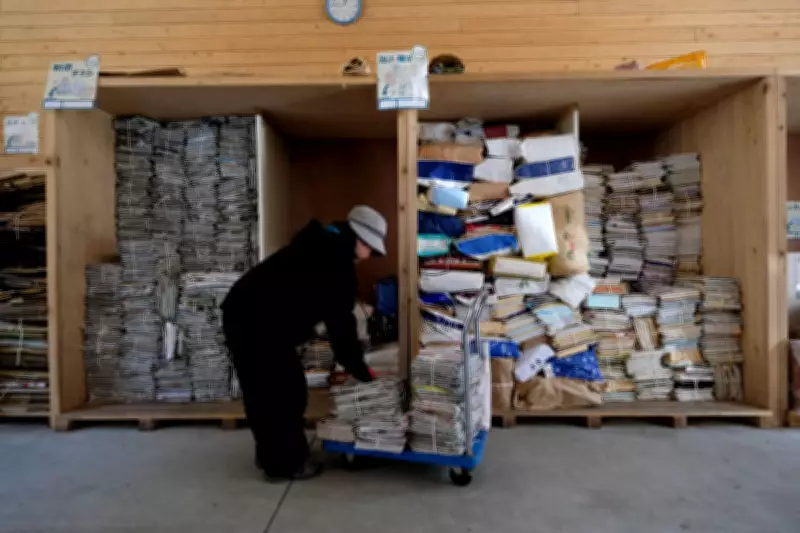
In the Japanese town of Kamikatsu, residents take their waste to a local recycling centre, sorting it into over 40 distinct categories. From toothbrushes to disposable chopsticks, this meticulous system contributes to an impressive 80% recycling rate, with the ultimate goal of achieving "zero waste." While this mountainous town on Shikoku island may be an outlier, it highlights a global trend: households in some countries regularly manage five to 10 different recycling streams.
How Does Australia's Recycling Compare?
In Australia, kerbside wheelie bins have been in use since the 1980s, yet the national recycling rate remains stuck at 44%. Victoria is leading the charge with a statewide mandate requiring all homes to have four wheelie bins—the most in the country—including commingled recycling (yellow), organics (green), glass (purple), and paper and cardboard (blue in some councils). According to latest data, local governments collect approximately 9.9 million tonnes of waste annually via kerbside bins, comprising 6 million tonnes of rubbish, 1.8 million tonnes of recycling, and 2 million tonnes of organics.
Amelia Leavesley, a waste researcher at the University of Melbourne, notes that kerbside collection is just one part of a complex system. For recycling to be effective, materials must be recyclable, households need to separate them properly, councils require access to infrastructure like materials recovery facilities, and there must be market demand for recycled products. Additionally, states have implemented container deposit schemes, such as South Australia's pioneering 1977 initiative, offering refunds for eligible drink containers.

Global Recycling Systems: A Broader Perspective
Compared to Australia, other nations boast significantly higher recycling rates. Japan achieves 79% and Germany 69% for municipal solid waste, largely due to advanced separate collection systems. In Germany, household waste is sorted into five main categories: organic, paper and cardboard, glass (by colour), metal and plastic, and residual waste. This is complemented by a deposit return system with a 98% return rate on single-use drink containers.
In Wales, some homes have up to 10 separate bins, contributing to a recycling rate that has surged from about 5% in 1999 to 68% in 2025. Residents of Cardiff will soon sort waste into eight streams, including plastic and cans, soft plastic, and food waste. Huw Irranca-Davies, the deputy first minister of Wales, emphasises that recycling has become integral to the national identity.
Are More Bins Actually Better for the Environment?
While increased stream separation can yield cleaner, higher-quality recyclables, it comes with trade-offs. Joe Pickin, director of environmental consultancy Blue Environment, points out that more bins may require extra collections, more trucks on the road, and higher costs. In Australia's vast landscape, rural areas face particular challenges, as transport costs can render recycling less cost-effective.
Factors like neighbourhood density, demand for recycled materials, and disposal methods (landfill vs. incineration) also influence kerbside collection design. Pickin adds that introducing new services requires a generational shift, not a quick fix. "It's a generational change," he says. "It's not something you can just do in a year."
The Bigger Picture: Beyond Recycling Bins
A UN environment programme report estimates over 2 billion tonnes of municipal solid waste are generated globally each year, stressing that recycling is not the ultimate goal. Cip Hamilton, plastics campaign manager at the Australian Marine Conservation Society, argues that the core issue is overproduction of materials like plastic, which poses a severe threat to marine life. "We cannot recycle our way out of a crisis driven by overproduction," she asserts, calling for upstream measures to reduce packaging and simplify formats.

Hamilton highlights public frustration with complex packaging, noting that consumers shouldn't need a degree in material science to navigate waste disposal. As Victoria adapts to four bins and global examples like Kamikatsu inspire, the debate continues: while more bins can enhance recycling quality, true sustainability demands a holistic approach focused on waste reduction and reuse from the outset.