As one in six children worldwide is affected by war, a UK-based charity is stepping up to provide joy and development opportunities through innovative playground designs. Playrise, founded by photographer Alexander Meininger, is producing flatpack timber climbing frames and play equipment for displaced families in conflict and disaster zones, from Ukraine to Ethiopia.
From Parental Observation to Humanitarian Mission
Alexander Meininger, a German-born photographer now living in London, found inspiration in his own children's love for playgrounds. After building an indoor treehouse for his sons, he was moved by the Ukraine war to think bigger. "Watching the destruction on television, I wondered what I could do to help Ukrainian children," Meininger explains. This led to the launch of Playrise, a charity focused on creating affordable, easy-to-assemble play equipment for temporary refugee accommodations.
"Initially, I considered salvaging materials from conflict sites, but these communities need something quick and affordable," says Meininger. "Like renting furniture from Ikea, refugee camps require non-permanent solutions, yet people often stay in these settings for depressingly long periods."

Collaborative Design and Prototyping
To develop effective solutions, Meininger partnered with UK architecture firm OMMX and engineers Webb Yates. Through NGOs like Empowerment for Development and Save the Children, they connected with displaced communities in Egypt and Ethiopia, including the Aysaita camp for Eritrean refugees and sites in Cairo and Karkar for Palestinian and Sudanese refugees.
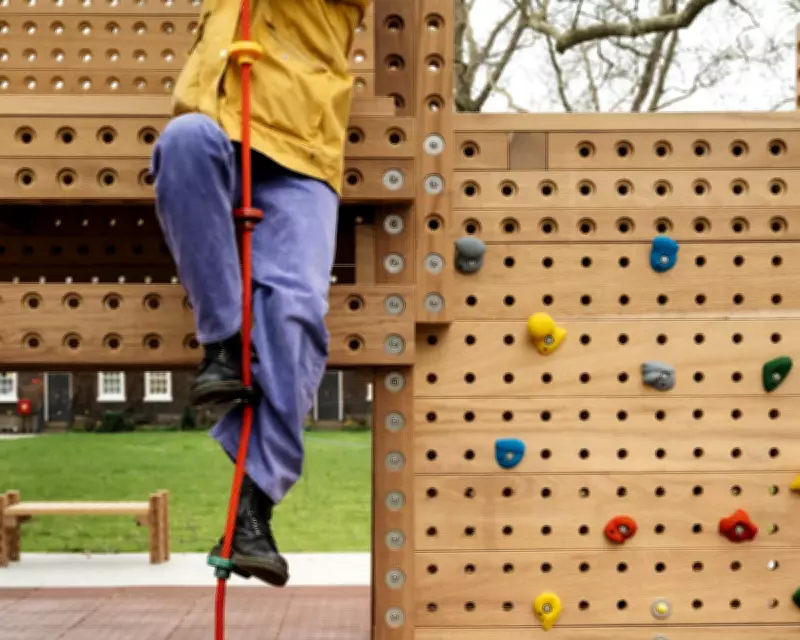
Hikaru Nissanke, director of OMMX, notes that Playrise aligns with the firm's Young Policymakers scheme, which advocates for children's needs in the building industry. The prototype features modular iroko hardwood beams and planks secured with metal bolts, customizable with add-ons like ropes, monkey bars, and basketball hoops. The design allows reconfiguration to fit various spaces, from open deserts to cramped courtyards, with easily replaceable parts and playground-specific security nuts.
Universal Joy and Developmental Benefits
"The project was complex," Nissanke admits. "We needed mass-producible structures that felt personal to each community. Despite varied conditions, we found a universal truth: every child wants to find joy." Research underscores that play is crucial for child development, fostering motor skills, cooperation, and social abilities. According to Unicef, nearly 50 million children were living in forced displacement in 2025, with young people making up about 40% of over 122 million displaced by conflict.
The first Playrise set is scheduled for deployment to the Aysaita camp in Ethiopia next month. Established in 2007, some children have spent their entire lives in this desert encampment. Nissanke reports that children helped assemble the play structures, gaining practical building skills. "We're equipping them with skills for future home-building, which is poignant given their precarious living conditions," she says.
Future Plans and Ethical Considerations
Meininger is focused on scaling Playrise to ensure availability for NGOs and young people, while avoiding overambitious ideas like meeting spaces or community gardens. "We didn't want a western, patronising perspective," he emphasises. "From my travels, I've seen that humans universally want their kids to thrive and play."
For more information, visit the Playrise charity website. This initiative highlights how design and compassion can combine to bring hope to children in the most challenging circumstances, proving that play is not just a luxury but a vital part of childhood resilience and growth.