Ancient 500-Year-Old Oak Felled by Toby Carvery Was Alive, Investigation Reveals
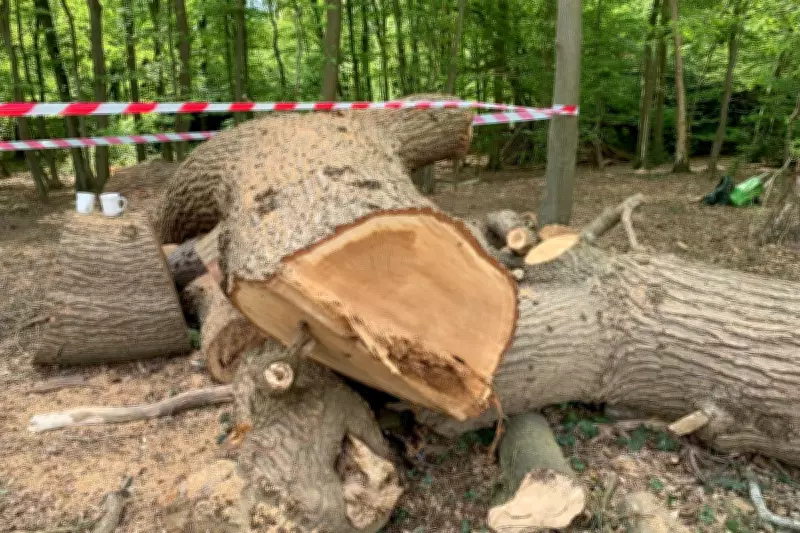
In a shocking twist to an environmental saga, an ancient oak tree, estimated to be between 450 and 500 years old, was felled without permission by Toby Carvery outside its Whitewebbs House restaurant in Enfield, north London, on 3 April 2025. Despite initial assertions from the restaurant chain that the tree was dying, a subsequent investigation by the Forestry Commission has now definitively found that the oak was still alive at the time of its removal.
Contradictory Claims and Official Findings
The Forestry Commission's probe identified green shoots in the cut wood, providing clear evidence that the ancient oak was not in a state of decline as claimed by Toby Carvery. This discovery has intensified scrutiny over the incident, highlighting a significant discrepancy between the company's justification and the factual condition of the tree. While police investigations concluded that no criminality was involved, and the Forestry Commission noted no breaches of legislation due to the tree lacking a formal preservation order, the findings have sparked widespread outrage among conservationists and local authorities.
Legal and Environmental Repercussions
Enfield Council, as the landowner, is now actively pursuing eviction proceedings against Mitchells & Butlers (M&B), the operator of Toby Carvery, citing serious breaches of the lease agreement. The council's actions underscore the gravity of the situation, with officials emphasizing the need for accountability in cases involving heritage trees. Dr Ed Pyne of the Woodland Trust has weighed in, describing the oak as irreplaceable and calling for enhanced legal protections for ancient trees to prevent similar incidents in the future. His advocacy points to broader concerns about the safeguarding of natural heritage in urban and suburban settings.

Apology and Public Response
In response to the backlash, Toby Carvery's chief executive has issued a public apology for the upset caused by the felling of the ancient oak. However, this gesture has done little to quell the controversy, as environmental groups and local residents continue to demand stronger measures to protect such venerable trees. The incident has reignited debates over corporate responsibility, urban development, and the preservation of historical ecosystems, with many calling for stricter regulations and oversight to ensure that ancient trees are not vulnerable to unauthorized removal.
The saga of the 500-year-old oak serves as a poignant reminder of the delicate balance between commercial interests and environmental stewardship, prompting calls for more robust legal frameworks and public awareness to safeguard our natural heritage for generations to come.