Australian Zoologist Advocates for Complete Cat Ban to Save Native Species
A prominent Australian zoologist has issued a stark demand for a comprehensive ban on all cats, proposing legislation that would make ownership illegal and ultimately drive domestic felines toward extinction. This radical proposal aims to protect Australia's vulnerable native wildlife from what experts describe as a devastating predation crisis.
Staggering Statistics Reveal Cat Predation Crisis
Dr. Antone Martinho-Truswell from the University of Sydney has presented alarming data showing that feral and pet cats collectively kill approximately three billion native animals annually across Australia. This translates to a breathtaking daily death toll of 8.2 million creatures, highlighting the scale of ecological damage.
"The breeding trade should be shut down," Dr. Martinho-Truswell declared emphatically. "Pet cats will slowly become extinct. It's time we outlawed pet cats. Cats kill more of Australia's native species than any other of the exotic animals we outlaw."

Detailed Breakdown of Daily Wildlife Losses
According to research from The Invasive Species Council of Australia, the daily carnage includes:
- 2.92 million mammals
- 1.67 million reptiles
- 1.09 million birds
- 2.97 million invertebrates
- 0.26 million frogs
Australia currently hosts up to six million feral cats roaming wild, alongside 4.9 million domestic pets. Each pet cat is estimated to kill between 186 and 200 animals every year, contributing to an annual total of approximately 400 million native creature deaths from domestic cats alone.
Surprising Behavior of Domestic Cats
Even cats supposedly confined indoors at night have been regularly tracked venturing outside their homes, hunting birds and small animals. Zoologists have documented domestic cats traveling distances up to 30 kilometers to feast on wildlife in areas recently devastated by bushfires, demonstrating their persistent predatory instincts.
Meanwhile, feral cats have established themselves as among the most ferocious predators within the Australian ecosystem. Experts contend that local wildlife has suffered more extensive damage from cats than any ecosystem worldwide since the initial arrival of these pets with the First Fleet.
Diverging Perspectives on Solutions
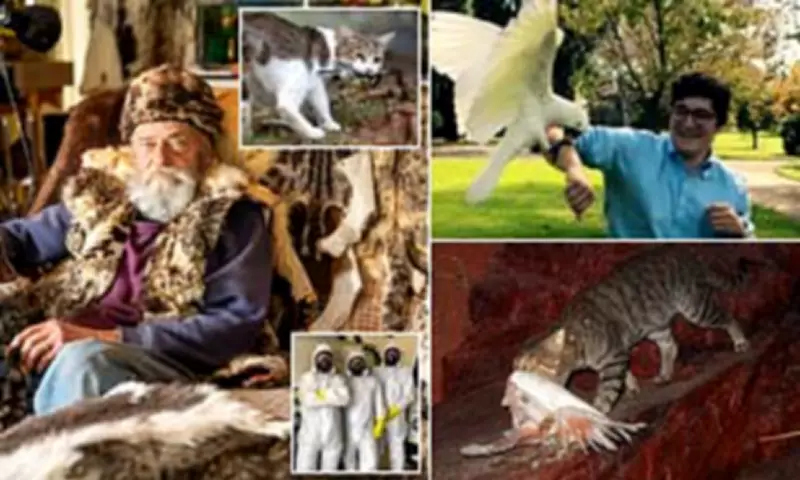
South Australian cat trapper Barry O'Shea, who still envisions a future for pet cats, advocates for stricter containment measures rather than outright bans. "You'd have to have them in a cat run, a caged and netted area from which they can't get out," he suggested.
However, Dr. Martinho-Truswell remains convinced that only a complete prohibition can adequately protect Australia's fragile wildlife diversity. "We are allowing a massacre to persist for the sake of keeping a discretionary pet," he argued. "I love animals. We do not need cats. Every pet cat is a potential escapee. Your cat is a killer and it cannot be permitted to live here."
Comparative Analysis with Other Species
The biologist highlighted what he perceives as inconsistent regulations, noting that while foxes are illegal to own or import, and tortoises are banned due to their invasive nature and disease risks, cat ownership remains largely unrestricted. Similarly, exotic birds like macaws face import bans, yet cats continue to enter the country freely.
"You can phone up a cat breeder and buy one ... keep it in your garden and let it roam the neighbourhood," Dr. Martinho-Truswell observed, characterizing Australian cat ownership as "cavalier" compared to strict quarantine laws governing other invasive species.
Scientific Debate Over Extinction Causes
While some scientists have questioned the extent of cats' impact on Australian mammal extinctions since British colonization, a recent rebuttal from 25 leading conservation experts has reinforced the consensus view. Professor John Woinarski, leading this group, concluded: "The evidence is overwhelming. Cats and foxes were the primary driver of the decline of most of the Australian mammals that have become extinct since 1788, and continue to drive the decline of many remaining species."

Professor Woinarski emphasized that this debate extends beyond academic argument, stating that "the survival of many of Australia's remaining native mammals, and other species like ground-nesting birds, depends on controlling cats and foxes."
Grassroots Conservation Efforts
On Kangaroo Island, veteran trapper Barry Green, known locally as the "Cat Man," has been capturing and humanely eliminating feral cats for three decades, assisted by fellow conservationist Sean O'Shea. Mr. O'Shea has proposed integrating feral cat trapping into school curricula as part of wildlife preservation education.
"They could go on school camps and learn these skills, see how we trap and shoot humanely," he suggested. "Who knows, it could lead some of them into careers in ecology and such like."
To illustrate the severity of the threat, Mr. O'Shea invited Australians to imagine millions of lions and tigers roaming freely, drawing a parallel to the current ecological disruption caused by feral and domestic cats.
Practical Implementation of Proposed Ban
Dr. Martinho-Truswell acknowledges that eradicating feral cats presents significant challenges but maintains that eliminating pet cats could be achieved efficiently and straightforwardly. Such measures could potentially reduce Australia's total cat population by 40 to 80 percent, providing substantial relief to native wildlife.
Anticipating strong opposition from cat enthusiasts, the zoologist concluded with a request: "Please keep your hate mail brief and civil." This controversial proposal continues to spark intense debate among conservationists, pet owners, and policymakers across Australia.