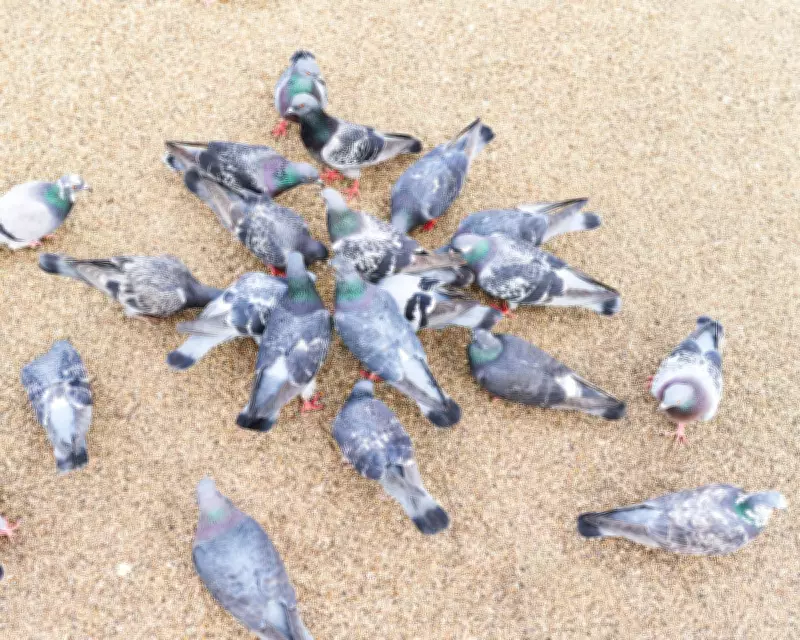
The Urban Pigeon Debate: Feeding Bans or Natural Balance?
In cities across the UK, from Norwich to London, the management of feral pigeon populations has sparked intense debate among experts and residents alike. A recent feature highlighted the ongoing "pigeon wars," revealing deep divisions over how to handle these ubiquitous birds.
Expert Insights on Population Control
Dr Dave Dawson, a former head of environment for the Greater London Authority, draws on decades of research as an animal population ecologist. He studied pigeons as pests in New Zealand during the 1960s and later advised on control measures in Trafalgar Square under Ken Livingstone's administration.
Dr Dawson emphasizes that traditional deterrents have consistently failed. Methods such as explosions, rocket-propelled nets, and Harris's hawks did not reduce pigeon numbers; instead, the population remained directly correlated with the availability of food. The birds simply flew around briefly before returning to feed, treating the disturbances as mere exercise.

He criticises recent proposals, like using dovecotes to harvest eggs, as misguided. Pigeons are not inherently sedentary, and fecundity is not the core issue. "Investing in dovecotes would be fun and, like Harris's hawks, a tourist attraction, but sadly the solution to the undeniable problem of excess pigeon populations is to control those who believe that pigeons need feeding," Dr Dawson asserts. He advocates for humane population control through enforced feeding bans, noting success where such measures have been implemented.
Alternative Approaches and Historical Context
Paul Roberts, who held the environment portfolio on Chester city council 25 years ago, shares a different perspective. His council addressed pigeon issues by constructing a specially designed pigeon loft in a city centre car park and introducing a bylaw to prohibit feeding elsewhere. This approach aimed to centralise nesting and allow for egg removal, stabilising the population with minimal complaints.
In contrast, Nicholas Milton argues for celebrating pigeons rather than eradicating them. Researching for a book on their role in the Second World War, he highlights that nearly 250,000 pigeons served in military conflicts, saving thousands of lives. They received 32 Dickin medals—more than any other animal—making their removal from war memorials in cities like Norwich deeply ironic.
David Jobbins adds an ecological angle, noting that feral pigeons are a key food source for peregrine falcons, which have thrived in urban areas including London and Norwich. "Take away the pigeons, and the future will once again be bleak for these iconic predators," he warns, advocating for letting nature find its own equilibrium.
Broader Implications and Ongoing Discussions
The debate underscores broader themes in urban wildlife management, balancing human concerns with animal welfare and ecological health. As cities grapple with pigeon populations, solutions range from regulatory measures to natural processes, reflecting diverse viewpoints on coexistence.
This discussion continues to evolve, with letters and opinions shaping public policy and community actions. The Guardian's letters section remains a platform for such exchanges, encouraging further dialogue on this and other pressing issues.