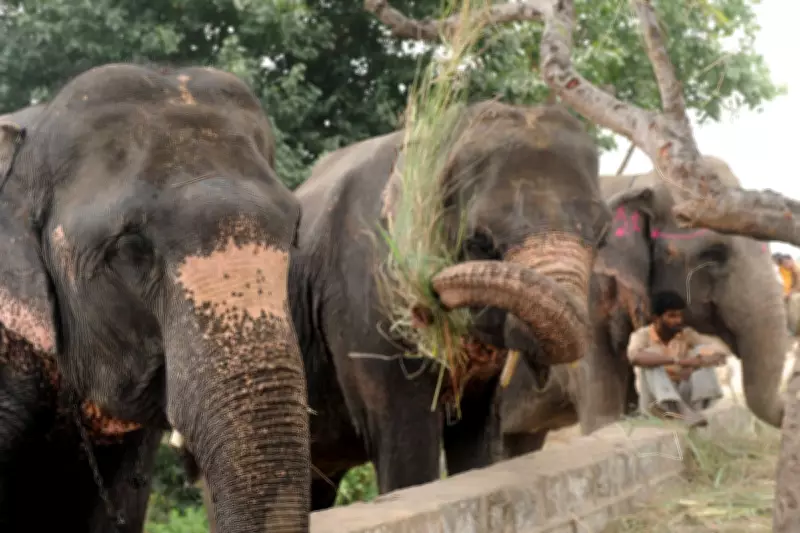
A 17-year-old girl has been tragically killed in a sudden elephant attack in the southern Indian state of Karnataka, according to local media reports. The incident underscores the ongoing and severe human-wildlife conflict in regions where animal habitats increasingly overlap with human settlements.
Details of the Fatal Incident
The victim, identified only by her first name Pooja, was nearly home in Bettathuru village, Kodagu district, when a wild elephant charged at her from behind around 5:30 PM local time on 28 February. She died at the scene, as reported by the Indian Express. Her family described the attack as sudden and unexpected.
Pooja's mother, Devaki, heard her daughter's screams and rushed out in panic, but there was no time to intervene. Her father, Girish, had momentarily stepped away to park his motorcycle and returned to find his daughter dead. The teenager's body was taken to a local government hospital for a postmortem examination.

Widespread Protests and Government Response
News of the killing sparked immediate anger and grief in the area. On Sunday, villagers, members of farmer organisations, and workers from the Bharatiya Janata Party staged protests. They blocked the Mysuru-Bantwal stretch of a nearby national highway for over two hours, causing traffic to pile up for several kilometres. Protesters demanded urgent action from authorities to prevent further attacks.
In response, the Karnataka government announced a compensation of Rs 20 lakh for the victim's family. This move aims to address the community's distress but highlights the need for more comprehensive solutions to human-wildlife conflicts.
Persistent Pattern of Human-Wildlife Conflict
This attack is not an isolated incident. Figures from Karnataka's forest department reveal a persistent pattern of human-wildlife conflict in the state. Over the past five years, at least 254 people have been killed in attacks by wild animals, with 42 fatalities occurring in 2024-25 alone.
Approximately 70% of these fatalities were caused by tigers, elephants, and leopards. These species' habitats increasingly overlap with expanding villages, farmlands, and infrastructure, intensifying encounters at the edges of forested areas.
Regional Context and Broader Issues
Incidents of human-wildlife conflict are frequently reported from areas along the forested tri-junction of Karnataka, Tamil Nadu, and Kerala states, where elephant corridors intersect with expanding human settlements. Animal attacks are also fairly common in eastern India, indicating a nationwide problem.
In early January, a lone male elephant in the eastern state of Jharkhand killed at least 20 people over nine days in the forested West Singhbhum district before disappearing into the jungle. The attacks, which took place between 1 and 9 January in the Chaibasa and Kolhan areas of the Saranda forest belt, mostly happened at night near forest fringes where villagers were guarding crops.
Long-Term Statistics and Conservation Concerns
Jharkhand has recorded nearly 1,300 deaths in elephant attacks over the past 23 years, according to a recent study by the Wildlife Institute of India. This alarming figure underscores the scale of the issue across India.
In October last year, India's wild elephant population was estimated at 22,446, down from 27,312 in 2017. This decline highlights conservation challenges and the pressures on elephant habitats, which are increasingly encroached upon by human activities.
The tragic death of Pooja serves as a stark reminder of the urgent need for effective strategies to mitigate human-wildlife conflicts, protect both communities and endangered species, and address the underlying causes of habitat encroachment in India.