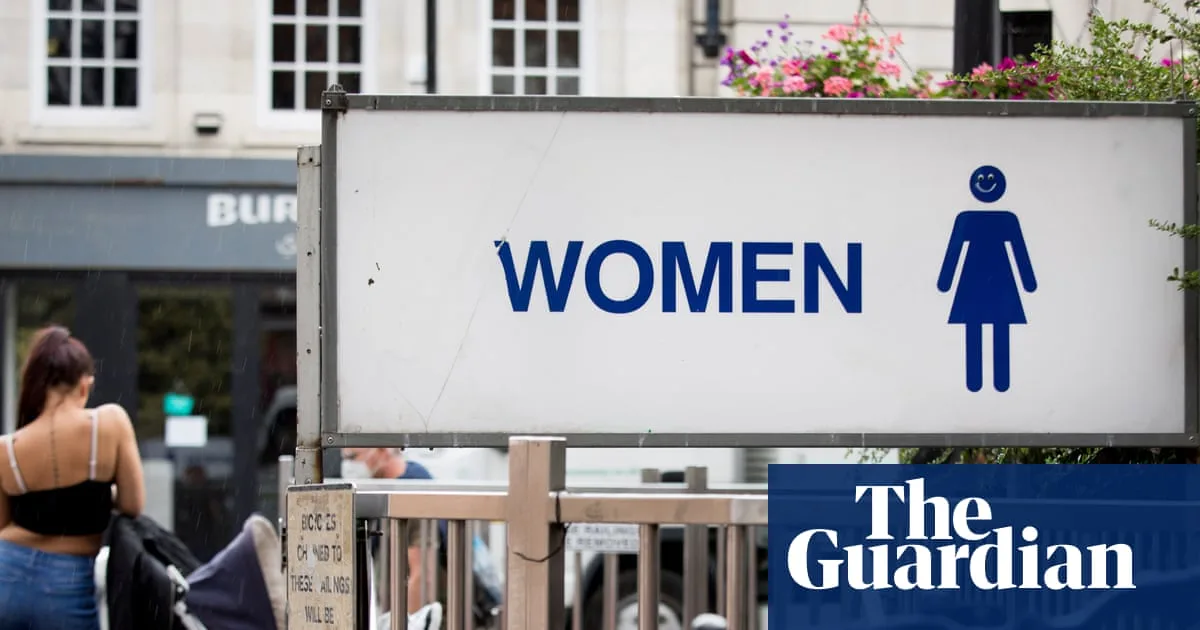
A stark new study has exposed a severe public toilet crisis in England, revealing there is now only one public convenience available for every 15,000 people. This alarming statistic follows a significant surge in closures that has created a 'significant shortfall' in essential facilities.
Health and Business Impacts
Health leaders are warning that this shortage is having profound consequences. Many individuals are so fearful of being caught short while away from home that they are choosing to remain indoors altogether. Others are deliberately reducing their fluid intake when out, putting themselves at serious risk of dehydration and related health issues.
William Roberts, chief executive of the Royal Society for Public Health, stated: 'Access to public toilets is a universal need that we all have, and we shouldn't shy away from talking about it. One public toilet per 15,000 people simply isn't good enough.'
Unhygienic Consequences
The RSPH analysis further highlights that inadequate toilet provision inevitably leads to increased public urination, creating unhygienic conditions that degrade public spaces. 'Having an insufficient number of public toilets has inevitable unsanitary consequences, creating unpleasant environments,' Roberts added.
Study Methodology and Findings
The research was conducted through more than 200 Freedom of Information requests to local authorities responsible for providing public conveniences. The data shows a 14 percent decrease in public toilet numbers since 2016, resulting in the current ratio of 15,481 people per facility across England.
The figures are based on responses from 221 of 309 local authorities, covering approximately 47 million residents or 82 percent of the population. Councils were asked to provide toilet counts for both 2016 and the present day.
Regional Disparities
The situation appears markedly better in devolved nations. Scotland maintains approximately one public toilet for every 8,500 people, while Wales fares even better with one facility per 6,748 residents.
Funding and Vandalism Challenges
A spokesperson for the Local Government Association explained the financial pressures: 'The maintenance of a public toilet could cost a council £25,000 annually. Vandalism and anti-social behaviour cost councils millions yearly, meaning taxpayers ultimately foot the bill for damage to this most basic public provision.'
Many councils have attempted to address gaps through community toilet schemes partnering with local businesses. However, high street closures have undermined these efforts, leaving vulnerable groups including older people, those with disabilities, and parents with young children disproportionately affected.
Calls for Action
The RSPH is advocating for substantial reforms. They propose that new strategic authorities should have a statutory duty to ensure sufficient public toilet provision in areas of public congregation, supported by dedicated central government funding.
Additionally, the society calls for regulatory changes requiring developers to include public toilets in any non-residential development projects. Currently, local councils retain discretion over toilet provision levels in their jurisdictions.
Government Response
A Ministry of Housing, Communities and Local Government spokesperson responded: 'To help councils provide public services like toilets, we've made over £78 billion available for council finances, with local leaders free to decide how best to spend the majority.'
Roberts concluded with a broader vision: 'As a country we can and should be doing better. We need to create public spaces that people want to spend time in, and this means giving local authorities the resources they need to provide the facilities we all rely on.' Without intervention, experts warn the toilet-to-people ratio will continue deteriorating as more facilities close.