Australia's Defence Minister Announces Major $53bn Spending Increase
Defence Minister Richard Marles will declare on Thursday that the Australian government plans to pursue "every avenue of increasing defence capability quickly" as part of a new national strategy. The announcement comes alongside a significant boost in defence expenditure, with an additional $53bn allocated over the next decade.
Spending Rise to 2.4% of GDP Still Below Trump's Demands
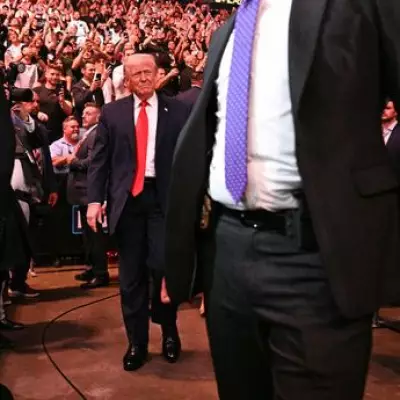
The new integrated investment program will see defence spending rise from the current trajectory of about 2.03% of GDP to approximately 2.3-2.4% by 2033. However, this increase falls notably short of demands from US President Donald Trump, who has urged American allies to spend as much as 3.5% of their GDP on defence to reduce reliance on the United States.
Marles will present the National Defence Strategy 2026 at the National Press Club in Canberra, emphasising that Australia faces its most complex and threatening strategic circumstances since the end of World War Two. "International norms that once constrained the use of force and military coercion continue to erode," Marles states. "More countries are engaged in conflict today than at any time since the end of world war two, and this is occurring across every region of the world."

Private Capital to Fund Defence Capability Increases
A central feature of the strategy involves accessing private capital through new "off budget" spending programs. This approach aims to fund increases in military capability without relying solely on traditional budget processes. The government plans to boost the current defence budget by $14bn over the next four years, with private financing expected to support major projects like the landmark upgrade of the Henderson defence precinct in Western Australia.
Spending of up to $25bn is anticipated in the next decade at Henderson, including private sector investments, to accelerate Aukus preparedness. The shipbuilding facility, which received a $12bn "downpayment" in September, will be used for constructing surface vessels and docking and sustaining submarines.
Strategic Shifts and Regional Challenges
Marles argues that the new defence strategy acknowledges that long-standing assumptions about Australia's national security are no longer valid. Geographic distance and comparative military superiority in the Indo-Pacific region can no longer be relied upon. The strategy responds to intensifying major-power competition between China and the US, rapid military modernisation in the region, and increasingly adverse global trends.
As part of the new approach, Labor will allocate between $2bn and $5bn more on drones, prioritising local manufacturing. This investment will bring total spending on uncrewed and autonomous capabilities to between $12bn and $15bn over the coming decade.
Political Reactions and Budget Context
Shadow Defence Minister James Paterson has criticised the plan, stating that "accounting tricks don't make Australians safer." He accuses the government of counting existing expenditures like military pensions as defence spending to create an illusion of increased commitment. "Australia needs real increases in actual defence spending today to put tangible capability into the hands of war fighters to protect our country," Paterson asserts.
The defence spending increase is expected to be a key feature of the 12 May federal budget, alongside tax reform and efforts to curb growth in the National Disability Insurance Scheme (NDIS). The government aims to reduce NDIS spending growth from about 10.3% last year to between 5% and 6%.
Amid a rapidly shifting geopolitical landscape, Australia continues to invest heavily in the Aukus nuclear submarine agreement with the US and Britain, with at least $368bn committed to this partnership.