The Global Imperative to Free Imran Khan
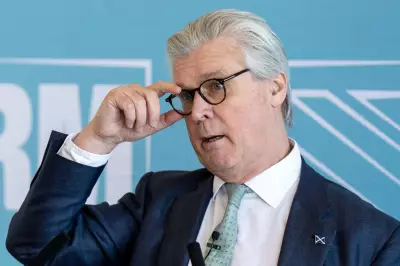
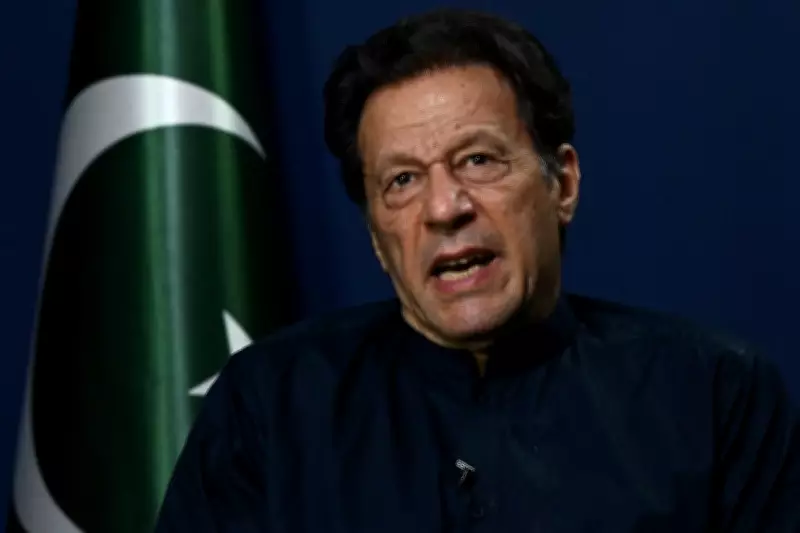
In a world increasingly defined by chaos and conflict, the continued imprisonment of former Pakistani Prime Minister Imran Khan represents not just a human rights tragedy but a significant threat to international stability. According to prominent human rights lawyer Eric Lewis, Khan has been wrongfully detained for nearly three years, despite his unique capacity to mediate in one of the world's most volatile regions.
A Leader's Unwavering Commitment
At 73 years old, Imran Khan faces a stark choice: accept exile to comfortable destinations like London, Dubai, or New York, or remain imprisoned in his homeland. Like historical figures Gandhi and Mandela before him, Khan has chosen the latter path, refusing to abandon Pakistan despite the personal cost. His two sons, living in England, have been denied visas to visit their father for nearly four years, adding to the humanitarian dimensions of this case.
World leaders across multiple nations have called for Khan's release, with Lewis noting meetings with numerous American political figures and British Members of Parliament who seek to pressure for his freedom. However, Field Marshal Munir, Pakistan's current leader, appears unmoved by international opinion, leveraging Pakistan's strategic importance as a nuclear-armed nation of 250 million people to maintain his position despite deep domestic unpopularity.

From Cricket Hero to Political Prisoner
Long before entering politics, Imran Khan enjoyed global recognition as an international cricket star whose charisma and principles led him to abandon a comfortable London life to confront Pakistan's systemic corruption and military dominance. Lewis recalls visiting a Pakistan that once significantly outpaced neighboring India economically, noting that in 1970, Pakistan's GDP per capita was approximately 1.5 times greater than India's. Today, that relationship has reversed dramatically, with India's per capita GDP nearly doubling Pakistan's.
Khan's 2018 election as prime minister broke the corrupt cycle of two-party rule that had enriched politicians and generals between military coups. His administration threatened military dominance by asserting civilian government's right to appoint military leaders and exercise authority. The resulting conflict over appointments to key positions including army chief of staff and head of the powerful Inter-Services Intelligence agency led to Khan's effective deposition through a military-backed vote of no confidence.
Systematic Legal Persecution
Following his removal from office, Khan faced over 100 corruption charges, including allegations of accepting and selling gifts from foreign governments. His wife has also been charged in what appears to be systematic legal persecution designed to ensure his permanent imprisonment. For nearly three years, Khan has endured solitary confinement in conditions described as extreme, with summer temperatures exceeding 100 degrees Fahrenheit and winter temperatures dropping below freezing.
The humanitarian argument for Khan's release is compelling on its own merits: no individual should face medical neglect and potential death in prison, nor should children be deprived of their father. Yet Lewis argues there are even more pressing pragmatic reasons for international intervention.
The Regional Stability Imperative
Pakistan stands at a dangerous crossroads. Should Khan die in prison, the country risks erupting into widespread political and communal violence. While the military may believe it can suppress unrest through force, Pakistan's size, engaged citizenry, tribal divisions, and widespread civilian armament make such suppression far more complex than in smaller, more homogeneous nations. Field Marshal Munir might attempt to follow Iran's playbook of mass killings, but Pakistan's demographic and political realities suggest this could trigger a catastrophic bloodbath.

Diplomatic Credibility in a Dangerous Region
Throughout his political career, Imran Khan maintained dialogue with diverse stakeholders across South Asia's dangerous geopolitical landscape. His unique credibility allowed him to engage with the Taliban, tribal groups in northern Pakistan, Shia communities in Baluchistan near the Iranian border, and both Iran and Saudi Arabia simultaneously. He maintained productive relationships with European leaders and China, which serves as a regional counterweight to India, and held highly productive meetings with former US President Donald Trump.
Ironically, current US President Joe Biden refused to engage with Khan, mistakenly interpreting his Pakistani nationalism as anti-Americanism. Field Marshal Munir now attempts to play intermediary in regional conflicts but lacks the stature, popularity, and personal magnetism that Khan possesses in abundance.
The Realpolitik Calculation
In practical geopolitical terms, Khan's release serves not only humanitarian interests but the strategic interests of the international community and even his Pakistani jailers. At a time of escalating regional conflicts, Khan retains the credibility to promote dialogue and create diplomatic off-ramps before potential escalations that could destabilize the entire region and impact the global economy. For a military regime accustomed to repression, making a martyr of Imran Khan could unleash consequences far beyond their control.
Can one man's fate truly impact global turmoil? In the unique case of Imran Khan—with his combination of domestic popularity, international credibility, and diplomatic experience—the answer appears to be yes. The world community faces both a moral imperative and strategic necessity to unite in securing his freedom before Pakistan, and the region, reaches a point of no return.