Trump's Stark Warning to Iran: Strike a Deal or Face Annihilation of Energy Infrastructure
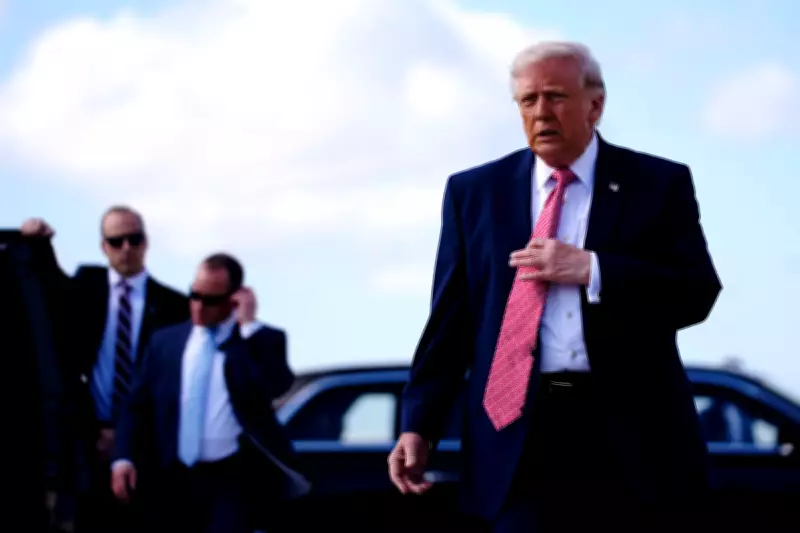
President Donald Trump has issued a severe ultimatum to Iran, threatening to "obliterate" all of the country's energy facilities, including the critical oil hub Kharg Island, if Tehran continues to delay efforts to finalise a peace agreement to end the ongoing conflict. In a post on Truth Social, Mr Trump asserted that "serious discussions" have been underway to conclude the month-old war, claiming "great progress" has been achieved. However, he warned that failure to immediately reopen the Strait of Hormuz would result in devastating consequences.
Escalating Threats and Military Buildup
"If the Hormuz Strait is not immediately 'Open for Business,' we will conclude our lovely 'stay' in Iran by blowing up and completely obliterating all of their Electric Generating Plants, Oil Wells and Kharg Island (and possibly all desalinization plants!), which we have purposefully not yet 'touched'," Mr Trump declared in his characteristically blunt style. This outburst follows reports of potential ground invasion plans, with officials indicating the president is evaluating military operations to seize uranium from deep within Iranian territory.
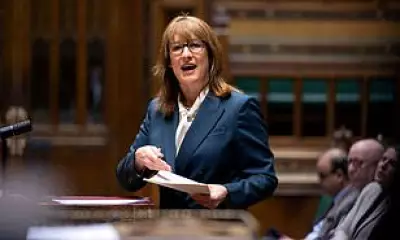
White House press secretary Karoline Leavitt addressed these reports, stating, "It's the job of the Pentagon to make preparations in order to give the commander-in-chief maximum optionality. It does not mean the president has made a decision." Meanwhile, thousands of US sailors and marines have landed in the Middle East over the weekend, according to US Central Command, a deployment Tehran interprets as evidence of Washington's insincerity about peace negotiations.

Global Repercussions and Diplomatic Responses
The conflict's ripple effects are being felt worldwide. Oil prices continue to surge as the Strait of Hormuz remains largely closed to commercial shipments, exacerbating economic concerns. Adding to the turmoil, Yemen's Houthi rebels have entered the fray, raising alarms about further disruption to global trade following their previous attacks on maritime vessels in the Red Sea passage to the Suez Canal in 2024.
In response to the escalating situation, UK Prime Minister Keir Starmer has firmly ruled out deploying British troops on the ground in Iran, insisting the United Kingdom will not be "dragged" into Mr Trump's war. "This is not our war and we're not going to get drawn into it," Mr Starmer emphasised, clarifying that the UK's involvement is limited to defensive actions aimed at protecting British interests and allies in the region.
Ongoing Denials and Regional Tensions
Iran continues to deny that any direct talks with the United States are taking place. Tehran's foreign ministry spokesperson, Esmaeil Baghaei, acknowledged receiving messages from intermediaries expressing Washington's willingness to negotiate but criticised the proposals as excessively demanding. Concurrently, Israeli strikes on southern Lebanon persist after Prime Minister Benjamin Netanyahu announced the expansion of a "buffer zone" in operations targeting Hezbollah.
The Pentagon is reportedly awaiting Mr Trump's approval for ground operations involving up to 10,000 troops, according to The Washington Post. Secretary of State Marco Rubio has previously denied that ground operations would proceed and reiterated on Monday that the US aims to achieve its objectives "in a matter of weeks, not months." As diplomatic efforts remain fraught with uncertainty, the spectre of further military escalation looms large over the Middle East.