Trump's High-Stakes Plan to Seize Iran's Critical Kharg Island Oil Terminal
President Donald Trump has deployed thousands of US soldiers to the Middle East, signalling that a ground invasion of Kharg Island, a tiny but strategically vital oil hub in the Persian Gulf, remains a distinct possibility. Despite public overtures about negotiations to end hostilities, the administration is actively considering a military operation to capture this crucial Iranian asset.
In an interview with the Financial Times, Trump explicitly stated his desire to "take the oil in Iran," confirming that American troops might be used to seize Kharg Island. This facility handles approximately 90% of Iran's oil exports, meaning its capture would grant the United States unprecedented leverage to disrupt Iran's energy trade and apply severe economic pressure.
A Fortified and Dangerous Target
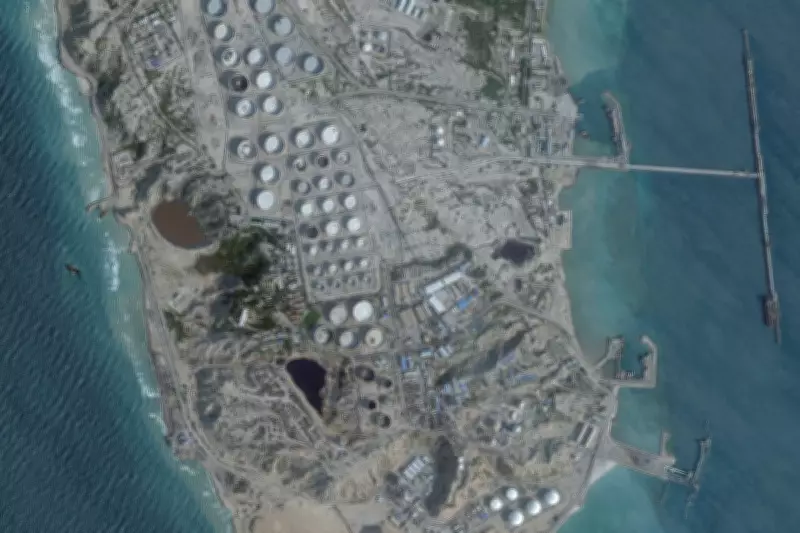
Kharg Island is located just 16 miles from the Iranian coast in the northern Persian Gulf, northwest of the strategically critical Strait of Hormuz. While US forces could likely secure the island quickly, analysts warn that a subsequent occupation would likely expand and prolong the conflict rather than deliver a decisive victory.

The island is heavily fortified. According to CNN reports citing US intelligence sources, Iran has deployed additional surface-to-air missiles and laid extensive traps, including anti-personnel and anti-armour mines in the surrounding waters. Former US Central Command commander Joseph Votel told TWZ.com that while only 800 to 1,000 troops might be needed on the island itself, they would require vulnerable logistical support. Votel expressed doubt about the tactical advantage, stating troops would be "very vulnerable" and the move would be "kind of an odd thing to do."
Iranian leadership has issued stark warnings. Parliament speaker Mohammad Bagher Ghalibaf declared on state media that the country is ready to "set on fire" any arriving US ground troops, accusing Trump of using negotiation talks as a smokescreen for invasion preparations.
Economic Strangulation and Global Repercussions
US administration officials, speaking to Axios, confirmed discussions about seizing the island, which is smaller than London's Westminster. The strategic goal is clear: to choke off Iran's economic lifeline. Oil exports constitute nearly 40% of the Iranian government's budget.
"Seizing the island would cut off Iran's oil lifeline, which is crucial for the regime," explained Petras Katinas, a research fellow at the Royal United Services Institute. "Seizure would give the US leverage during negotiations, no matter which regime is in power after the military operation ends."
The operation's global economic impact could be severe. Shipping through the Strait of Hormuz has largely halted since the Islamic Revolutionary Guard Corps (IRGC) took control, severely affecting global supply chains. Oil prices recently surged past $119 a barrel, with the IRGC warning they could reach $200 if hostilities escalate. Neil Quilliam of Chatham House warned that any attempt to take Kharg would "likely send the markets into a tailspin" and could block any future diplomatic resolution, creating an endless standoff.
Regional Warnings and Strategic Calculations
Gulf allies have privately cautioned the Trump administration against putting troops on the ground in Iran, fearing it could trigger retaliatory strikes against their own energy and civilian infrastructure, a senior Gulf official told Reuters.
The White House maintains public ambiguity. A spokesperson stated Trump has "no plans to send ground troops anywhere at this time," but emphasised that all options remain on the table. Press Secretary Karoline Leavitt added that it is the Pentagon's job to provide "maximum optionality" to the commander in chief.
Analyst Laura Blumenfeld of Johns Hopkins University described Trump's approach as creating a "fog of war," noting he "traffics in contradictory signals" to keep opponents off-balance. Some, like former Pentagon official Michael Rubin, argue controlling Kharg could not only bankrupt the current regime but also help finance rebuilding under a future government. However, others warn that fighting for the island could irreparably damage the terminal, harming any successor regime's economic prospects.

This is not the first time Kharg Island has been in Trump's sights. In a 1988 interview with The Guardian, he declared, "One bullet shot at one of our men or ships, and I'd do a number on Kharg Island. I'd go in and take it." The island was also attacked by Saddam Hussein in 1984, sparking the Tanker War. Today, the gamble is far greater, with the potential to reshape the geopolitical and economic landscape of the Persian Gulf for years to come.