UN Peacekeepers and Israeli Soldiers Killed in Southern Lebanon Invasion
Fighting during Israel's military invasion of southern Lebanon has resulted in the tragic deaths of United Nations peacekeepers and Israeli soldiers, officials confirmed on Tuesday. This escalation occurs amidst contradictory statements from U.S. President Donald Trump and Iranian officials concerning negotiations aimed at ending the protracted war.
Israeli Campaign and UN Casualties
Israel is actively engaged in a campaign to push Hezbollah militants out of southern Lebanon, following sustained rocket and drone attacks across the border. Israeli officials have indicated this operation could evolve into a prolonged occupation. The United Nations Security Council is scheduled to discuss the volatile situation after three UN peacekeepers were killed in southern Lebanon within a 24-hour period, though responsibility for these deaths remains unclear. Early Tuesday, Israel reported that an additional four of its soldiers had been killed during the offensive.
Contradictory Negotiation Claims
In an interview published Monday with the New York Post, U.S. President Donald Trump asserted that the United States is currently negotiating with Iran's parliamentary speaker, Mohammad Bagher Qalibaf. Qalibaf, a former Revolutionary Guard commander previously considered as a potential negotiating partner by Washington, has denied any talks with the U.S. He claimed that Pakistan-facilitated discussions were merely a cover for American troop deployments in the region.

President Trump issued a stark warning, threatening widespread destruction of Iran's energy resources and critical infrastructure, including desalination plants, if a deal to conclude the war with Tehran is not reached promptly. Meanwhile, U.S. stocks experienced modest gains in unstable trading on Monday, as oil prices continue to rise due to ongoing uncertainty about the war's conclusion.
Iran's Stance and Regional Tensions
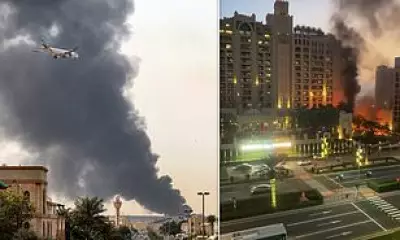
Iran's Foreign Minister, Abbas Araghchi, insisted early Tuesday that Tehran's attacks on Gulf Arab states exclusively target U.S. forces, despite assaults that have impacted civilian sites throughout the region. His comments, directed at Saudi Arabia, come amid increasing anger from Gulf Arab states, which are encouraging America to persist in prosecuting the war.
In a post on the social media platform X, Araghchi stated, "Iran respects the Kingdom of Saudi Arabia and considers it a brotherly nation." He shared a photo purportedly showing damage to an American aircraft at Prince Sultan Air Base in Saudi Arabia, adding, "Our operations are aimed at enemy aggressors who have no respect for Arabs or Iranians, nor can provide any security. ... High time to eject U.S. forces." This rhetoric underscores the complex diplomatic and military landscape as the conflict intensifies.